
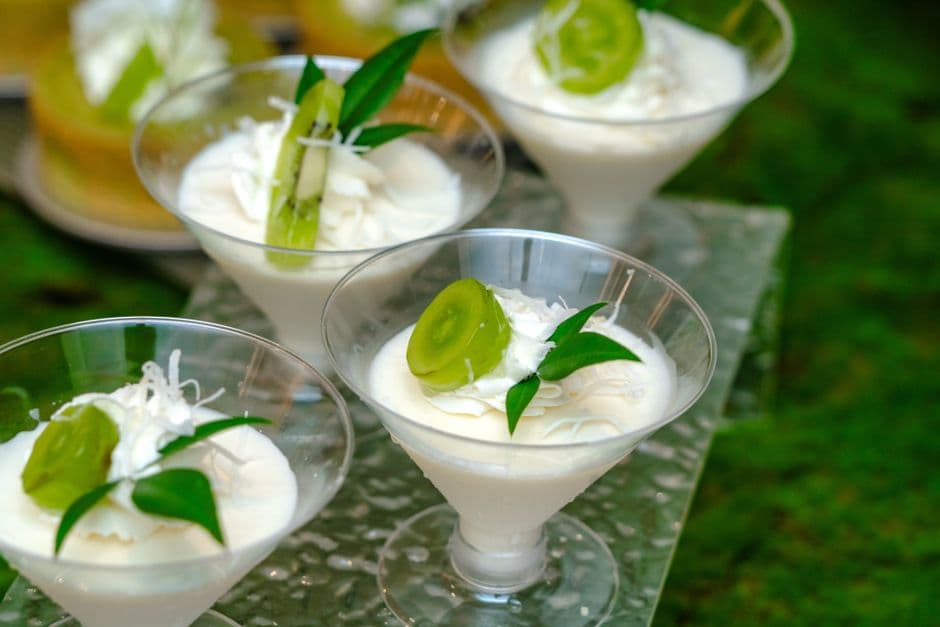
باباي مع كريمة جوز الهند
القلقاس المستنقعي العملاق (باباي) يُطهى على البخار حتى يصبح طريًا ويقدم مع كريمة جوز الهند الحلوة - وهو طبق كيريباتي احتفالي.
حول هذه الوصفة
باباي (Cyrtosperma merkusii) هو القلقاس المستنقعي العملاق المزروع في الحفر المغمورة بالمياه في جزر كيريباتي المرجانية. يمكن أن يستغرق نمو قرم باباي واحد ما يصل إلى خمسة عشر عامًا. يتم تقديمه في الاحتفالات وحفلات الزفاف والمناسبات المجتمعية الهامة كدليل على الهيبة وكرم الضيافة. النكهة أكثر نشوية وترابية من القلقاس العادي، كما أن كريمة جوز الهند تخفف من حدتها بشكل جميل.
المكونات
يخدم 6
- 800 غالقلقاس (أو القلقاس باباي/المستنقع إن وجد)، مقشر ومقطع إلى شرائح بسمك 2 سم
- 300 ملكريمة جوز الهند
- 1 ملعقة صغيرةملح
- 2 ملعقة كبيرةسكر
- 1 leafورقة الباندان (اختياري)، مربوطة في عقدة
التعليمات
- 1
القلقاس البخاري
ضع شرائح القلقاس في سلة البخار فوق الماء المغلي. قم بالبخار لمدة 35-40 دقيقة حتى يصبح طريًا تمامًا عند ثقبه بالسيخ.
- 2
كريمة جوز الهند الدافئة
أثناء طبخ القلقاس على البخار، قم بجمع كريمة جوز الهند والملح والسكر وأوراق الباندان في قدر صغيرة. سخنيه بلطف لمدة 5 دقائق حتى يذوب السكر. إزالة الباندان.
- 3
لوحة
رتبي شرائح القلقاس في طبق التقديم. اسكبي كريمة جوز الهند الدافئة في الأعلى.
- 4
خدمة
يقدم على الفور كطبق جانبي أو طبق رئيسي خفيف.
هل جرّبت هذه الوصفة؟
قيّمها وساعد الآخرين في العثور على الوصفات التي تنجح فعلاً.
سجّل الدخول بنقرة واحدة وسنحفظ التقييم الذي اخترته للتو.
كل ما تحتاجه لتخطيط أسبوعك — مجانًا
- تقويم الوجبات
- قائمة التسوق
- أفكار وصفات بالذكاء الاصطناعي
تابع ما تأكله
صوّر وجبتك لتسجيل السعرات والعناصر الغذائية، واستخدم مؤقتات الصيام وتتبع شرب الماء في تطبيق SnapCal المجاني.
نصائح للمحترفين
- →
إذا لم يكن باباي متوفرًا، فإن القلقاس القياسي أو حتى البطاطس يعطي نتيجة معقولة.
- →
تضيف ورقة الباندان لمسة زهرية تشبه الفانيليا - لا تتخطاها إذا كان بإمكانك العثور عليها.
- →
تذوق واضبط الملح في النهاية - تتركز النكهات مع تقليل السوائل، كما أن رشة أخيرة من الملح القشري تزيد من حدة الطبق بأكمله.
- →
Mise en place يدفع ثمنه بنفسه: قم بتقطيع وقياس وخلط كل شيء مسبقًا قبل أن تستمر الحرارة، خاصة بالنسبة لأي خطوة تتحرك بسرعة.
الاختلافات
- •
قمة مع جوز الهند المجفف المحمص للحصول على الملمس.
- •
رش مع قليل من العسل بدلا من السكر.
- •
نباتي: استبدل البروتين بفطر المحار المحمص أو التوفو المدخن أو الحمص المطبوخ - اضبط التتبيل قليلاً لأعلى للتعويض.
- •
أكثر توابلًا: أضف الفلفل الحار الطازج المفروم جيدًا أو ملعقة صغيرة من فلفل حلب / أورفا المطحون إلى العطريات للحصول على حرارة دافئة متعددة الطبقات بدلاً من ضربة واحدة حادة.
تخزين
قم بتبريده لمدة تصل إلى يومين. يسخن بلطف ويضاف كريمة جوز الهند الطازجة.
التاريخ والأصل
لقد ساعدت زراعة باباي على دعم مجتمعات كيريباتي لعدة قرون في الجزر المرجانية حيث التربة رقيقة والمياه العذبة نادرة. يعد إهداء قرم باباي كبير أحد أعلى التكريمات التي يمكن أن يمنحها المضيف للضيف.
الأسئلة المتداولة
ما هو طعم باباي بالمقارنة مع القلقاس العادي؟
باباي أكثر نشويًا وجفافًا، مع نكهة ترابية أكثر مرارة. يتطلب طهيًا أطول ويستفيد أكثر من الصلصات الغنية مثل كريمة جوز الهند.
هل يمكنني القيام بذلك في وقت مبكر؟
نعم، يمكن تحضير معظم المكونات قبل يوم واحد وتبريدها بشكل منفصل. يُعاد تسخينه بلطف ويُجمّع قبل التقديم مباشرةً حتى يظل القوام مميزًا.
ما الذي يمكنني استبداله إذا لم يكن لدي جميع المكونات؟
ابق على مقربة من الدور الذي يلعبه كل مكون: استبدل المواد العطرية بأخرى مماثلة (الكراث بالبصل، والليمون الحامض بالليمون)، وحافظ على توازن الدهون والأحماض والملح سليمًا. يمكن عادة تقريب خلطات التوابل مع ما هو موجود في الخزانة.
كيف أعرف أنها أصلية؟
الأصالة تقع على نطاق واسع - ما يهم أكثر هو احترام التقنية وتوازن النكهات. إذا كان مذاق الطبق متناغمًا ويحترم الطريقة التي سيصنعها بها الطهاة في منطقته الأصلية، فأنت على أرض صلبة.
حقائق التغذية
لكل وجبة (260g) · 6 حصص إجمالية
ملخص الوقت
هل لديك أسئلة؟
اسأل مساعد الطبخ الذي يعمل بالذكاء الاصطناعي لدينا أي شيء عن هذه الوصفة - البدائل والتقنيات والقياس.
الدردشة مع AI Chef →ظهرت في الأدلة
هذه الوصفة واردة في الأدلة المنسقة التالية:
المزيد من وصفات Kiribatian
قد يعجبك أيضًا
أطباق مشابهة من مطابخ أخرى حول العالم.
أدوات مطبخ مجانية
حاسبات ومحوّلات تكمّل هذه الصفحة — دون الحاجة إلى تسجيل.
حوّلها إلى خطة
جدولها، تسوّق لها، وتابع ما لديك بالفعل.
اقرأ بعد ذلك
مقالات أطول تتعمّق في الأفكار وراء هذا الطبق.
مجتمع
انضم إلى المحادثة
قم بتسجيل الدخول لترك تعليق وحفظ وصفاتك المفضلة