
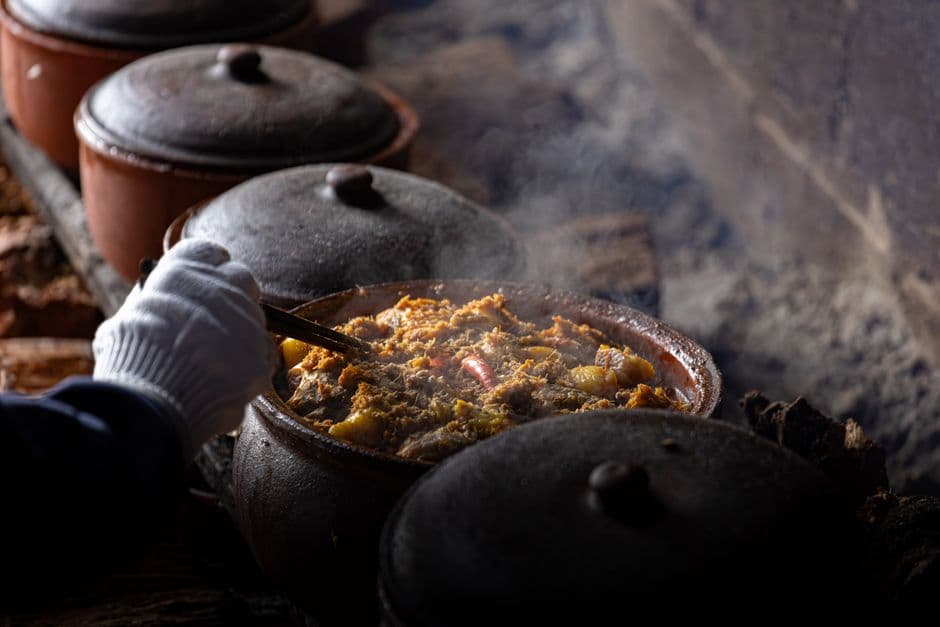
كافارما (حساء وعاء الطين البلغاري)
يخنة وعاء من الطين البلغاري العطري من لحم الخنزير أو الدجاج مطهو ببطء مع الفلفل والطماطم والفطر والنبيذ - مع بيضة نيئة في الأعلى.
حول هذه الوصفة
كافارما هي واحدة من الأطباق البلغارية الأكثر تميزًا ومحبوبة: أواني فخارية فردية (جيوفيتشي) مملوءة باللحم المتبل والفلفل الحلو والطماطم والفطر والبصل والنبيذ، ثم تُغلق وتُخبز ببطء حتى تمتزج المكونات في يخنة حريرية عطرية للغاية. قبل التقديم مباشرة، يتم كسر بيضة نيئة مباشرة على الحساء الساخن في الوعاء وإعادتها إلى الفرن لفترة وجيزة حتى ينضج البياض. يضفي وعاء الطبخ الفخاري لمسة ترابية فريدة ويحتفظ بالرطوبة بشكل جميل. ويختلف الطبق حسب المنطقة، حيث يتضمن البعض الفلفل الحار، والبعض الآخر يضيف الكراث أو البصل الأخضر، لكن تقنية الأواني الفخارية عالمية.
المكونات
يخدم 4
- 600 غكتف من لحم الخنزير أو أفخاذ الدجاج، مقطعة إلى قطع صغيرة
- 2 متوسطبصل مقطع إلى شرائح
- 3 متوسطحبة فلفل أحمر، مقطعة إلى شرائح
- 1 متوسطفلفل حار أو فلفل حار مقطع مكعبات (اختياري)
- 3 متوسططماطم مقطعة مكعبات (أو 400 جرام معلبة)
- 200 غفطر أو فطر محار، مقطع إلى شرائح
- 4 فصوصالثوم المفروم
- 150 ملالنبيذ الأبيض الجاف
- 3 ملعقة كبيرةزيت عباد الشمس
- 1.5 ملعقة صغيرةالفلفل الحلو الحلو
- 1 ملعقة صغيرةمالح مجفف (تشوبريتسا) أو زعتر
- Salt and pepper(to taste)
- 4 كبيربيضة (واحدة لكل وعاء من الطين)
- Fresh parsleyلتزيين
التعليمات
- 1
نقع اللحم
تُقلب قطع اللحم مع الفلفل الحلو والثوم والملح والفلفل وملعقة كبيرة من الزيت. نقع لمدة 30 دقيقة.
- 2
عطريات مقلية
سخني الزيت المتبقي في مقلاة على نار متوسطة عالية. يُحمر اللحم من جميع الجوانب لمدة 4-5 دقائق. إزالة وتوضع جانبا. في نفس المقلاة، يذبل البصل لمدة 5 دقائق، ثم يضاف الفلفل والفطر ويطهى لمدة 3 دقائق أخرى.
- 3
الجمع والموسم
أضف الطماطم والنبيذ والمالح / الزعتر إلى المقلاة. يقلب ويترك على نار خفيفة لمدة 5 دقائق. يتبل جيداً بالملح والفلفل.
- 4
ملء الأواني الفخارية
قسمي اللحم بين 4 أوعية فخارية فردية (أو استخدمي جيوفيتشي واحدة كبيرة). نسكب خليط الخضار فوق اللحم، ونوزعه بالتساوي. يجب أن يغطي السائل بالكاد.
- 5
خبز مغطى
قم بتغطية الأواني بأغطيةها أو ختمها بورق الألمنيوم. تُخبز في الفرن على حرارة 180 درجة مئوية لمدة 60-70 دقيقة حتى ينضج اللحم تمامًا.
- 6
أضف البيضة وانتهى
اكشفي كل وعاء واكسري بيضة نيئة واحدة في وسط كل وعاء. تُعاد إلى الفرن بدون غطاء على حرارة 200 درجة مئوية لمدة 8-10 دقائق حتى يتماسك بياض البيض ولكن يظل الصفار سائلاً. يُزيّن بالبقدونس ويُقدّم فورًا في القدور.
هل جرّبت هذه الوصفة؟
قيّمها وساعد الآخرين في العثور على الوصفات التي تنجح فعلاً.
سجّل الدخول بنقرة واحدة وسنحفظ التقييم الذي اخترته للتو.
كل ما تحتاجه لتخطيط أسبوعك — مجانًا
- تقويم الوجبات
- قائمة التسوق
- أفكار وصفات بالذكاء الاصطناعي
تابع ما تأكله
صوّر وجبتك لتسجيل السعرات والعناصر الغذائية، واستخدم مؤقتات الصيام وتتبع شرب الماء في تطبيق SnapCal المجاني.
نصائح للمحترفين
- →
انقعي الأواني الفخارية الجديدة في الماء لمدة 30 دقيقة قبل الاستخدام الأول لمنع التشقق.
- →
التشوبريتسا البلغارية المجففة (المالحة) هي العشبة المميزة - استبدلها بالزعتر بالإضافة إلى قليل من البردقوش.
- →
يضيف صفار البيض المختلط في الحساء أثناء تناولك نكهة فاخرة.
- →
تذوق واضبط الملح في النهاية - تتركز النكهات مع تقليل السوائل، كما أن رشة أخيرة من الملح القشري تزيد من حدة الطبق بأكمله.
الاختلافات
- •
كافرما نباتية: استبدلي اللحم بكمية إضافية من الفطر والكوسة والباذنجان.
- •
النسخة الحارة (ليوتيكا): ضاعفي الفلفل الحار وأضيفي ملعقة من الليوتيتسا (معجون الفلفل المحمص).
- •
أكثر توابلًا: أضف الفلفل الحار الطازج المفروم جيدًا أو ملعقة صغيرة من فلفل حلب / أورفا المطحون إلى العطريات للحصول على حرارة دافئة متعددة الطبقات بدلاً من ضربة واحدة حادة.
- •
أخف: قلل الدهون بمقدار الثلث وانتهي بعصرة من الحمضيات أو رشة من الخل للحفاظ على السطوع دون فقدان الجسم.
تخزين
قم بتبريدها في الأواني الفخارية أو في حاوية محكمة الإغلاق لمدة يومين. يعاد تسخينها في الفرن على حرارة 160 درجة مئوية وهي مغطاة. أضف البيض الطازج عند إعادة التسخين.
التاريخ والأصل
يُمارس الطبخ في الأواني الفخارية في الأراضي البلغارية منذ العصر التراقي. يعكس المزيج المحدد من الفلفل والطماطم واللحوم تأثير المطبخ العثماني الذي شكل المنطقة لمدة خمسة قرون، في حين أن استخدام النبيذ والمالح المجفف هو أمر بلغاري واضح. تظل كافارما رمزًا للضيافة المنزلية البلغارية.
الأسئلة المتداولة
هل يمكنني صنع هذا بدون أواني فخارية فردية؟
نعم، استخدم فرن هولندي واحد أو طبق خزفي ثقيل. ستكون النتيجة متشابهة، على الرغم من أن الأواني الفردية تخلق العرض التقليدي وديناميكيات الحرارة المختلفة قليلاً.
ما هو تشوبريتسا؟
تشوبريتسا هو طبق بلغاري صيفي مجفف ومالح، وهو عشب أساسي في الطبخ البلغاري مع نكهة الفلفل والنعناع قليلاً. يمكنك العثور عليه في محلات البقالة في البلقان أو الشرق الأوسط.
هل يمكنني القيام بذلك في وقت مبكر؟
نعم، يمكن تحضير معظم المكونات قبل يوم واحد وتبريدها بشكل منفصل. يُعاد تسخينه بلطف ويُجمّع قبل التقديم مباشرةً حتى يظل القوام مميزًا.
ما الذي يمكنني استبداله إذا لم يكن لدي جميع المكونات؟
ابق على مقربة من الدور الذي يلعبه كل مكون: استبدل المواد العطرية بأخرى مماثلة (الكراث بالبصل، والليمون الحامض بالليمون)، وحافظ على توازن الدهون والأحماض والملح سليمًا. يمكن عادة تقريب خلطات التوابل مع ما هو موجود في الخزانة.
حقائق التغذية
لكل وجبة (380g) · 4 حصص إجمالية
ملخص الوقت
هل لديك أسئلة؟
اسأل مساعد الطبخ الذي يعمل بالذكاء الاصطناعي لدينا أي شيء عن هذه الوصفة - البدائل والتقنيات والقياس.
الدردشة مع AI Chef →المزيد من وصفات Bulgarian
قد يعجبك أيضًا
أطباق مشابهة من مطابخ أخرى حول العالم.
أدوات مطبخ مجانية
حاسبات ومحوّلات تكمّل هذه الصفحة — دون الحاجة إلى تسجيل.
حوّلها إلى خطة
جدولها، تسوّق لها، وتابع ما لديك بالفعل.
اقرأ بعد ذلك
مقالات أطول تتعمّق في الأفكار وراء هذا الطبق.
مجتمع
انضم إلى المحادثة
قم بتسجيل الدخول لترك تعليق وحفظ وصفاتك المفضلة