
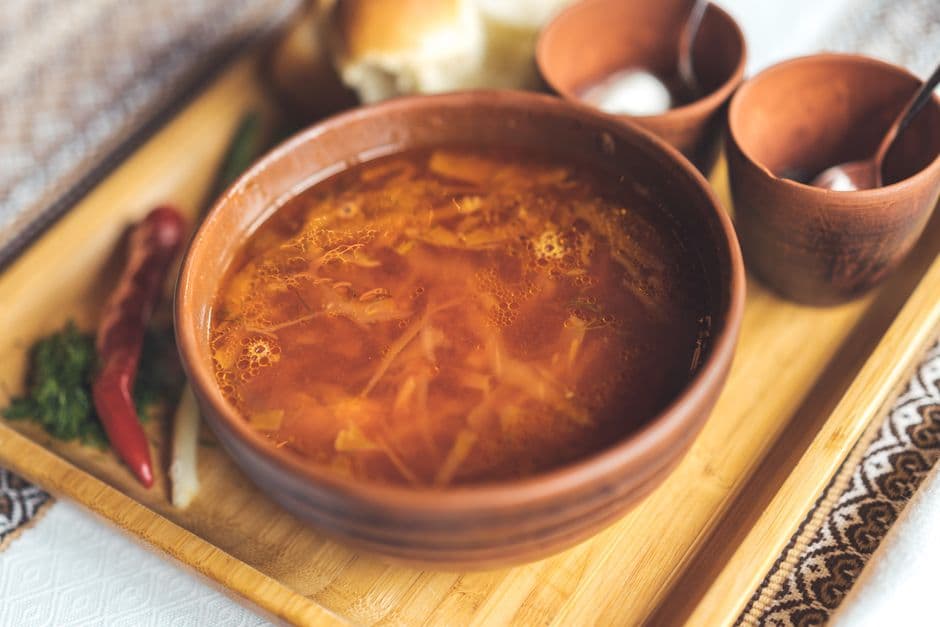
Soupe Aibika (Soupe de chou gluant)
Une soupe verte nourrissante fabriquée à partir de feuilles d'aibika — le « chou gluant » de Papouasie-Nouvelle-Guinée — cuite dans un bouillon de noix de coco avec ail et gingembre.
À propos de cette recette
Aibika (Abelmoschus manihot), communément appelée « chou gluant » pour sa texture mucilagineuse ressemblant à l'okra quand on la cuit, est l'une des légumes feuillus les plus importants sur le plan nutritionnel en Papouasie-Nouvelle-Guinée et dans le Pacifique au sens large. Riche en fer, calcium et vitamines, c'est un aliment nutritionnel de base à la fois dans les villages ruraux et les ménages de Port Moresby. Les feuilles sont cuites brièvement dans un bouillon de lait de coco avec des aromatiques, produisant une soupe verte avec une consistance soyeuse et légèrement visqueuse de la mucilage naturelle des feuilles. C'est la cuisine à la maison PNG honnête et quotidienne à sa plus nourrissante.
Ingrédients
Sert 4
- 300 gfeuilles d'aibika fraîches (chou gluant), ou feuilles d'okra ou épinards
- 400 mllait de coco
- 500 mlbouillon de légumes ou de poulet
- 3 goussesail, finement haché
- 1 c. à c.gingembre frais, râpé
- 1oignon moyen, dés
- 1 c. à s.huile de coco
- 1 c. à c.sel
Étapes
- 1
Faire sauter les aromatiques
Chauffez l'huile de coco dans une casserole à feu moyen. Ajoutez l'oignon, l'ail et le gingembre. Cuisez pendant 5 minutes jusqu'à ce qu'ils soient ramollis et parfumés.
- 2
Ajouter le bouillon
Versez le bouillon et portez à un frémissement doux.
- 3
Cuire les feuilles
Ajoutez les feuilles d'aibika et laissez mijoter pendant 8-10 minutes jusqu'à ce qu'elles soient complètement fanées et tendres. Ne pas trop cuire — les feuilles doivent conserver une couleur verte brillante.
- 4
Finir avec le lait de coco
Remuez le lait de coco et laissez mijoter pendant 3 minutes. Assaisonnez avec du sel et servez chaud avec la patate douce bouillie ou le riz cuit à la vapeur.
Vous l'avez cuisinée ?
Notez-la et aidez les autres à trouver les recettes qui fonctionnent vraiment.
Connectez-vous en un geste : nous enregistrons la note que vous venez de choisir.
Tout ce qu'il faut pour planifier votre semaine — gratuit
- Calendrier des repas
- Liste de courses
- Idées de recettes IA
Cuisinez les mains libres
Profitez de plans de repas IA, d'un mode cuisine pas à pas et de vos recettes enregistrées dans l'appli gratuite Bento.
Conseils de pro
- →
Si l'aibika n'est pas disponible, remplacez par les épinards — bien que l'effet d'épaississement de la mucilage naturelle d'aibika ne sera pas reproduit.
- →
Les jeunes feuilles tendres sont les meilleures — les feuilles plus anciennes peuvent être dures.
- →
Ne pas bouillir vigoureusement après l'ajout du lait de coco car il peut se curdler.
- →
Goûtez et ajustez le sel à la toute fin — les saveurs se concentrent à mesure que les liquides s'évaporent, et une pincée finale de sel en flocons affûte le plat entier.
Variantes
- •
Ajoutez du tofu en cubes pour la protéine.
- •
Remuez une cuillère à soupe de beurre d'arachide pour une torsion inspirée de l'Afrique de l'Ouest.
- •
Ajoutez du poulet cuit ou des crevettes dans les 5 dernières minutes.
- •
Végétarien: remplacez la protéine par des champignons king oyster rôtis, du tofu fumé ou des pois chiches cuits — ajustez l'assaisonnement légèrement vers le haut pour compenser.
Stockage
Réfrigérez pendant jusqu'à 2 jours. La soupe s'épaissit en reposant — mincissez avec le bouillon au moment de réchauffer.
Histoire et origine
Aibika a été cultivée en Papouasie-Nouvelle-Guinée et dans le Pacifique pendant des milliers d'années, valorisée autant pour ses propriétés médicinales que pour sa valeur nutritive. On croit qu'elle aide à la cicatrisation des plaies et à renforcer l'immunité, ce qui lui donne un statut révéré dans les communautés villageoises.
Foire aux questions
Qu'est-ce qui rend la soupe d'aibika "gluante"?
Les feuilles contiennent une mucilage naturelle (similaire à l'okra), ce qui donne à la soupe une consistance légèrement visqueuse et soyeuse. C'est tout à fait normal et souhaitable.
Puis-je préparer ceci à l'avance?
Oui — la plupart des composants peuvent être préparés jusqu'à un jour à l'avance et réfrigérés séparément. Réchauffez doucement et assemblez juste avant de servir pour que les textures restent distincte.
Que puis-je substituer si je n'ai pas tous les ingrédients?
Restez proche du rôle que joue chaque ingrédient: remplacez les aromatiques par des ingrédients similaires (échalote pour oignon, citron vert pour citron), et maintenez l'équilibre gras-acide-sel intact. Les mélanges d'épices peuvent généralement être approximés avec ce qui se trouve dans le placard.
Comment savoir si c'est authentique?
L'authenticité se situe sur un spectre — ce qui importe davantage est d'honorer la technique et l'équilibre des saveurs. Si le plat a bon goût harmonieux et respecte comment les cuisinier de sa région d'origine le construiraient, vous êtes sur un terrain solide.
Faits nutritionnels
Par portion (280g) · 4 portions totales
Résumé du temps
Vous avez des questions ?
Demandez quoi que ce soit à notre assistant culinaire IA sur cette recette : substitutions, techniques, mise à l'échelle.
Discutez avec AI Chef →Plus de recettes Papua-new-guinean
Vous Aimerez Aussi
Des plats similaires venus d'autres cuisines du monde.
Outils de Cuisine Gratuits
Calculateurs et convertisseurs qui accompagnent cette page — sans inscription.
Transformer en Plan
Programmez-le, faites les courses et suivez ce que vous avez déjà.
À Lire Ensuite
Des articles de fond sur les idées derrière ce plat.
Communauté
Rejoignez la conversation
Connectez-vous pour laisser un commentaire et enregistrer vos recettes préférées