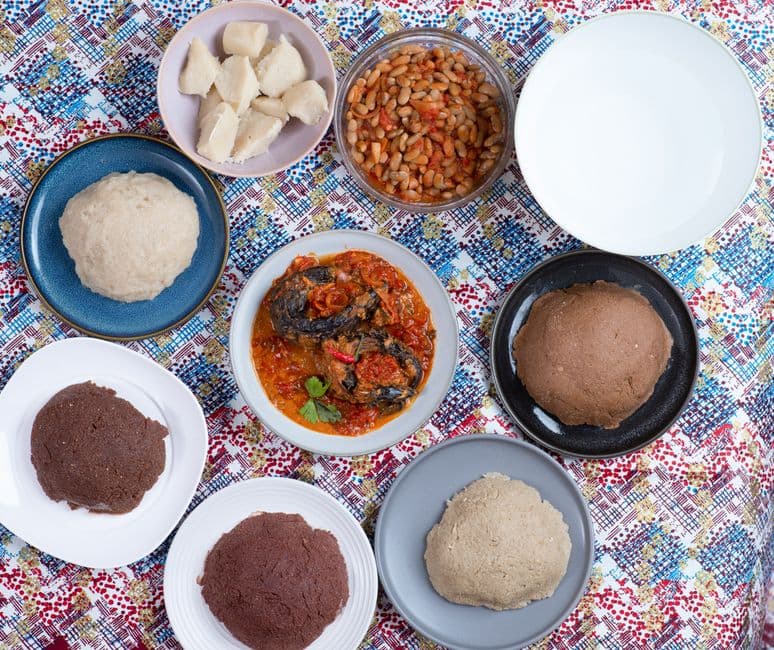
Ibiharage means 'beans' in Kirundi, and this red bean stew is one of the most important protein sources in Burundian cuisine. Burundi, a landlocked country with limited livestock resources, relies heavily on legumes, and ibiharage is eaten daily in most households, often served both at lunch and dinner alongside ugali or rice. The stew is seasoned simply but effectively — onion, garlic, tomatoes, and a touch of chilli — allowing the earthy richness of slow-cooked red beans to take centre stage. Beans are so central to Burundian identity that ibiharage is sometimes simply called 'the food of Burundi'.
Serves 6
Drain soaked beans and place in a large pot with fresh water. Bring to a boil and cook vigorously for 10 minutes, then reduce to a simmer and cook for 50–60 minutes until tender. Drain, reserving 500 ml of cooking liquid.
Heat oil in a large pot over medium heat. Cook onions until golden, about 6 minutes. Add garlic, cumin, paprika, and chilli; cook 1 minute.
Stir in tomatoes and cook for 5 minutes until broken down.
Add cooked beans and reserved cooking liquid. Season well with salt and pepper. Simmer for 20 minutes until the stew thickens and the flavours meld.
Mash a spoonful of beans against the pot side to naturally thicken the stew. Adjust seasoning.
Garnish with parsley and serve alongside ugali, rice, or fried plantain.
Everything you need to plan your week — free
Cook this hands-free
Get AI meal plans, step-by-step cooking mode, and your saved recipes in the free Bento app.
Adding salt only after beans are fully cooked prevents them from becoming tough.
Canned kidney beans can be used to save time — skip the boiling step and reduce simmer time to 20 minutes.
Mashing a small portion of the beans thickens the stew naturally without adding flour.
Taste and adjust salt at the very end — flavors concentrate as liquids reduce, and a final pinch of flaky salt sharpens the whole dish.
Ibiharage with coconut: stir in 100 ml coconut milk at the end for a richer, creamier stew.
Spiced ibiharage: add ground ginger and cinnamon for a North African-influenced version.
Vegetarian: swap the protein for roasted king oyster mushrooms, smoked tofu or cooked chickpeas — adjust seasoning slightly upward to compensate.
Spicier: add a finely chopped fresh chile or a teaspoon of crushed Aleppo/Urfa pepper to the aromatics for warm, layered heat instead of a single sharp hit.
Keeps refrigerated for 5 days. Freezes excellently for up to 3 months. Beans absorb more liquid over time — add water when reheating.
Red beans have been cultivated in the Great Lakes region for centuries and are believed to have arrived in Central Africa via Arab and Portuguese trade routes from the Americas in the 16th century. They rapidly became so central to Burundian subsistence farming that they are now considered an indigenous cultural staple.
Soaking dramatically reduces cooking time and improves digestibility. If you forget, use the quick-soak method: boil for 5 minutes, remove from heat, soak for 1 hour, then drain and cook.
Yes — black beans work well and give the stew a slightly richer flavour, though they will turn the liquid a darker purple-black colour.
Yes — most of the components can be prepared up to a day in advance and refrigerated separately. Reheat gently and assemble just before serving so textures stay distinct.
Stay close to the role each ingredient plays: swap aromatics for similar ones (shallot for onion, lime for lemon), and keep the fat-acid-salt balance intact. Spice blends can usually be approximated with what's in the cupboard.
Per serving (320g / 11.3 oz) · 6 servings total
Ask our AI cooking assistant anything about this recipe — substitutions, techniques, scaling.
Chat with AI Chef →Join the conversation
Sign in to leave a comment and save your favourite recipes
Everything you need to plan your week — free
Have feedback or need help?
We read every email and reply within 1–2 business days.
© 2026 MyCookingCalendar. All rights reserved.