
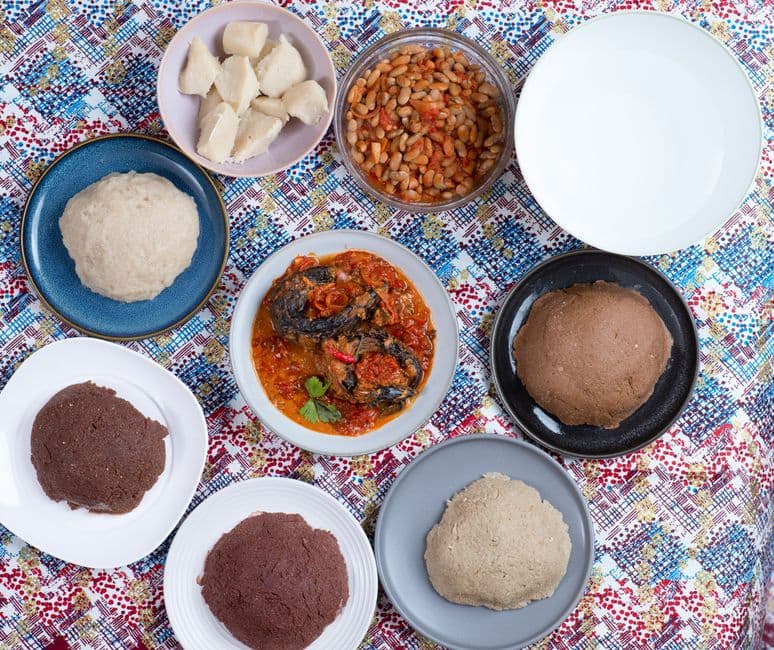
Mizuzu
Crispy golden fried plantain fingers — Burundi's favourite street snack eaten plain, with beans, or alongside grilled meats.
About This Recipe
Mizuzu are deep-fried plantain pieces that appear throughout Central and East Africa under various names. In Burundi, mizuzu made from semi-ripe plantains are a ubiquitous street food and side dish, strikingly similar to the Latin American tostones. The key to exceptional mizuzu is selecting plantains at the right ripeness: the skin should be mostly yellow with a few black spots, giving a balance of starch and sweetness. Fried until deeply golden and crispy on the outside with a dense, creamy interior, mizuzu are eaten at any time of day alongside ibiharage, grilled meats, or simply dipped in chilli sauce. The smell of frying mizuzu is the sensory signature of Burundian markets.
Ingredients
Serves 4
- 4semi-ripe plantains (yellow with some black spots), peeled
- Vegetable oilfor deep frying (at least 1 litre)
- 1 tspsalt
- 0.5 tspchilli powder (optional)
Instructions
- 1
Slice plantains
Cut plantains diagonally into rounds about 2 cm thick, or into 5 cm long fingers.
- 2
Heat oil
Pour oil into a deep saucepan or wok to a depth of at least 5 cm. Heat to 175°C.
- 3
First fry
Fry plantain pieces in batches for 3–4 minutes until pale golden. Remove and drain on paper towels.
- 4
Flatten (optional)
For a crispier result similar to tostones, press each piece flat with the back of a plate or mallet.
- 5
Second fry
Return flattened pieces to the oil and fry for a further 2–3 minutes until deeply golden and crispy on the outside.
- 6
Season and serve
Drain on paper towels, sprinkle with salt (and chilli powder if using). Serve immediately.
Did you make this?
Rate it and help other cooks find the recipes that actually work.
One tap to sign in, and we'll save the rating you just picked.
Everything you need to plan your week — free
- Meal calendar
- Grocery list
- AI recipe ideas
Track what you eat
Snap your meal to log calories and macros, run fasting timers and track water in the free SnapCal app.
Pro Tips
- →
Do not use fully ripe black plantains — they will be too sweet and soft for frying.
- →
Maintaining consistent oil temperature prevents greasy mizuzu.
- →
The double-fry method gives the crispiest exterior while keeping the interior creamy.
- →
Taste and adjust salt at the very end — flavors concentrate as liquids reduce, and a final pinch of flaky salt sharpens the whole dish.
Variations
- •
Sweet mizuzu: use fully ripe plantains and serve with honey and cinnamon.
- •
Baked mizuzu: brush with oil and bake at 200°C for 25 minutes, turning once, for a lower-fat version.
- •
Vegetarian: swap the protein for roasted king oyster mushrooms, smoked tofu or cooked chickpeas — adjust seasoning slightly upward to compensate.
- •
Spicier: add a finely chopped fresh chile or a teaspoon of crushed Aleppo/Urfa pepper to the aromatics for warm, layered heat instead of a single sharp hit.
Storage
Best eaten fresh. Can be kept warm in a low oven for 30 minutes, but mizuzu lose their crispiness quickly.
History & Origin
Plantains were introduced to East Africa from Asia via Arab trade routes more than a thousand years ago and rapidly became a staple crop across the Great Lakes region. In Burundi, banana and plantain cultivation is so extensive that both fresh and cooked forms feature prominently in daily nutrition and cultural celebrations.
Frequently Asked Questions
What is the difference between a plantain and a banana?
Plantains are larger, starchier, and lower in sugar than dessert bananas. They must be cooked before eating and are used as a vegetable at various stages of ripeness.
Can I make mizuzu in an air fryer?
Yes — brush with oil and air fry at 200°C for 15–18 minutes, turning halfway. The result is less crispy but still delicious.
Can I make this ahead of time?
Yes — most of the components can be prepared up to a day in advance and refrigerated separately. Reheat gently and assemble just before serving so textures stay distinct.
What can I substitute if I don't have all the ingredients?
Stay close to the role each ingredient plays: swap aromatics for similar ones (shallot for onion, lime for lemon), and keep the fat-acid-salt balance intact. Spice blends can usually be approximated with what's in the cupboard.
Nutrition Facts
Per serving (150g / 5.3 oz) · 4 servings total
Time Summary
Have Questions?
Ask our AI cooking assistant anything about this recipe — substitutions, techniques, scaling.
Chat with AI Chef →More Burundian Recipes
You Might Also Like
Similar dishes from other cuisines around the world.
Free Kitchen Tools
Calculators and converters that pair with this page — no signup needed.
Put This Into a Plan
Schedule it, shop for it, and track what you already have.
Read Next
Longer reads that go deeper on the ideas behind this dish.
Community
Join the conversation
Sign in to leave a comment and save your favourite recipes