
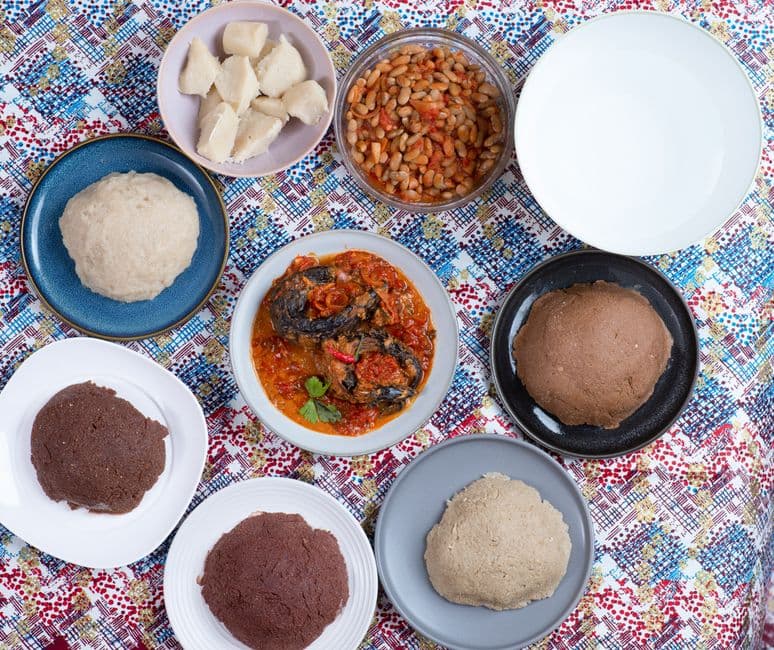
Ugali wa Mahindi
Burundi's firm maize flour porridge — the daily staple eaten at every meal, scooped and dipped into accompanying stews.
About This Recipe
Ugali wa mahindi is the Burundian name for the thick maize porridge that serves as the fundamental starchy base of Burundian cuisine. Made simply from finely ground maize flour and water, ugali in Burundi is always eaten communally — the pot placed at the centre of the table, each person tearing off a piece, rolling it, and using it to scoop up accompaniments. The preparation requires both skill and strength, as the thickening porridge demands continuous and vigorous stirring. In Burundian culture, the ability to prepare smooth ugali is considered a mark of domestic competence.
Ingredients
Serves 4
- 400 gwhite maize flour
- 1 litrewater
- 1 tspsalt
Instructions
- 1
Boil water
Bring salted water to a full boil in a heavy pot over high heat.
- 2
Introduce the flour
Gradually pour in maize flour while stirring constantly with a strong wooden spoon to avoid lumps forming.
- 3
Stir and cook
Reduce heat to medium-low. Stir vigorously for 20–25 minutes, scraping the bottom, until the ugali is very stiff and pulls cleanly away from the pot sides.
- 4
Shape and rest
Using a wetted wooden spoon, shape the ugali into a smooth dome in the centre of the pot. Cover and rest for 3–5 minutes.
- 5
Serve
Invert or scoop onto a serving plate. Serve immediately alongside bean stew, isombe, or grilled meat.
Did you make this?
Rate it and help other cooks find the recipes that actually work.
One tap to sign in, and we'll save the rating you just picked.
Everything you need to plan your week — free
- Meal calendar
- Grocery list
- AI recipe ideas
Track what you eat
Snap your meal to log calories and macros, run fasting timers and track water in the free SnapCal app.
Pro Tips
- →
The stirring arm gets a workout — switch hands if needed.
- →
A smooth-bottomed heavy pot prevents burning at the base.
- →
Adding a tablespoon of butter when finishing gives a richer taste.
- →
Taste and adjust salt at the very end — flavors concentrate as liquids reduce, and a final pinch of flaky salt sharpens the whole dish.
Variations
- •
Ugali wa mtama: substitute sorghum flour for a nuttier, more mineral-rich version.
- •
Ugali wa muhogo: use cassava flour for a denser, slightly stickier porridge.
- •
Vegetarian: swap the protein for roasted king oyster mushrooms, smoked tofu or cooked chickpeas — adjust seasoning slightly upward to compensate.
- •
Spicier: add a finely chopped fresh chile or a teaspoon of crushed Aleppo/Urfa pepper to the aromatics for warm, layered heat instead of a single sharp hit.
Storage
Best eaten immediately. Leftover ugali can be sliced and pan-fried or grilled the next day.
History & Origin
Maize became the dominant crop in Burundi during the colonial era of the late 19th century, displacing sorghum and millet as the primary starch. Today ugali wa mahindi is eaten daily by the vast majority of Burundians and is considered the cultural centrepiece of Burundian cuisine.
Frequently Asked Questions
How thick should ugali be?
Very thick — thicker than mashed potato. It should hold its shape when scooped and not slump.
Can I use yellow maize flour?
White maize flour is traditional in Burundi, but yellow will work and gives a slightly sweeter flavour.
Can I make this ahead of time?
Yes — most of the components can be prepared up to a day in advance and refrigerated separately. Reheat gently and assemble just before serving so textures stay distinct.
What can I substitute if I don't have all the ingredients?
Stay close to the role each ingredient plays: swap aromatics for similar ones (shallot for onion, lime for lemon), and keep the fat-acid-salt balance intact. Spice blends can usually be approximated with what's in the cupboard.
Nutrition Facts
Per serving (300g / 10.6 oz) · 4 servings total
Time Summary
Have Questions?
Ask our AI cooking assistant anything about this recipe — substitutions, techniques, scaling.
Chat with AI Chef →Featured in Guides
This recipe is featured in the following curated guides:
More Burundian Recipes
You Might Also Like
Similar dishes from other cuisines around the world.
Free Kitchen Tools
Calculators and converters that pair with this page — no signup needed.
Put This Into a Plan
Schedule it, shop for it, and track what you already have.
Read Next
Longer reads that go deeper on the ideas behind this dish.
Community
Join the conversation
Sign in to leave a comment and save your favourite recipes