
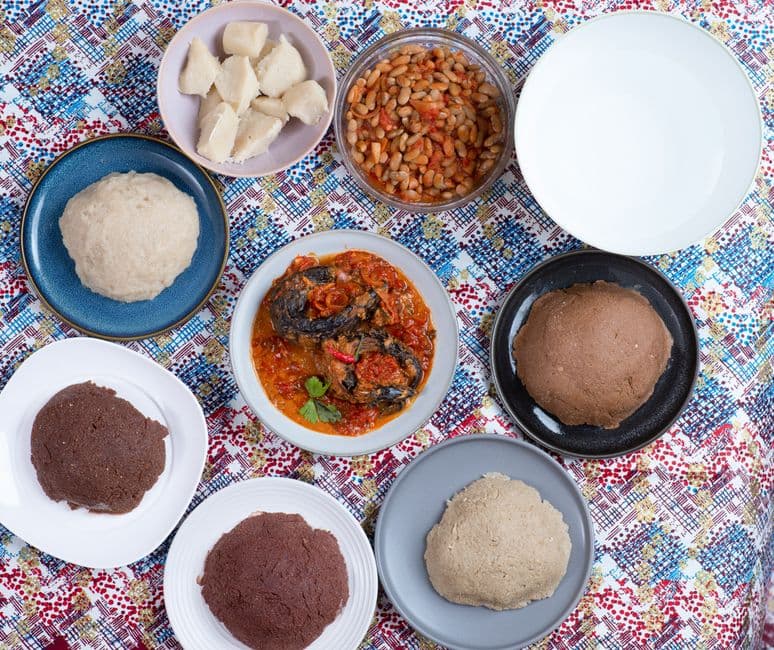
Isombe
A deeply flavourful Burundian dish of slow-cooked cassava leaves with peanuts, palm oil, and aromatic spices.
About This Recipe
Isombe is one of the most celebrated dishes in Burundian cuisine, made from cassava leaves that are pounded, boiled, and then simmered in a rich sauce of ground peanuts, palm oil, and aromatics. The cassava leaves undergo a transformation during cooking — their bitterness and toxicity are removed through extended boiling, leaving a silky, deep green sauce with an earthy complexity that is unique. Isombe is eaten throughout the Great Lakes region of central Africa, where cassava is a dual-purpose crop providing both starchy roots and protein-rich leaves. In Burundi it is a dish of cultural pride, often served at celebrations.
Ingredients
Serves 4
- 500 gfresh or frozen cassava leaves, finely chopped (or 200 g dried)
- 150 gnatural peanut butter
- 3 tbspred palm oil
- 1large onion, finely diced
- 4 clovesgarlic, minced
- 1green chilli, chopped
- 400 mlwater or vegetable stock
- 1 tspsalt
- 0.5 tspblack pepper
Instructions
- 1
Pre-cook cassava leaves
If using fresh leaves, boil in a large pot of unsalted water for 45 minutes, changing the water twice to remove bitterness. If using frozen, thaw and squeeze out excess liquid. Drain well and roughly chop.
- 2
Sauté aromatics
Heat palm oil in a large pot over medium heat. Fry onion for 5 minutes until softened. Add garlic and chilli, cook 1 minute.
- 3
Add cassava leaves
Stir in the pre-cooked cassava leaves and cook for 5 minutes, stirring frequently.
- 4
Add peanut butter sauce
Whisk peanut butter into the water or stock until smooth. Pour over the leaves and stir to combine.
- 5
Simmer until thick
Simmer on low heat for 20–30 minutes, stirring occasionally, until the sauce is thick, creamy, and fully flavoured. Season with salt and pepper.
- 6
Serve
Serve hot with ugali, rice, or fried plantain.
Did you make this?
Rate it and help other cooks find the recipes that actually work.
One tap to sign in, and we'll save the rating you just picked.
Everything you need to plan your week — free
- Meal calendar
- Grocery list
- AI recipe ideas
Track what you eat
Snap your meal to log calories and macros, run fasting timers and track water in the free SnapCal app.
Pro Tips
- →
Changing the water while pre-cooking fresh cassava leaves is essential — it removes harmful cyanogenic compounds.
- →
Frozen cassava leaves are widely available in African grocery stores and eliminate the pre-boiling step.
- →
Red palm oil gives isombe its characteristic golden-orange hue — do not substitute with regular oil.
- →
Taste and adjust salt at the very end — flavors concentrate as liquids reduce, and a final pinch of flaky salt sharpens the whole dish.
Variations
- •
Isombe with smoked fish: add flaked smoked fish in the last 10 minutes of cooking.
- •
Isombe with coconut milk: replace stock with coconut milk for a creamier, milder version.
- •
Vegetarian: swap the protein for roasted king oyster mushrooms, smoked tofu or cooked chickpeas — adjust seasoning slightly upward to compensate.
- •
Spicier: add a finely chopped fresh chile or a teaspoon of crushed Aleppo/Urfa pepper to the aromatics for warm, layered heat instead of a single sharp hit.
Storage
Refrigerate for up to 4 days. The flavours deepen overnight making it even better the next day. Freezes well for 1 month.
History & Origin
Isombe is believed to have been part of Burundian and Rwandan cuisine for several centuries, predating the introduction of cassava to the region. Similar dishes appear across the Great Lakes region from DR Congo to Tanzania, reflecting shared culinary heritage among Bantu-speaking communities.
Frequently Asked Questions
Are cassava leaves safe to eat?
Yes, once properly prepared. Fresh cassava leaves must be boiled with water changes to remove cyanogenic glycosides. Commercially frozen and dried leaves have been pre-processed and are safe to use directly.
What can I substitute for red palm oil?
Coconut oil with a pinch of turmeric for colour is the closest substitute, though the flavour will differ.
Can I make this ahead of time?
Yes — most of the components can be prepared up to a day in advance and refrigerated separately. Reheat gently and assemble just before serving so textures stay distinct.
What can I substitute if I don't have all the ingredients?
Stay close to the role each ingredient plays: swap aromatics for similar ones (shallot for onion, lime for lemon), and keep the fat-acid-salt balance intact. Spice blends can usually be approximated with what's in the cupboard.
Nutrition Facts
Per serving (280g / 9.9 oz) · 4 servings total
Time Summary
Have Questions?
Ask our AI cooking assistant anything about this recipe — substitutions, techniques, scaling.
Chat with AI Chef →Featured in Guides
This recipe is featured in the following curated guides:
More Burundian Recipes
You Might Also Like
Similar dishes from other cuisines around the world.
Free Kitchen Tools
Calculators and converters that pair with this page — no signup needed.
Put This Into a Plan
Schedule it, shop for it, and track what you already have.
Read Next
Longer reads that go deeper on the ideas behind this dish.
Community
Join the conversation
Sign in to leave a comment and save your favourite recipes