
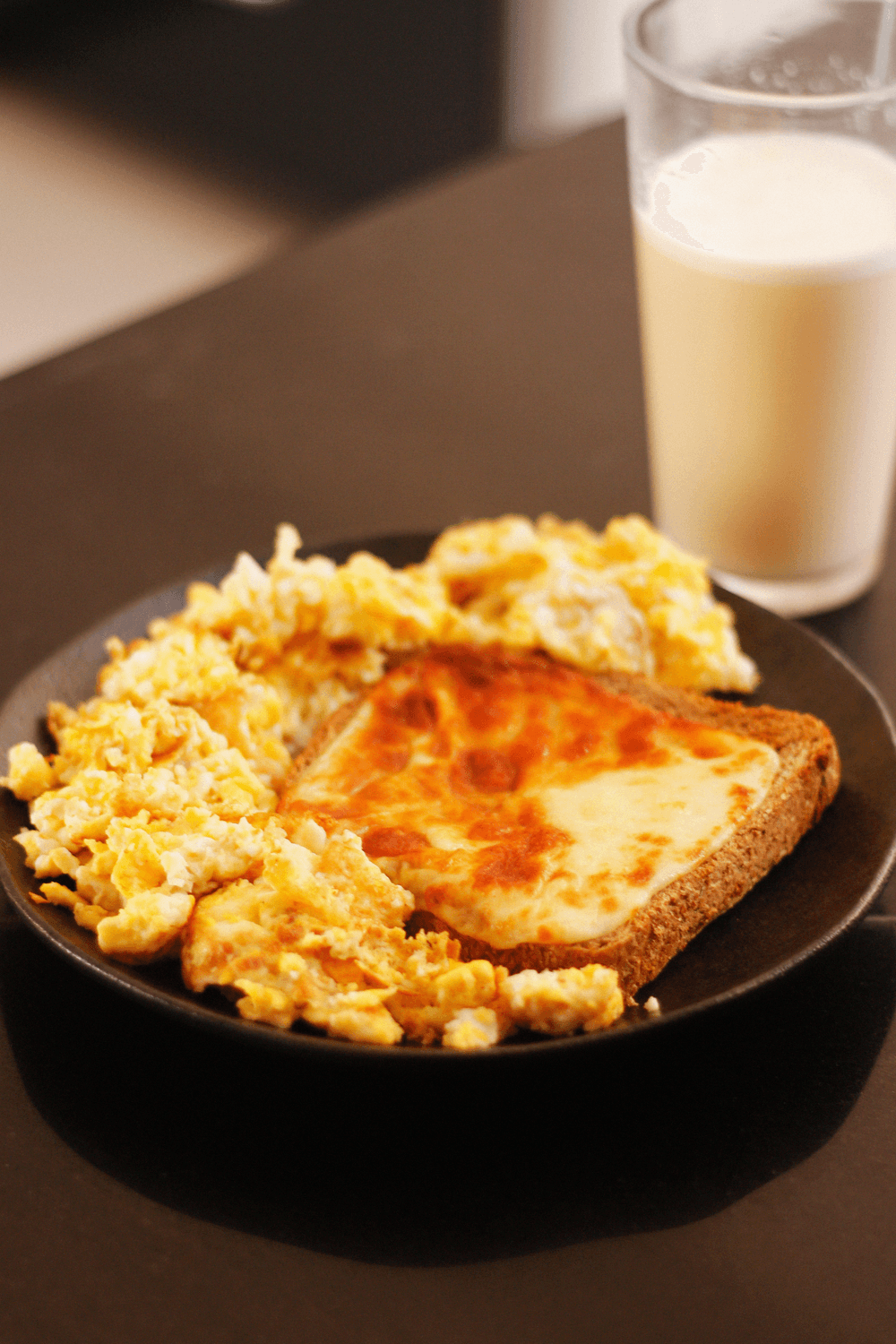
Cottage Cheese Rührwi
Extra-cremige Rührweißwir mit hochwertigem Cottage Cheese.
Über dieses Rezept
Cottage Cheese ist die geheime Waffe für die cremigsten, proteinreichsten Rühreier, die Sie je essen werden. Die Quark schmilzt in die Eier, während sie kochen, und erzeugt weiche, flaumige Falten mit einer unglaublich seidigen Textur und fast doppelt so viel Protein wie normale Rührweißwir. Mit Vollkorntoast und Avocado serviert, ist es das ultimative schnelle Fitness-Frühstück.
Zutaten
Dient 2
- 5 großeEier
- 120 gCottage Cheese
- 1 ELButter
- 2 ScheibenVollkorntoast
- 1 kleineAvocado, geschnitten
- 1 PriseSalz und schwarzer Pfeffer
- 1 ELfrische Schnittlauch, geschnitten
Anleitung
- 1
Eier und Cottage Cheese verquirlen
Eier in eine Schüssel krachen, Cottage Cheese, Salz und Pfeffer hinzufügen. Verquirlen, bis gerade verbunden — ein paar Cottage Cheese Lumpen sind in Ordnung und schmilzen beim Kochen.
- 2
Langsam kochen
Butter in einer Antihaft-Pfanne bei niedriger Hitze schmelzen. Ei-Mischung gießen und langsam mit einer Wendespachtel umrühren, große Quark-Flocken von den Rändern zur Mitte drücken.
- 3
Früh von der Hitze entfernen
Wenn die Eier noch leicht nass und glänzend sind (etwa 4-5 Minuten), die Pfanne von der Hitze entfernen. Die Restwärme beendet das Kochen zu einer weichen, cremigen Konsistenz.
- 4
Servieren
Rühreier auf Vollkorntoast löffeln. Mit geschnittener Avocado und frischer Schnittlauch toppen.
Hast du das gekocht?
Bewerte es und hilf anderen, die Rezepte zu finden, die wirklich funktionieren.
Einmal anmelden, und wir speichern die Bewertung, die du gerade gewählt hast.
Alles, was du für deine Wochenplanung brauchst — kostenlos
- Essensplaner
- Einkaufsliste
- KI-Rezeptideen
Freihändig kochen
Hol dir KI-Essenspläne, einen Schritt-für-Schritt-Kochmodus und deine gespeicherten Rezepte in der kostenlosen Bento-App.
Profi-Tipps
- →
Niedrige Hitze ist wichtig — hohe Hitze macht Cottage Cheese körnig.
- →
Von der Hitze entfernen, während die Eier noch leicht undergar aussehen.
- →
Salz und Würze am Ende probieren und anpassen — Aromen konzentrieren sich, während Flüssigkeiten verdampfen, und ein letzter Hauch Flockensalz schärft das ganze Gericht.
- →
Mise en place zahlt sich selbst aus: alles vor Hitze hacken, messen und vor-mischen, besonders für jeden schnellen Schritt.
Variationen
- •
Geräucherten Lachs und Dill für ein luxuriöses Upgrade hinzufügen.
- •
Sonnengetrocknete Tomaten und Basilikum für eine Mittelmeer-Wendung mischen.
- •
Vegetarisch: Protein durch gebratene Kräuterseitlinge, geräucherten Tofu oder gekochte Kichererbsen ersetzen — Würzung leicht erhöhen, um auszugleichen.
- •
Würziger: Gehackte frische Chili oder einen Teelöffel gequetschte Aleppo/Urfa-Pfeffer zu den Aromaten hinzufügen für wärmte, geschichtete Schärfe statt eines einzelnen scharfen Treffers.
Lagerung
Am besten sofort gegessen. Rühreier speichern oder reheizen nicht gut.
Geschichte und Herkunft
Cottage Cheese Rühreier ist ein beliebter Standard amerikanischer Küchen, verfeinert durch Generationen von Komfortessen-Köchen. Regionale Variationen sind eher die Regel als die Ausnahme — benachbarte Dörfer, Familien und sogar einzelne Köche passen das Gericht an das an, was in der Speisekammer und in der Saison vorhanden ist, weshalb keine zwei Versionen genau gleich schmecken und warum das Rezept so lange lebendig geblieben ist.
Häufig gestellte Fragen
Kann ich das voraus machen?
Ja — die meisten Komponenten können bis zu einen Tag im Voraus zubereitet und separat gekühlt werden. Sanft erneut erwärmen und direkt vor dem Servieren zusammenstellen, damit die Texturen erhalten bleiben.
Was kann ich ersetzen, wenn ich nicht alle Zutaten habe?
Bleiben Sie nah an der Rolle, die jede Zutat spielt: ersetzen Sie Aromaten durch ähnliche (Schalotte durch Zwiebel, Limette durch Zitrone) und halten Sie das Fett-Säure-Salz-Gleichgewicht intakt. Gewürzmischungen können normalerweise mit dem angenähert werden, was im Schrank vorhanden ist.
Wie weiß ich, ob es authentisch ist?
Authentizität liegt auf einem Spektrum — was mehr zählt, ist die Einhaltung der Technik und des Aromatengleichgewichts. Wenn das Gericht harmonisch schmeckt und respektiert, wie Köche in seiner Heimatregion es bauen würden, befinden Sie sich auf solidem Grund.
Warum ist meine Version nicht wie erwartet ausgefallen?
Die zwei häufigsten Probleme sind Unter-Würzung und Eile bei der Hitze. Probieren Sie während Sie gehen, würzen Sie in Schichten und geben Sie Aromaten und Proteinen die Zeit, die sie brauchen, um Farbe und Tiefe zu entwickeln, bevor Sie weitermachen.
Nährwertangaben
Pro Portion (250g) · 2 Portionen insgesamt
Zeitzusammenfassung
Haben Sie Fragen?
Fragen Sie unseren KI-Kochassistenten zu diesem Rezept – Ersetzungen, Techniken, Skalierung.
Chatten Sie mit AI Chef →In Reiseführern vorgestellt
Dieses Rezept ist in den folgenden kuratierten Leitfäden enthalten:
Weitere Amerikanische Rezepte
Das könnte dir auch gefallen
Ähnliche Gerichte aus anderen Küchen der Welt.
Nach Zutat stöbern
Weitere Rezepte rund um dieselben Hauptzutaten.
Kostenlose Küchen-Tools
Rechner und Umrechner, die zu dieser Seite passen — ohne Anmeldung.
Daraus einen Plan machen
Einplanen, einkaufen und im Blick behalten, was schon da ist.
Weiterlesen
Ausführliche Artikel zu den Ideen hinter diesem Gericht.
Gemeinschaft
Beteiligen Sie sich an der Unterhaltung
Melden Sie sich an, um einen Kommentar zu hinterlassen und Ihre Lieblingsrezepte zu speichern