
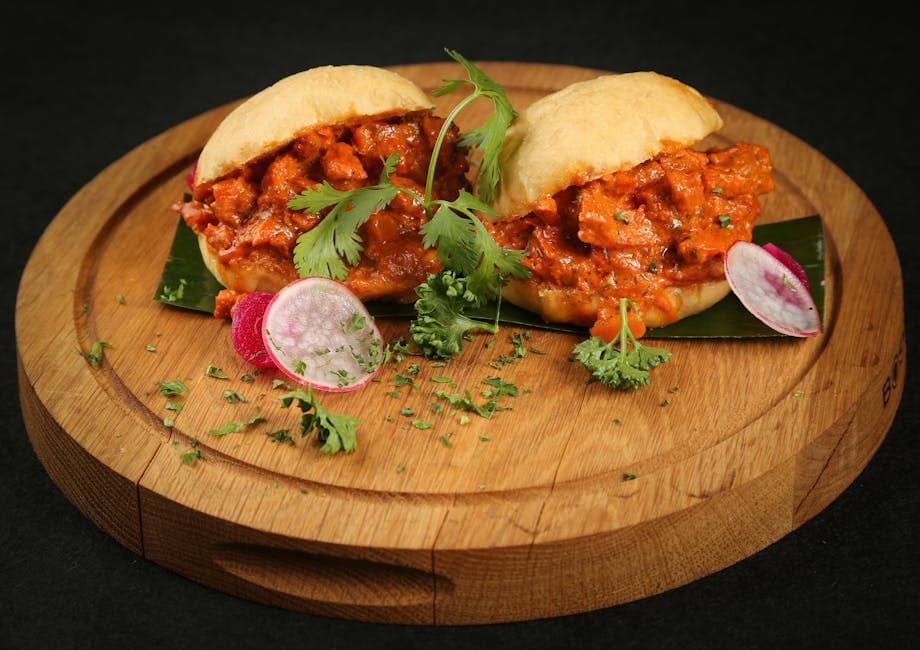
Bunny Chow (Durban Curry in a Bread Loaf)
Durban's iconic street food: a hollowed-out white bread loaf filled with spicy lamb or bean curry. Eaten with hands, never cutlery.
About This Recipe
Bunny chow — or just 'a bunny' to locals — is the signature street food of Durban, South Africa, and one of the world's great fusion inventions. Half a loaf of white bread is hollowed out, the soft interior 'virgin' kept aside, and the cavity filled to overflowing with a spicy Durban-style lamb, mutton, or sugar-bean curry. You eat it standing, tearing chunks of the soaked, gravy-stained bread to scoop up the curry, finishing with the virgin bread plug at the end. The curry itself is unmistakably Durban Indian: thick, oily, fiery with chili, redolent of garam masala and curry leaves, with potatoes that have collapsed into the gravy. It is one of the most satisfying meals you can eat with two hands and zero ceremony.
Ingredients
Serves 4
- 800 glamb shoulder or mutton, cubed
- 3 tbspneutral oil
- 2 largeonions, finely sliced
- 5 clovesgarlic, minced
- 1 thumbginger, minced
- 3fresh green chilies, slit
- 2cinnamon sticks
- 4cardamom pods, bruised
- 1star anise
- 2 tbspDurban masala (or hot curry powder)
- 1 tspground turmeric
- 1 tspground cumin
- 1 tspground coriander
- 3 tbsptomato paste
- 4ripe tomatoes, grated
- 500 gwaxy potatoes, peeled and quartered
- 1 sprigfresh curry leaves
- 500 mlwater
- 2 tspsalt
- 2 tbspfresh cilantro, chopped
- 2 loavessoft white sandwich bread, unsliced
Instructions
- 1
Brown lamb
Heat oil in a heavy pot. Sear lamb in batches until well browned, 4 minutes per batch. Remove.
- 2
Bloom aromatics
Lower heat. Cook onions 10 minutes until deep golden — this depth is what makes a great Durban curry. Add garlic, ginger, chilies, cinnamon, cardamom, and star anise; cook 2 minutes.
- 3
Toast spices
Add masala, turmeric, cumin, and coriander. Stir for 90 seconds until intensely fragrant and the oil separates orange around the edge.
If your masala doesn't darken the oil, your curry will taste raw — keep it moving for a full minute and a half.
- 4
Build base
Stir in tomato paste; fry 2 minutes. Add grated tomato; cook 6–8 minutes until thick and jammy and the oil pools at the edges again.
- 5
Stew
Return lamb. Add curry leaves, water, salt. Bring to a simmer, cover, cook 60 minutes.
- 6
Add potatoes
Stir in potatoes. Simmer uncovered 25–30 minutes until potatoes are tender and the curry is thick, oily, and clings to the meat.
- 7
Prep bread
Cut each loaf in half. Hollow out each half, leaving a 2 cm wall. Reserve the bread plug ('virgin').
- 8
Fill
Spoon hot curry into each bread cavity, slightly overfilling. Place the virgin plug on top or alongside.
- 9
Eat with hands
Tear the virgin into pieces to scoop curry. Eat the gravy-stained walls last as the curry has soaked them deeply. No fork allowed.
Did you make this?
Rate it and help other cooks find the recipes that actually work.
One tap to sign in, and we'll save the rating you just picked.
Everything you need to plan your week — free
- Meal calendar
- Grocery list
- AI recipe ideas
Cook this hands-free
Get AI meal plans, step-by-step cooking mode, and your saved recipes in the free Bento app.
Pro Tips
- →
Use a sturdy, soft white sandwich loaf — artisan crusty breads don't soak the gravy properly and are too hard to tear by hand.
- →
Durban masala (Pakco or Mother-in-Law brand) is the proper spice mix. Madras curry powder is the closest UK/US substitute; reduce by 25% as it's hotter.
- →
The curry must be thick enough to stand a spoon up in — soupy curry leaks out and ruins the loaf. Reduce uncovered if needed.
Variations
- •
Bean bunny: substitute sugar beans or red kidney beans for lamb — equally traditional and entirely vegetarian.
- •
Chicken bunny: use bone-in chicken thighs; reduce simmer to 35 minutes.
- •
Half-bunny vs. quarter: a 'quarter' is a smaller loaf portion for one person; a 'half' (used here) feeds two hungry or one ravenous.
Storage
Make curry up to 3 days ahead — it improves. Only assemble the bunny when ready to eat or the bread turns to mush. Refrigerate filled bunnies no more than 2 hours.
History & Origin
Bunny chow originated in Durban's Indian community in the 1940s, when laborers needed a portable lunch that could be eaten with hands. The 'bunny' name comes from the banias (Indian merchants) who first sold them, not from the animal.
Frequently Asked Questions
Why is it called a bunny?
The name comes from 'bania', a term for Indian merchants in colonial Durban, who first sold curry-stuffed bread to laborers in the 1940s. It has nothing to do with rabbits.
What is Durban masala?
Durban masala is a chili-forward South African Indian spice blend, drier and hotter than typical garam masala, with paprika, cayenne, cumin, coriander, fennel, and turmeric. Pakco brand is the standard.
Can I eat bunny chow with a fork?
You can, but Durbanites consider it heresy. The whole point is the eating ritual: tear the bread plug, scoop, and end by eating the gravy-soaked walls. Cutlery removes the soul.
What's the difference between bunny chow and kothu paratha?
Bunny chow is curry inside a hollowed bread loaf; kothu paratha is chopped flatbread stir-fried with curry. Different formats, similar Tamil-diaspora heritage.
Nutrition Facts
Per serving (540g / 19.0 oz) · 4 servings total
Time Summary
Have Questions?
Ask our AI cooking assistant anything about this recipe — substitutions, techniques, scaling.
Chat with AI Chef →Featured in Guides
This recipe is featured in the following curated guides:
More South-african Recipes
You Might Also Like
Similar dishes from other cuisines around the world.
Free Kitchen Tools
Calculators and converters that pair with this page — no signup needed.
Put This Into a Plan
Schedule it, shop for it, and track what you already have.
Read Next
Longer reads that go deeper on the ideas behind this dish.
Community
Join the conversation
Sign in to leave a comment and save your favourite recipes