
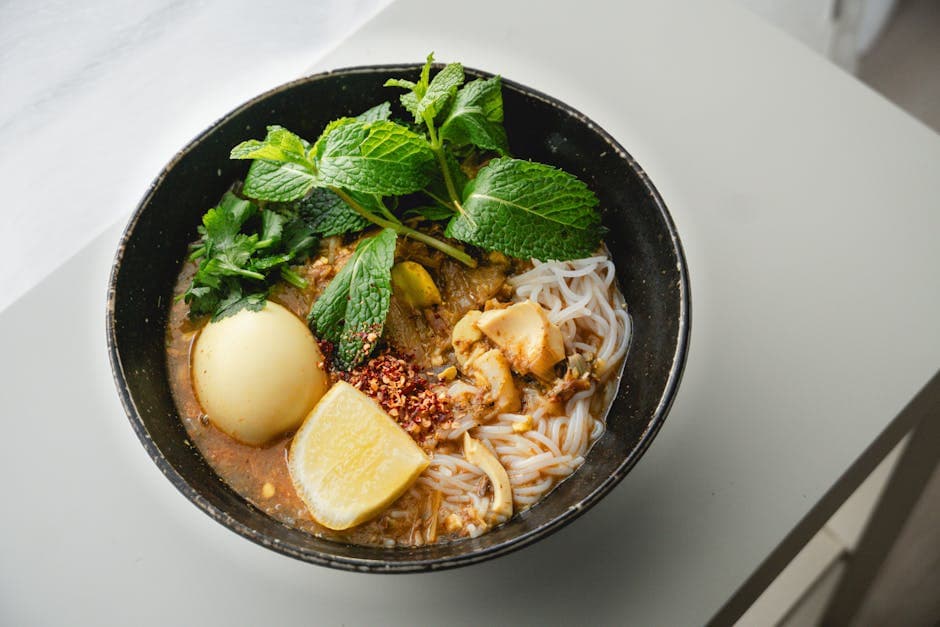
Mohinga (Burmese Fish Noodle Soup)
Myanmar's national dish — a fragrant catfish broth thickened with toasted chickpea flour and banana stem, ladled over thin rice noodles and topped with crispy fritters, egg and lime.
About This Recipe
Mohinga is what Burma eats for breakfast. Across Yangon and Mandalay, vendors push wooden carts before dawn with steaming cauldrons of fish broth on charcoal braziers, ladling bowls for laborers, students and office workers as the city wakes. The soup is built on whole freshwater catfish or carp simmered until the flesh flakes apart and the bones release their gelatin into the broth. That stock is then perfumed with lemongrass, ginger, garlic, shallot, turmeric and shrimp paste, thickened with toasted chickpea flour and traditionally finished with thin slices of tender banana stem for an unmistakable vegetal sweetness. Thin rice vermicelli cooks separately and goes into a deep bowl; the hot broth is ladled over and the eater takes charge of the garnishes — crispy split-pea fritters for crunch, a quartered hard-boiled egg, sliced raw shallot, fresh cilantro, dried chili flakes, fish sauce and a heroic squeeze of lime. The flavor is layered and a little funky, with a soft heat that builds as you eat. At a vendor stall it costs less than a dollar; made at home it is an hour of stovetop work that produces enough breakfast for a small army.
Ingredients
Serves 6
- 800 gwhole catfish, cleaned (or 600 g firm white fish fillets like basa or tilapia)
- 2lemongrass stalks, smashed
- 1 thumbginger, sliced
- 2 Lwater
- 5 tbspneutral oil
- 3shallots, finely chopped
- 6garlic cloves, minced
- 1 tbspground turmeric
- 1 tbspBurmese shrimp paste (ngapi) or Thai kapi
- 60 gchickpea flour (besan), toasted in a dry pan until tan and fragrant
- 3 tbspfish sauce
- 1 small cansliced banana stem in brine (optional but traditional) — or 1 cup thinly sliced inner banana blossom or hearts of palm
- 500 gthin rice vermicelli
- to serve: hard-boiled eggs (halved), split-pea fritters or crushed crackers, lime wedges, chili flakes, sliced raw shallot, cilantro
Instructions
- 1
Simmer the fish stock
Place the whole fish (or fillets), 1 smashed lemongrass and half the ginger in a large pot with the water. Bring to a gentle simmer and cook 25 minutes until the fish is fully cooked. Lift the fish out with a slotted spoon, leaving the broth on a low simmer.
- 2
Flake the fish
When cool enough to handle, pick all the flesh from the bones, discarding skin and bones. Flake into bite-sized pieces and set aside. Strain the broth and reserve.
- 3
Build the aromatic base
In a clean heavy pot, heat the oil over medium and fry the shallots, garlic, remaining ginger and the second lemongrass for 5 minutes until soft and golden. Stir in the turmeric and shrimp paste and fry 1 more minute until very fragrant.
- 4
Add the flaked fish
Add the flaked fish to the aromatics and stir to coat, mashing gently with the back of a spoon to break it into the paste. Cook 3 minutes — this concentrates flavor and tints everything deep yellow.
- 5
Thicken with chickpea flour
Whisk the toasted chickpea flour with 250 ml of the strained broth until smooth (no lumps). Pour into the pot along with the rest of the broth. Bring to a simmer, stirring constantly until the soup thickens to a light cream consistency — about 10 minutes.
Always toast chickpea flour first — raw besan tastes chalky.
- 6
Season and finish
Add the fish sauce and banana stem (if using). Simmer 10 more minutes. Taste and adjust — it should be savory, slightly tangy from the shrimp paste, with gentle heat to come from the table garnishes. Add water if it becomes too thick.
- 7
Cook the noodles
Boil the rice vermicelli per package directions (usually 3–4 minutes), drain and rinse with cold water. Divide among 6 deep bowls. Ladle generously with hot mohinga.
- 8
Garnish and serve
Top each bowl with half a hard-boiled egg, a crushed fritter or a few crackers, a scatter of cilantro and raw shallot, a pinch of chili flakes, and a big squeeze of lime. Serve immediately while the noodles are still hot.
Did you make this?
Rate it and help other cooks find the recipes that actually work.
One tap to sign in, and we'll save the rating you just picked.
Everything you need to plan your week — free
- Meal calendar
- Grocery list
- AI recipe ideas
Cook this hands-free
Get AI meal plans, step-by-step cooking mode, and your saved recipes in the free Bento app.
Pro Tips
- →
Catfish is traditional; any firm freshwater or mild ocean fish works. Avoid oily fish like mackerel — too strong.
- →
Toasted chickpea flour is the soul of the broth's texture. Toast in a dry pan over low heat 5–7 minutes, stirring, until it smells nutty.
- →
Burmese shrimp paste (ngapi) is funkier than Thai kapi but harder to find — both work. In a pinch, anchovy paste covers similar territory.
- →
Mohinga improves overnight. Make a day ahead and reheat gently with a splash of water.
Variations
- •
Vegetarian mohinga — use mushroom stock, omit fish, double the toasted chickpea flour and add roasted oyster mushrooms in place of the flaked fish.
- •
Spicier Mandalay-style — add a tablespoon of toasted dried chili flakes directly into the broth.
- •
With duck egg — replace chicken eggs with halved hard-boiled duck eggs for richer yolks (popular in delta regions).
- •
Coconut mohinga — stir in 200 ml coconut milk for a richer, sweeter Rakhine variant.
Storage
Soup keeps 3 days refrigerated, freezes 2 months. Always store noodles separately. Reheat the broth on the stovetop with a splash of water — microwaving can break the chickpea-flour thickening.
History & Origin
Mohinga predates colonial Burma and likely originated among the Bamar and Mon peoples of the Irrawaddy delta, where freshwater catfish were abundant. It was popularized as Yangon's signature breakfast in the late 19th century by women hawkers and was declared the unofficial national dish of Myanmar by the 1960s.
Frequently Asked Questions
Can I use canned fish?
Canned tuna or mackerel in water can work in a pinch — drain, flake and skip the stock step (use chicken or vegetable stock instead). Flavor will be less complex but acceptable.
Where do I find banana stem?
Asian markets sell it canned in brine (Vietnamese label 'bap chuoi'). Without it, mohinga is still delicious — banana stem is texture and subtle sweetness, not the main flavor.
Is the soup spicy?
The base broth is mild — savory and aromatic. Heat is added at the table via chili flakes so each eater can adjust.
Can I make the fritters at home?
Yes — soak yellow split peas overnight, drain, blend with garlic and turmeric into a coarse paste, drop spoonfuls into 180°C oil and fry until golden. Or simply crumble Indian papadums for a quick substitute.
Nutrition Facts
Per serving (540g / 19.0 oz) · 6 servings total
Time Summary
Have Questions?
Ask our AI cooking assistant anything about this recipe — substitutions, techniques, scaling.
Chat with AI Chef →Featured in Guides
This recipe is featured in the following curated guides:
More Burmese Recipes
You Might Also Like
Similar dishes from other cuisines around the world.
Free Kitchen Tools
Calculators and converters that pair with this page — no signup needed.
Put This Into a Plan
Schedule it, shop for it, and track what you already have.
Read Next
Longer reads that go deeper on the ideas behind this dish.
Community
Join the conversation
Sign in to leave a comment and save your favourite recipes