
Pupusas
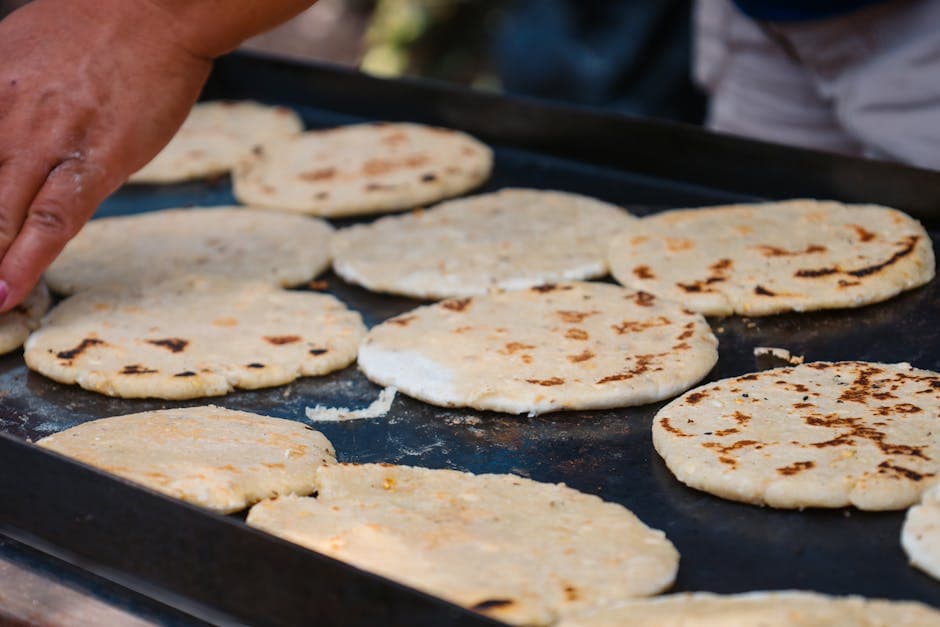
El Salvador's beloved stuffed corn cakes — thick masa discs filled with cheese, beans, or chicharrón, griddle-cooked and served with curtido and salsa.
About This Recipe
Pupusas are El Salvador's national dish and one of the most ancient foods in the Americas, with evidence of pupusa preparation dating to 2,000 years ago in the region now known as El Salvador. They are thick, handmade corn masa discs stuffed with fillings — the most popular being queso (cheese), frijoles refritos (refried beans), chicharrón (ground pork), or the classic revuelta (all three together). The masa is patted around the filling to encase it completely, then cooked on a comal (griddle) until both sides are golden and slightly charred. Pupusas are always served with curtido (a lightly fermented cabbage and carrot slaw) and a thin tomato salsa. El Salvador dedicated a national holiday to the pupusa — Pupusa Day — celebrated every second Sunday of November.
Ingredients
Serves 4
- 400 gmasa harina (instant corn dough flour)
- 350 mlwarm water(plus extra if needed)
- 1 tspsalt
- 200 gmozzarella or Oaxacan cheese(shredded)
- 150 grefried black or pinto beans
- 200 gwhite cabbage(finely shredded)
- 1 mediumcarrot(grated)
- ½ smallwhite onion(thinly sliced)
- 4 tbspwhite vinegar
- ½ tspdried oregano
- 200 gcanned crushed tomatoes(for salsa)
- 1 clovegarlic(for salsa)
Instructions
- 1
Make curtido (do first)
Toss cabbage, carrot, and onion with vinegar, oregano, and a pinch of salt. Mix well and leave to ferment at room temperature for at least 30 minutes (longer is better).
- 2
Make quick tomato salsa
Blend canned tomatoes with garlic and salt. Heat in a small pan for 5 minutes. Season and set aside.
- 3
Make masa dough
Mix masa harina, salt, and warm water until you have a soft, pliable dough that doesn't crack when pressed. Rest 5 minutes. Adjust water if too dry.
Test the masa by pressing a ball flat — if the edges crack, add more water a tablespoon at a time.
- 4
Fill and shape
Wet your palms slightly. Take a golf-ball sized piece of dough and flatten to a disc. Place 1–2 tbsp filling in the centre. Fold edges up and over to encase filling completely. Gently pat back into a flat disc about 1 cm thick. Seal any cracks.
- 5
Cook on the comal
Heat a dry griddle or heavy pan over medium-high heat. Cook pupusas 3–4 minutes per side until golden with dark spots and slightly puffed. The cheese should ooze at the edges.
- 6
Serve
Serve immediately with curtido piled on top and salsa spooned over.
Did you make this?
Rate it and help other cooks find the recipes that actually work.
One tap to sign in, and we'll save the rating you just picked.
Everything you need to plan your week — free
- Meal calendar
- Grocery list
- AI recipe ideas
Cook this hands-free
Get AI meal plans, step-by-step cooking mode, and your saved recipes in the free Bento app.
Pro Tips
- →
Wet hands prevent the masa from sticking — keep a bowl of water nearby.
- →
The filling should be completely enclosed — any gaps will cause the cheese to leak out during cooking.
- →
Pupusas are best eaten immediately; they firm up quickly as they cool.
- →
Taste and adjust salt at the very end — flavors concentrate as liquids reduce, and a final pinch of flaky salt sharpens the whole dish.
Variations
- •
Fill with loroco (a Salvadoran flower bud) and cheese for the most traditional version.
- •
Make sweet pupusas with sweetened black beans and a drizzle of crema.
- •
Use blue masa harina for a dramatic purple-black colour.
- •
Vegetarian: swap the protein for roasted king oyster mushrooms, smoked tofu or cooked chickpeas — adjust seasoning slightly upward to compensate.
Storage
Best eaten immediately. Leftover pupusas can be reheated on a dry pan for 2 minutes per side.
History & Origin
Pupusas have been made by the Pipil people of what is now El Salvador for at least 2,000 years, making them one of the oldest documented foods in the Americas. Spanish colonisers documented them in the 1500s. Unlike many indigenous dishes that were marginalised after conquest, pupusas remained central to Salvadoran daily life. In 2005, El Salvador proclaimed the pupusa its national dish and established Pupusa Day.
Frequently Asked Questions
What is masa harina?
Masa harina is dried corn dough flour made from nixtamalised (alkali-treated) corn. It is the foundation of tortillas, tamales, and pupusas across Latin America. Maseca is the most widely available brand.
What is loroco?
Loroco (Fernaldia pandurata) is an edible flower bud native to Central America with a unique earthy, slightly nutty flavour. It is one of the most traditional pupusa fillings. Available frozen at Salvadoran grocery stores.
Can I make this ahead of time?
Yes — most of the components can be prepared up to a day in advance and refrigerated separately. Reheat gently and assemble just before serving so textures stay distinct.
What can I substitute if I don't have all the ingredients?
Stay close to the role each ingredient plays: swap aromatics for similar ones (shallot for onion, lime for lemon), and keep the fat-acid-salt balance intact. Spice blends can usually be approximated with what's in the cupboard.
Nutrition Facts
Per serving · 4 servings total
Time Summary
Have Questions?
Ask our AI cooking assistant anything about this recipe — substitutions, techniques, scaling.
Chat with AI Chef →Featured in Guides
This recipe is featured in the following curated guides:
More Salvadoran Recipes
You Might Also Like
Similar dishes from other cuisines around the world.
Free Kitchen Tools
Calculators and converters that pair with this page — no signup needed.
Put This Into a Plan
Schedule it, shop for it, and track what you already have.
Read Next
Longer reads that go deeper on the ideas behind this dish.
Community
Join the conversation
Sign in to leave a comment and save your favourite recipes