
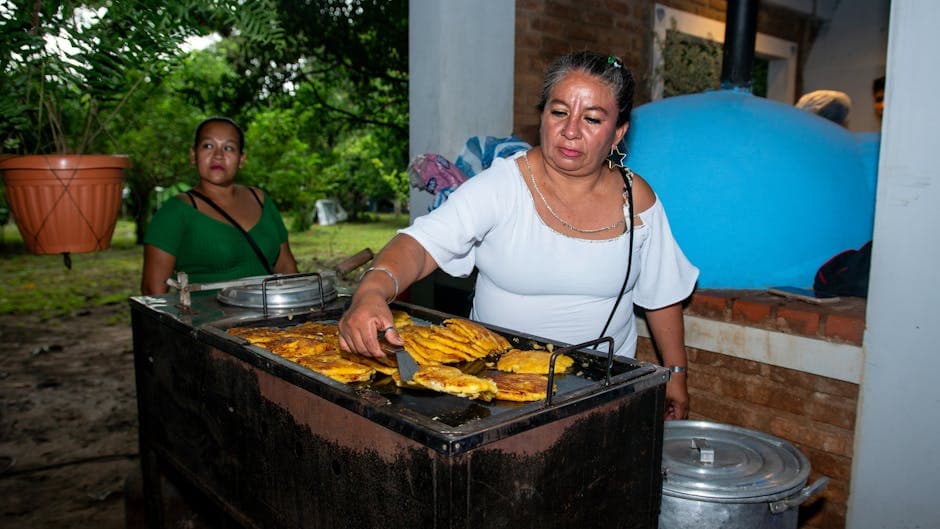
Salteñas
Bolivia's beloved baked empanadas — crimped dough pockets filled with a juicy, sweet-spiced meat and vegetable stew that bursts with every bite.
About This Recipe
Salteñas are Bolivia's most iconic food and the country's contribution to the broader empanada family — but they are emphatically their own thing. Unlike dry-filled empanadas, salteñas are filled with a thick, almost gelatinous stew (jigote) of beef or chicken with potatoes, peas, olives, raisins, and hard-boiled egg, seasoned with cumin, ají pepper, and a touch of sugar. The filling is made a day ahead so the gelatin sets, then baked inside a distinctive orange-coloured dough that is crimped in an elaborate braid on top. When eaten, the hot filling liquefies inside the pastry, creating a juice-burst with every bite. Eating a salteña without spilling the precious juices is considered a Bolivian art form. They are the quintessential morning snack, eaten standing up at markets and in city squares across Bolivia.
Ingredients
Serves 12
- 500 gplain flour
- 2 tbspsugar
- 1 tspsalt
- 2 tspground turmeric(for colour)
- 150 gcold butter or lard(cubed)
- 2eggs
- 80 mlcold water
- 400 gminced beef or diced chicken
- 200 gpotatoes(finely diced, par-cooked)
- 100 gfrozen peas
- 2 tbspraisins
- 10pitted green olives(halved)
- 2hard-boiled eggs(finely chopped)
- 1 mediumonion(finely diced)
- 1 tspground cumin
- 1 tspají amarillo paste or mild chilli
- 1 tbspgelatine powder(dissolved in 200ml hot stock)
- 1 tbspsugar(for filling)
- Salt(to taste)
Instructions
- 1
Make the filling (day before)
Fry onion in a little oil until soft. Add beef, cumin, ají paste, sugar, and salt; cook until just done. Add potatoes, peas, raisins, olives, and chopped egg. Pour in gelatine stock. Stir well, simmer 5 minutes, cool completely. Refrigerate overnight — the filling will set solid.
The gelled filling is what creates the signature juice burst when the salteña is baked. This step is non-negotiable.
- 2
Make the dough
Mix flour, sugar, salt, and turmeric. Rub in cold butter until breadcrumb texture. Mix eggs with cold water and add gradually, bringing together to a smooth, slightly firm dough. Wrap and rest 30 minutes.
- 3
Fill and seal
Divide dough into 12 balls. Roll each into an oval. Place a heaped tablespoon of cold, solid filling in the centre. Fold dough over and crimp tightly in a braid along the top edge, sealing completely. No gaps — any opening will let the precious juice escape during baking.
- 4
Bake
Preheat oven to 220°C. Brush salteñas with egg wash. Bake on a lined tray for 20–25 minutes until deep golden brown. The dough should be fully cooked through.
- 5
Eat immediately
Serve hot immediately from the oven. Hold vertically and bite a small opening at the top first to manage the hot liquid inside before eating.
Did you make this?
Rate it and help other cooks find the recipes that actually work.
One tap to sign in, and we'll save the rating you just picked.
Everything you need to plan your week — free
- Meal calendar
- Grocery list
- AI recipe ideas
Track what you eat
Snap your meal to log calories and macros, run fasting timers and track water in the free SnapCal app.
Pro Tips
- →
The solid filling is the secret — if it's not fully gelled, the pastry will be soggy and difficult to eat.
- →
The crimp must be absolutely tight — any leaks waste the precious filling juice.
- →
Eat salteñas standing up and immediately; they don't travel well once cut.
- →
Taste and adjust salt at the very end — flavors concentrate as liquids reduce, and a final pinch of flaky salt sharpens the whole dish.
Variations
- •
Make a chicken version for a lighter filling.
- •
Add diced carrot and red pepper to the filling.
- •
Use sweet pastry (more sugar in the dough) for a more pronounced sweet contrast.
- •
Vegetarian: swap the protein for roasted king oyster mushrooms, smoked tofu or cooked chickpeas — adjust seasoning slightly upward to compensate.
Storage
Best eaten fresh from the oven. Uncooked filled salteñas freeze well — bake from frozen at 220°C for 30 minutes.
History & Origin
Salteñas were allegedly invented in the 19th century by Juana Manuela Gorriti, an Argentine exile living in Bolivia who sold them to support her family. The name derives from Salta, the Argentine province she came from. Over time the Bolivian version evolved its own distinctive sweet-savoury flavour profile, gelled filling technique, and braided crimping style that sets it apart from any other empanada in the world.
Frequently Asked Questions
Why must the filling be made a day ahead?
The gelatine in the filling needs to fully set overnight. When the salteñas bake, the solid filling liquefies inside the pastry shell, creating the famous juice burst that makes salteñas so special.
How do I eat a salteña without spilling?
Hold it vertically, bite a small hole at the narrow crimped end, sip any juice, then eat. This is a skill Bolivians practice from childhood — don't be discouraged if you spill on the first try.
Can I make this ahead of time?
Yes — most of the components can be prepared up to a day in advance and refrigerated separately. Reheat gently and assemble just before serving so textures stay distinct.
What can I substitute if I don't have all the ingredients?
Stay close to the role each ingredient plays: swap aromatics for similar ones (shallot for onion, lime for lemon), and keep the fat-acid-salt balance intact. Spice blends can usually be approximated with what's in the cupboard.
Nutrition Facts
Per serving · 12 servings total
Time Summary
Have Questions?
Ask our AI cooking assistant anything about this recipe — substitutions, techniques, scaling.
Chat with AI Chef →Featured in Guides
This recipe is featured in the following curated guides:
More Bolivian Recipes
You Might Also Like
Similar dishes from other cuisines around the world.
Free Kitchen Tools
Calculators and converters that pair with this page — no signup needed.
Put This Into a Plan
Schedule it, shop for it, and track what you already have.
Read Next
Longer reads that go deeper on the ideas behind this dish.
Community
Join the conversation
Sign in to leave a comment and save your favourite recipes