
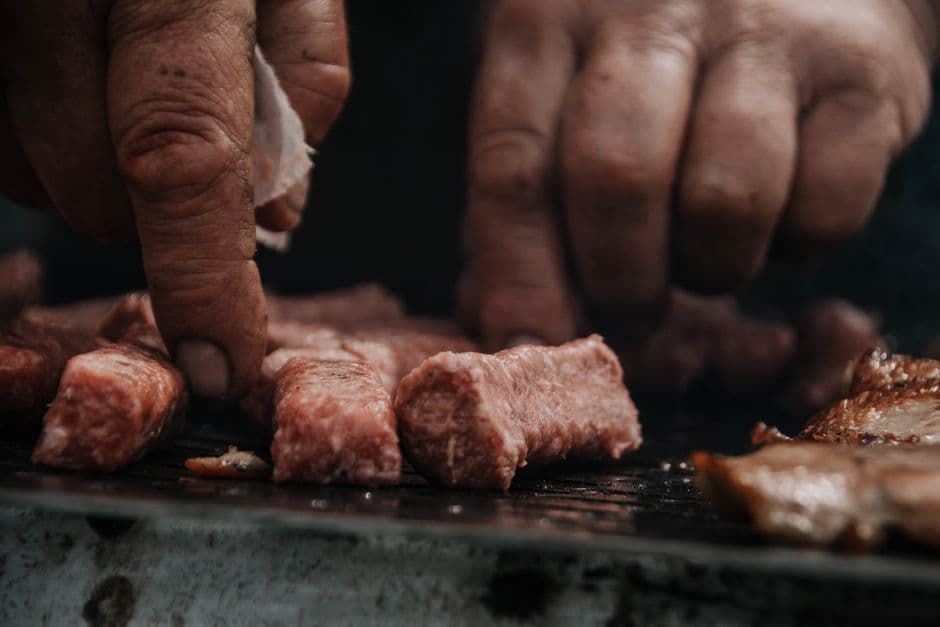
سيفابي (لحم مفروم صربي مشوي)
نقانق طرية مصنوعة يدويًا من لحم البقر المفروم ولحم الخنزير المشوي على الفحم، تقدم في خبز مسطح مع البصل الخام والأجفار. أشهر أطعمة الشوارع في صربيا.
حول هذه الوصفة
Ćevapi هو ملك الشوي البلقاني بلا منازع، ويوجد في كل كافانا (حانة صربية تقليدية) وفي حفلات الشواء الصيفية. يتم تتبيل مزيج لحم البقر ولحم الخنزير - أحيانًا بلمسة من لحم الضأن - بالثوم والملح وقليل من صودا الخبز، مما يمنح النقانق مظهرها الداخلي الخفيف والرقيق المميز. يتم طهيها على شواية ساخنة حارقة، مما يؤدي إلى ظهور مظهر خارجي متفحم بينما تبقى عصارية في الداخل. يتم تقديمها في خبز ليبينجا المسطح مع البصل الخام المفروم والفلفل المحمص، فهي لا تقاوم.
المكونات
يخدم 4
- 400 غلحم البقر المفروم (80٪ العجاف)
- 300 غلحم الخنزير المطحون
- 3 فصوصالثوم، المفروم إلى عجينة
- 1 ملعقة صغيرةملح
- 1/2 ملعقة صغيرةفلفل أسود
- 1/4 ملعقة صغيرةصودا الخبز
- 1 ملعقة كبيرةالمياه الفوارة
- 4 قطعليبينجا (خبز صربي مسطح) أو بيتا
- 2 متوسطبصل أبيض، مفروم ناعماً
- 4 ملعقة كبيرةأجفار (مذاق الفلفل الأحمر المحمص)
- 100 غالقشدة الحامضة أو كاجمك
التعليمات
- 1
اخلطي اللحم
يُمزج اللحم المفروم، ولحم الخنزير، ومعجون الثوم، والملح، والفلفل، وصودا الخبز، والماء الفوار في وعاء. امزجي بقوة بيديك لمدة 3-4 دقائق حتى يصبح الخليط لزجاً ومتماسكاً.
- 2
الثلاجة
يغطى ويوضع في الثلاجة لمدة ساعة على الأقل، ويفضل طوال الليل. يتيح ذلك امتزاج النكهات وتفاعل صودا الخبز مع القوام.
- 3
شكل ćevapi
بأيدي مبتلة، قومي بتشكيل اللحم على شكل اسطوانات طولها 8 سم وعرضها 2 سم. يجب أن تحصل على 20-24 قطعة.
- 4
شواء
تسخين شواية الفحم أو صينية الحديد الزهر إلى درجة حرارة عالية جدًا. يُشوى ćevapi لمدة 3-4 دقائق لكل جانب، مع التقليب مرة واحدة، حتى يتفحم جيدًا من الخارج وينضج تمامًا.
- 5
خدمة
قم بتسخين الليبينجا على الشواية لمدة 30 ثانية. يُحشى 5-6 شيفابي داخل كل خبز مع كومة كبيرة من مكعبات البصل، وملعقة من الأجفار، وقليل من الكاجماك أو القشدة الحامضة.
هل جرّبت هذه الوصفة؟
قيّمها وساعد الآخرين في العثور على الوصفات التي تنجح فعلاً.
سجّل الدخول بنقرة واحدة وسنحفظ التقييم الذي اخترته للتو.
كل ما تحتاجه لتخطيط أسبوعك — مجانًا
- تقويم الوجبات
- قائمة التسوق
- أفكار وصفات بالذكاء الاصطناعي
تابع ما تأكله
صوّر وجبتك لتسجيل السعرات والعناصر الغذائية، واستخدم مؤقتات الصيام وتتبع شرب الماء في تطبيق SnapCal المجاني.
نصائح للمحترفين
- →
الماء الفوار وصودا الخبز هما السر وراء الحصول على قوام خفيف وجيد التهوية، فلا تتجاهلهما.
- →
يُفضل الفحم بشدة؛ تعمل شواية الغاز ولكنها لن تكرر نكهة الدخان.
- →
بقية ćevapi لمدة دقيقتين خارج الشواية قبل التقديم.
- →
تذوق واضبط الملح في النهاية - تتركز النكهات مع تقليل السوائل، كما أن رشة أخيرة من الملح القشري تزيد من حدة الطبق بأكمله.
الاختلافات
- •
أضف 100 جرام من لحم الضأن المطحون إلى المزيج للحصول على نكهة أكثر ثراءً وتعقيدًا.
- •
لحم العجل فقط ćevapi تحظى بشعبية في بعض المناطق للحصول على طعم أكثر حساسية.
- •
نباتي: استبدل البروتين بفطر المحار المحمص أو التوفو المدخن أو الحمص المطبوخ - اضبط التتبيل قليلاً لأعلى للتعويض.
- •
أكثر توابلًا: أضف الفلفل الحار الطازج المفروم جيدًا أو ملعقة صغيرة من فلفل حلب / أورفا المطحون إلى العطريات للحصول على حرارة دافئة متعددة الطبقات بدلاً من ضربة واحدة حادة.
تخزين
يُحفظ ćevapi على شكل خام في الثلاجة لمدة 24 ساعة أو يُجمد لمدة شهر واحد. يُطهى من المجمدة مع إضافة دقيقتين إضافيتين لكل جانب.
التاريخ والأصل
ينحدر Ćevapi من تقاليد الكباب العثمانية ولكنه تطور إلى شكل فريد من نوعه في منطقة البلقان خلال القرن التاسع عشر. لقد أصبحوا رمزًا لهوية الطهي الصربية والبوسنية، مع وجود اختلافات إقليمية تمت مناقشتها بحماس في جميع أنحاء يوغوسلافيا السابقة.
الأسئلة المتداولة
لماذا ينهار ćevapi الخاص بي على الشواية؟
يحتاج الخليط إلى خلط شامل لتطوير ارتباط البروتين. كما أن التبريد لعدة ساعات واستخدام اللحوم الدهنية قليلًا (غير الخالية من الدهون) يساعدان أيضًا على التماسك.
ما هو كاجمك؟
كاجماك هي كريمة بلقانية غنية مصنوعة من الحليب الساخن. يمكنك استبدال الكريما الطازجة أو مزيج من الجبن الكريمي والقشدة الحامضة.
هل يمكنني القيام بذلك في وقت مبكر؟
نعم، يمكن تحضير معظم المكونات قبل يوم واحد وتبريدها بشكل منفصل. يُعاد تسخينه بلطف ويُجمّع قبل التقديم مباشرةً حتى يظل القوام مميزًا.
ما الذي يمكنني استبداله إذا لم يكن لدي جميع المكونات؟
ابق على مقربة من الدور الذي يلعبه كل مكون: استبدل المواد العطرية بأخرى مماثلة (الكراث بالبصل، والليمون الحامض بالليمون)، وحافظ على توازن الدهون والأحماض والملح سليمًا. يمكن عادة تقريب خلطات التوابل مع ما هو موجود في الخزانة.
حقائق التغذية
لكل وجبة (320g) · 4 حصص إجمالية
ملخص الوقت
هل لديك أسئلة؟
اسأل مساعد الطبخ الذي يعمل بالذكاء الاصطناعي لدينا أي شيء عن هذه الوصفة - البدائل والتقنيات والقياس.
الدردشة مع AI Chef →ظهرت في الأدلة
هذه الوصفة واردة في الأدلة المنسقة التالية:
المزيد من وصفات Serbian
قد يعجبك أيضًا
أطباق مشابهة من مطابخ أخرى حول العالم.
أدوات مطبخ مجانية
حاسبات ومحوّلات تكمّل هذه الصفحة — دون الحاجة إلى تسجيل.
حوّلها إلى خطة
جدولها، تسوّق لها، وتابع ما لديك بالفعل.
اقرأ بعد ذلك
مقالات أطول تتعمّق في الأفكار وراء هذا الطبق.
مجتمع
انضم إلى المحادثة
قم بتسجيل الدخول لترك تعليق وحفظ وصفاتك المفضلة