
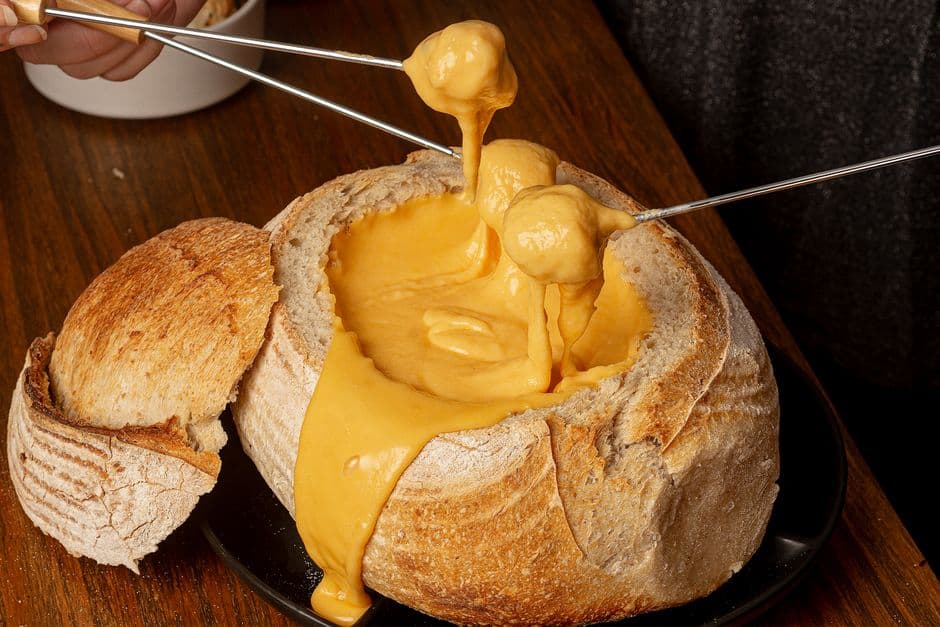
فوندو الجبن السويسري
وعاء فقاعي من جبن غرويير وإيمنتال الذائبين مع النبيذ الأبيض والكيرش، مثالي لتغميس الخبز المقرمش. الوجبة الجماعية المثالية في جبال الألب السويسرية.
حول هذه الوصفة
يعد فوندو الجبن الطبق الأكثر شهرة في سويسرا ورمزًا للعيش في جبال الألب، وله جذور في مجتمعات الفلاحين في جبال الألب السويسرية حيث كان الجبن والخبز المحفوظ من العناصر الغذائية الأساسية في فصل الشتاء. يستخدم الفوندو الكلاسيكي moitié-moitié (نصف ونصف) أجزاء متساوية من Gruyère وVacherin Fribourgeois، على الرغم من وجود اختلافات إقليمية عبر كانتونات فريبورغ وفاليه وأبنزيل. يعتبر النبيذ وقليل من الكيرش (براندي الكرز) ضروريين، ليس فقط من أجل النكهة ولكن لأن حموضتها وكحولها يمنعان الجبن من التكتل. يقضي التقليد بأن أي شخص يسقط خبزه في الوعاء يجب أن يؤدي إلى خسارة، وعادةً ما يشتري جولة من النبيذ.
المكونات
يخدم 4
- 400 غغرويير، مبشور خشن
- 400 غإيمنتال أو فاشرين فريبورجوا، مبشور بشكل خشن
- 300 ملالنبيذ الأبيض السويسري الجاف (Chasselas أو Fendant)
- 1 فصالثوم، النصف
- 2 ملعقة كبيرةنشا الذرة (دقيق الذرة)
- 3 ملعقة كبيرةكيرش (براندي الكرز)
- 1 قبضةجوزة الطيب المبشور الطازج
- 1 قبضةفلفل أبيض
- 1 كبيرخبز فرنسي مخمر أو خبز فرنسي مقطع إلى مكعبات
- 200 غبطاطس صغيرة مسلوقة (غميس اختياري)
- 1بصلة شمر، مقطعة إلى أعواد (غمس اختياري)
التعليمات
- 1
تحضير الكاكيلون (وعاء الفوندو)
افرك الجزء الداخلي من وعاء الفوندو الثقيل (الكاكيلون) جيدًا بالجوانب المقطوعة من فصوص الثوم. تخلصي من الثوم أو اتركيه للحصول على نكهة أقوى.
- 2
إرم الجبن مع نشا الذرة
في وعاء كبير، ضعي الجبن المبشور مع نشا الذرة حتى يغطى بالتساوي. يساعد ذلك على ذوبان الجبن بسلاسة ويمنعه من الانفصال.
- 3
نذوب الجبن
يُسكب النبيذ الأبيض في وعاء الفوندو المُجهز ويُوضع على نار متوسطة على الموقد. عندما يصبح النبيذ ساخنًا ويبدأ في الغليان (لا يغلي)، أضف الجبن على ثلاث أو أربع إضافات، مع التحريك بحركة على شكل ثمانية بملعقة خشبية وانتظر حتى تذوب كل إضافة قبل إضافة الأخرى.
- 4
أضف الكيرش والموسم
بمجرد أن تذوب جميع أنواع الجبن ويصبح الفوندو ناعمًا وكريميًا، أضيفي الكيرش. يتبل بجوزة الطيب والفلفل الأبيض. يجب أن يكون للفوندو قوام الكريمة السميكة. إذا كان سميكًا جدًا، أضف القليل من النبيذ. إذا كانت رقيقة جدًا، قم بزيادة الحرارة لفترة وجيزة.
- 5
نقل وخدمة
انقل الوعاء إلى حامل الفوندو فوق موقد صغير للتدفئة على الطاولة. يقدم مع الخبز المكعب والبطاطس المسلوقة وغموس الخضار. قومي بتقليب الفوندو بشكل متكرر أثناء تناول الطعام لمنعه من الالتصاق بالقاع.
هل جرّبت هذه الوصفة؟
قيّمها وساعد الآخرين في العثور على الوصفات التي تنجح فعلاً.
سجّل الدخول بنقرة واحدة وسنحفظ التقييم الذي اخترته للتو.
كل ما تحتاجه لتخطيط أسبوعك — مجانًا
- تقويم الوجبات
- قائمة التسوق
- أفكار وصفات بالذكاء الاصطناعي
تابع ما تأكله
صوّر وجبتك لتسجيل السعرات والعناصر الغذائية، واستخدم مؤقتات الصيام وتتبع شرب الماء في تطبيق SnapCal المجاني.
نصائح للمحترفين
- →
قم دائمًا بالتحريك بنمط الشكل الثامن، فهو يساعد على استحلاب الجبن والنبيذ.
- →
إذا انقسم الفوندو أو أصبح محببًا، قم بإضافة ملعقة صغيرة من نشا الذرة الممزوجة بالنبيذ.
- →
يقدم مع النبيذ الأبيض الجاف أو الشاي الأسود - تقول التقاليد السويسرية أن المشروبات الباردة تسبب تراكم الجبن في معدتك.
- →
تعتبر القشرة المقرمشة التي تتشكل في قاع الإناء (la religieuse) من الأطعمة الشهية.
الاختلافات
- •
فوندو فاليزان: أضف كوبًا من عصير الطماطم إلى النبيذ للحصول على نسخة فاكهية وردية.
- •
أضف ملعقة كبيرة ممتلئة من معجون الكمأة للحصول على ترقية فاخرة.
- •
قم بإضافة جبن أبنزلر للحصول على فوندو عشبي أكثر نفاذة.
- •
نباتي: استبدل البروتين بفطر المحار المحمص أو التوفو المدخن أو الحمص المطبوخ - اضبط التتبيل قليلاً لأعلى للتعويض.
تخزين
يمكن تبريد بقايا الفوندو لمدة يوم واحد. يُعاد تسخينه بلطف على الموقد مع القليل من النبيذ مع التحريك باستمرار. بدلًا من ذلك، دعها تستقر، قطعها إلى شرائح، ثم قم بقلي ألواح الجبن كوجبة خفيفة في اليوم التالي.
التاريخ والأصل
تم ذكر الفوندو لأول مرة في السجلات المكتوبة السويسرية عام 1699 في مخطوطة زيوريخ. أصبحت شائعة عالميًا من خلال الحملات الترويجية التي قامت بها سويسرا في الثلاثينيات والأربعينيات من القرن العشرين، واكتسبت شهرة عالمية عندما أطلق عليها اتحاد الجبن السويسري اسم الطبق الوطني السويسري في عام 1930.
الأسئلة المتداولة
هل يمكنني تحضير الفوندو بدون كحول؟
نعم. استبدل النبيذ بكمية متساوية من عصير العنب الأبيض الجاف الخالي من الكحول الممزوج بملعقة كبيرة من عصير الليمون (للحموضة)، واحذف الكيرش. ستكون النتيجة أخف في النكهة.
ماذا لو لم يكن لدي وعاء فوندو؟
إن قدرًا صغيرًا ذو قاع ثقيل فوق موقد تخييم محمول أو مصباح كحول يعمل بشكل جيد. المفتاح هو الحفاظ على حرارة لطيفة ومتسقة.
هل يمكنني القيام بذلك في وقت مبكر؟
نعم، يمكن تحضير معظم المكونات قبل يوم واحد وتبريدها بشكل منفصل. يُعاد تسخينه بلطف ويُجمّع قبل التقديم مباشرةً حتى يظل القوام مميزًا.
ما الذي يمكنني استبداله إذا لم يكن لدي جميع المكونات؟
ابق على مقربة من الدور الذي يلعبه كل مكون: استبدل المواد العطرية بأخرى مماثلة (الكراث بالبصل، والليمون الحامض بالليمون)، وحافظ على توازن الدهون والأحماض والملح سليمًا. يمكن عادة تقريب خلطات التوابل مع ما هو موجود في الخزانة.
حقائق التغذية
لكل وجبة (420g) · 4 حصص إجمالية
ملخص الوقت
هل لديك أسئلة؟
اسأل مساعد الطبخ الذي يعمل بالذكاء الاصطناعي لدينا أي شيء عن هذه الوصفة - البدائل والتقنيات والقياس.
الدردشة مع AI Chef →ظهرت في الأدلة
هذه الوصفة واردة في الأدلة المنسقة التالية:
المزيد من وصفات Swiss
قد يعجبك أيضًا
أطباق مشابهة من مطابخ أخرى حول العالم.
أدوات مطبخ مجانية
حاسبات ومحوّلات تكمّل هذه الصفحة — دون الحاجة إلى تسجيل.
حوّلها إلى خطة
جدولها، تسوّق لها، وتابع ما لديك بالفعل.
اقرأ بعد ذلك
مقالات أطول تتعمّق في الأفكار وراء هذا الطبق.
مجتمع
انضم إلى المحادثة
قم بتسجيل الدخول لترك تعليق وحفظ وصفاتك المفضلة