
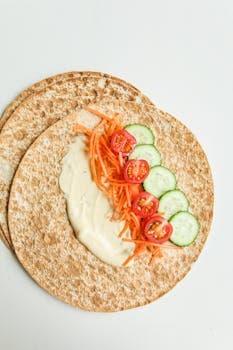
Hummus-Gemüse-Wrap
Cremiger Hummus und knackiges Gemüse in einem weichen Wrap gerollt.
Über dieses Rezept
Dieser Koch-freie Wrap ist ein Lunchbox-Held – eine große weiche Tortilla großzügig mit cremigem Hummus bestrichen und gefüllt mit knackiger Gurke, geraspelten Karotten, würziger Rucola, reifer Avocado und einem Hauch Sumach. Er ist frisch, sättigend und braucht gerade mal fünf Minuten zum Zusammenstellen.
Zutaten
Dient 1
- 1 großeVollkorn-Tortilla-Wrap
- 60 gHummus
- 0.5 mittlereGurke, in Julienne geschnitten
- 1 kleineKarotte, geraspelt
- 1 HandvollRucola
- 0.5 mittlereAvocado, in Scheiben
- 0.5 TLSumach
- 1 TLZitronensaft
Anleitung
- 1
Hummus aufstreichen
Die Tortilla flach auslegen und Hummus gleichmäßig auf der gesamten Oberfläche verteilen, dabei einen 2-cm-Rand an den Kanten lassen.
- 2
Gemüse schichten
Gurke, geraspelte Karotte, Rucola und Avocadoscheiben in einer Linie über die Mitte des Wraps anordnen.
- 3
Würzen
Zitronensaft über die Füllung pressen und mit Sumach bestreuen.
- 4
Rollen und schneiden
Die Seiten des Wraps einfalten, dann von unten fest aufrollen. Diagonal halbieren und servieren.
Hast du das gekocht?
Bewerte es und hilf anderen, die Rezepte zu finden, die wirklich funktionieren.
Einmal anmelden, und wir speichern die Bewertung, die du gerade gewählt hast.
Alles, was du für deine Wochenplanung brauchst — kostenlos
- Essensplaner
- Einkaufsliste
- KI-Rezeptideen
Freihändig kochen
Hol dir KI-Essenspläne, einen Schritt-für-Schritt-Kochmodus und deine gespeicherten Rezepte in der kostenlosen Bento-App.
Profi-Tipps
- →
Hummus bis zu den Rändern streichen, damit er als Klebstoff wirkt und den Wrap zusammenhält.
- →
Nasses Gemüse trocken tupfen, damit der Wrap nicht aufweicht.
- →
Erst am Ende abschmecken und nachsalzen – Aromen konzentrieren sich beim Reduzieren, und eine abschließende Prise Meersalzflocken schärft das gesamte Gericht.
- →
Mise en place zahlt sich aus: Alles hacken, abmessen und vorab mischen, bevor die Hitze eingeschaltet wird, besonders bei Arbeitsschritten, die schnell gehen.
Variationen
- •
Zerbröckelten Feta und getrocknete Tomaten für eine mediterrane Note hinzufügen.
- •
Hummus durch Baba Ghanoush für ein rauchigeres Aroma ersetzen.
- •
Vegetarisch: Das Protein durch gebratene Kräuterseitlinge, geräucherten Tofu oder gegarte Kichererbsen ersetzen – die Würzung leicht erhöhen zum Ausgleich.
- •
Schärfer: Eine fein gehackte frische Chili oder einen Teelöffel zerstoßenen Aleppo-/Urfa-Pfeffer zu den Aromen geben, für wärmende, vielschichtige Schärfe statt eines einzigen scharfen Treffers.
Lagerung
Fest in Frischhaltefolie einwickeln und bis zu 4 Stunden kühlen. Für längere Aufbewahrung nicht geeignet.
Geschichte und Herkunft
Der Hummus-Gemüse-Wrap wurzelt in der libanesischen Mezze-Kultur mit hellem Zitrone, Tahini und frischen Kräutern. Regionale Variationen sind eher die Regel als die Ausnahme – benachbarte Dörfer, Familien und sogar einzelne Köche passen das Gericht an das an, was in der Speisekammer und in der Saison vorhanden ist, weshalb keine zwei Versionen genau gleich schmecken und das Rezept so lange lebendig geblieben ist.
Häufig gestellte Fragen
Kann ich das im Voraus zubereiten?
Ja – die meisten Komponenten können bis zu einem Tag im Voraus zubereitet und separat im Kühlschrank aufbewahrt werden. Sanft aufwärmen und erst kurz vor dem Servieren zusammenstellen, damit die Texturen erhalten bleiben.
Was kann ich ersetzen, wenn ich nicht alle Zutaten habe?
Bleiben Sie nah an der Rolle, die jede Zutat spielt: Aromen durch ähnliche ersetzen (Schalotte für Zwiebel, Limette für Zitrone) und die Fett-Säure-Salz-Balance beibehalten. Gewürzmischungen lassen sich meist mit dem annähern, was im Schrank ist.
Woran erkenne ich, dass es authentisch ist?
Authentizität liegt auf einem Spektrum – wichtiger ist es, die Technik und die Ausgewogenheit der Aromen zu respektieren. Wenn das Gericht harmonisch schmeckt und die Art widerspiegelt, wie Köche in seiner Heimatregion es zubereiten würden, sind Sie auf dem richtigen Weg.
Warum ist meins nicht wie erwartet geworden?
Die beiden häufigsten Probleme sind zu wenig Würzung und zu hastiges Erhitzen. Während des Kochens abschmecken, in Schichten würzen und Aromen sowie Proteinen die Zeit geben, die sie brauchen, um Farbe und Tiefe zu entwickeln, bevor man weitermacht.
Nährwertangaben
Pro Portion (250g) · 1 Portionen insgesamt
Zeitzusammenfassung
Haben Sie Fragen?
Fragen Sie unseren KI-Kochassistenten zu diesem Rezept – Ersetzungen, Techniken, Skalierung.
Chatten Sie mit AI Chef →In Reiseführern vorgestellt
Dieses Rezept ist in den folgenden kuratierten Leitfäden enthalten:
Weitere Libanesische Rezepte
Das könnte dir auch gefallen
Ähnliche Gerichte aus anderen Küchen der Welt.
Kostenlose Küchen-Tools
Rechner und Umrechner, die zu dieser Seite passen — ohne Anmeldung.
Daraus einen Plan machen
Einplanen, einkaufen und im Blick behalten, was schon da ist.
Weiterlesen
Ausführliche Artikel zu den Ideen hinter diesem Gericht.
Gemeinschaft
Beteiligen Sie sich an der Unterhaltung
Melden Sie sich an, um einen Kommentar zu hinterlassen und Ihre Lieblingsrezepte zu speichern