
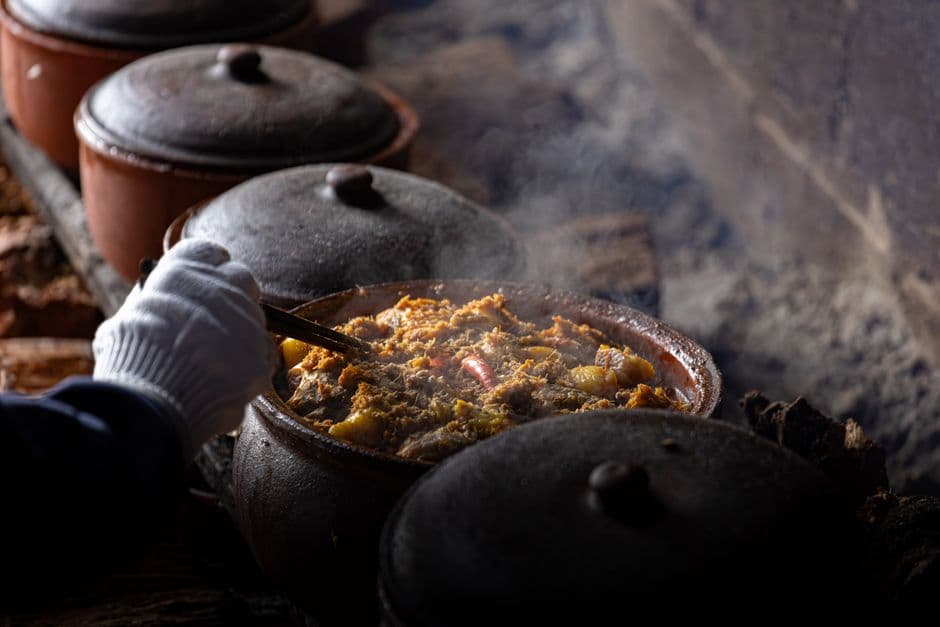
Kavarma (Bulgarian Clay Pot Stew)
A fragrant Bulgarian clay pot stew of pork or chicken slowly braised with peppers, tomatoes, mushrooms, and wine — finished with a raw egg on top.
About This Recipe
Kavarma is one of Bulgaria's most distinctive and beloved dishes: individual clay pots (gyuveche) are filled with marinated meat, sweet peppers, tomatoes, mushrooms, onions, and wine, then sealed and slow-baked until the ingredients meld into a deeply aromatic, silky stew. Just before serving, a raw egg is cracked directly onto the hot stew in the pot and returned to the oven briefly until the white is just set. The clay pot cooking imparts a unique earthiness and retains moisture beautifully. The dish varies by region — some include spicy peppers, others add leeks or green onions — but the clay pot technique is universal.
Ingredients
Serves 4
- 600 gpork shoulder or chicken thighs, cut into chunks
- 2 mediumonions, sliced
- 3 mediumred bell peppers, sliced
- 1 mediumspicy pepper or chili, diced (optional)
- 3 mediumtomatoes, diced (or 400 g canned)
- 200 gbutton or oyster mushrooms, sliced
- 4 clovesgarlic, minced
- 150 mldry white wine
- 3 tbspsunflower oil
- 1.5 tspsweet paprika
- 1 tspdried savory (chubritsa) or thyme
- Salt and pepper(to taste)
- 4 largeeggs (one per clay pot)
- Fresh parsleyto garnish
Instructions
- 1
Marinate the meat
Toss meat chunks with paprika, garlic, salt, pepper, and 1 tablespoon oil. Marinate for 30 minutes.
- 2
Sauté aromatics
Heat remaining oil in a pan over medium-high heat. Brown the meat on all sides, 4–5 minutes. Remove and set aside. In the same pan, soften onions for 5 minutes, then add peppers and mushrooms and cook 3 more minutes.
- 3
Combine and season
Add tomatoes, wine, and savory/thyme to the pan. Stir and simmer 5 minutes. Season well with salt and pepper.
- 4
Fill the clay pots
Divide the meat among 4 individual clay pots (or use one large gyuveche). Pour the vegetable mixture over the meat, distributing evenly. The liquid should barely cover.
- 5
Bake covered
Cover pots with their lids or seal with foil. Bake at 180°C for 60–70 minutes until the meat is completely tender.
- 6
Add the egg and finish
Uncover each pot and crack one raw egg into the center of each. Return to oven uncovered at 200°C for 8–10 minutes until egg white is set but yolk is still runny. Garnish with parsley and serve immediately in the pots.
Did you make this?
Rate it and help other cooks find the recipes that actually work.
One tap to sign in, and we'll save the rating you just picked.
Everything you need to plan your week — free
- Meal calendar
- Grocery list
- AI recipe ideas
Track what you eat
Snap your meal to log calories and macros, run fasting timers and track water in the free SnapCal app.
Pro Tips
- →
Soak new clay pots in water for 30 minutes before first use to prevent cracking.
- →
Dried Bulgarian chubritsa (savory) is the defining herb — substitute with thyme plus a pinch of marjoram.
- →
The egg yolk mixed into the stew as you eat adds a luxurious richness.
- →
Taste and adjust salt at the very end — flavors concentrate as liquids reduce, and a final pinch of flaky salt sharpens the whole dish.
Variations
- •
Vegetarian kavarma: Replace meat with extra mushrooms, zucchini, and eggplant.
- •
Spicy version (lyutika): Double the hot peppers and add a spoon of lyutenitsa (roasted pepper paste).
- •
Spicier: add a finely chopped fresh chile or a teaspoon of crushed Aleppo/Urfa pepper to the aromatics for warm, layered heat instead of a single sharp hit.
- •
Lighter: reduce the fat by a third and finish with a squeeze of citrus or a splash of vinegar to keep brightness without losing body.
Storage
Refrigerate in the clay pots or an airtight container for 2 days. Reheat in the oven at 160°C covered. Add egg fresh when reheating.
History & Origin
Clay pot cooking has been practiced in the Bulgarian lands since Thracian times. The specific combination of peppers, tomatoes, and meat reflects the influence of Ottoman cuisine that shaped the region for five centuries, while the use of wine and dried savory is distinctly Bulgarian. Kavarma remains a symbol of Bulgarian home hospitality.
Frequently Asked Questions
Can I make this without individual clay pots?
Yes, use a single Dutch oven or heavy casserole dish. The result will be similar, though individual pots create the traditional presentation and slightly different heat dynamics.
What is chubritsa?
Chubritsa is Bulgarian dried summer savory, a herb fundamental to Bulgarian cooking with a peppery, slightly minty flavor. Find it in Balkan or Middle Eastern grocery stores.
Can I make this ahead of time?
Yes — most of the components can be prepared up to a day in advance and refrigerated separately. Reheat gently and assemble just before serving so textures stay distinct.
What can I substitute if I don't have all the ingredients?
Stay close to the role each ingredient plays: swap aromatics for similar ones (shallot for onion, lime for lemon), and keep the fat-acid-salt balance intact. Spice blends can usually be approximated with what's in the cupboard.
Nutrition Facts
Per serving (380g / 13.4 oz) · 4 servings total
Time Summary
Have Questions?
Ask our AI cooking assistant anything about this recipe — substitutions, techniques, scaling.
Chat with AI Chef →More Bulgarian Recipes
You Might Also Like
Similar dishes from other cuisines around the world.
Free Kitchen Tools
Calculators and converters that pair with this page — no signup needed.
Put This Into a Plan
Schedule it, shop for it, and track what you already have.
Read Next
Longer reads that go deeper on the ideas behind this dish.
Community
Join the conversation
Sign in to leave a comment and save your favourite recipes