
In This Article
Track what you eat
Snap your meal to log calories and macros, run fasting timers and track water in the free SnapCal app.
Related Recipes
Related Guides
Medical disclaimer: The information in this article is for educational purposes only. Always consult a qualified healthcare professional before making significant dietary or lifestyle changes, especially if you have a medical condition.
Diverticula are small pouches that can form in the wall of the large intestine, and they are very common as people age. Most people who have them, a condition called diverticulosis, never notice. Sometimes one or more pouches become inflamed or infected, which is diverticulitis, and it can cause pain, usually in the lower left abdomen, along with fever and changes in bowel habits. Food advice here has changed a lot over the years, and it is easy to be confused. During a flare, doctors may recommend a short period of clear liquids or a low-fiber diet; between flares, the usual advice is the opposite, a high-fiber diet. This guide explains the difference, why the old warning about nuts, seeds, and popcorn is now considered outdated, and how to increase fiber without upsetting your gut. A flare is a medical event, so use this as background and follow your own clinician's directions.
Key Takeaways
Diverticulitis eating has two phases with different rules.
• During an acute flare, a clear-liquid or low-fiber diet is often used for a short time, but only under medical direction. • Between flares, current guidance generally favors a high-fiber diet rich in vegetables, fruit, legumes, and whole grains. • Older advice to avoid nuts, seeds, corn, and popcorn is no longer supported; research has not found they increase diverticulitis risk, though individual tolerance varies. • Increase fiber gradually and drink plenty of fluids to avoid gas, bloating, and cramping. • Severe or worsening abdominal pain, fever, vomiting, or blood in the stool needs urgent medical attention, not a diet change.
Diverticulosis versus diverticulitis
It helps to separate two terms that sound alike. Diverticulosis means pouches are present in the colon wall. It is common, often found incidentally during a colonoscopy, and usually causes no symptoms. Diverticulitis means one or more of those pouches have become inflamed or infected. It is much less common, but it is the reason people start worrying about their diet.
Why do the pouches form? The leading idea is that long-term pressure within the colon, along with age-related changes in the bowel wall, pushes the lining outward at weak spots. Low fiber intake has long been suspected as a contributor, since a stool that is small and hard needs more pressure to move along, though the picture is more complicated than that and genetics, inactivity, smoking, and excess weight also play a role. What diet can do is support bowel health and may lower the chance of future episodes. It cannot remove existing pouches, and it does not replace treatment during a flare.
During a flare: clear liquids and low fiber, with medical direction
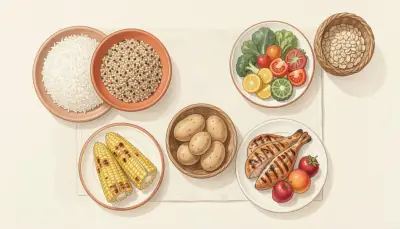
In an acute flare, the goal is to rest the bowel while inflammation settles. Doctors sometimes advise a short period on clear liquids, such as water, broth, pulp-free juice, tea, and gelatin, and then a gradual return to solid food starting with low-fiber choices: white rice, plain pasta, white bread, eggs, well-cooked skinless chicken or fish, and canned or peeled soft fruit. This is a temporary step. Low-fiber eating is not a long-term plan, because it can lead to constipation.
It is worth knowing that medical thinking about flares has also changed. Mild, uncomplicated diverticulitis is sometimes managed without antibiotics, and recommendations about diet during recovery are more flexible than they once were. Because the right approach depends on how severe your episode is, whether you have complications, and what your doctor finds, take your specific instructions from your care team rather than from a general article. If you are unable to keep fluids down or your pain is worsening, that is a reason to call, not to wait.
Ask your clinician when to move from liquids to solid food and when to start raising fiber again. Staying on a low-fiber diet for weeks without a plan can leave you constipated and prone to the next flare.
Between flares: fiber is the long-term foundation
Once symptoms have settled, mainstream guidance generally encourages a high-fiber diet. Large observational studies have linked higher fiber intake with a lower risk of diverticulitis and of its complications. These studies show an association rather than proof, but the advice has a very low risk of harm and many other benefits for heart health, blood sugar, and weight.
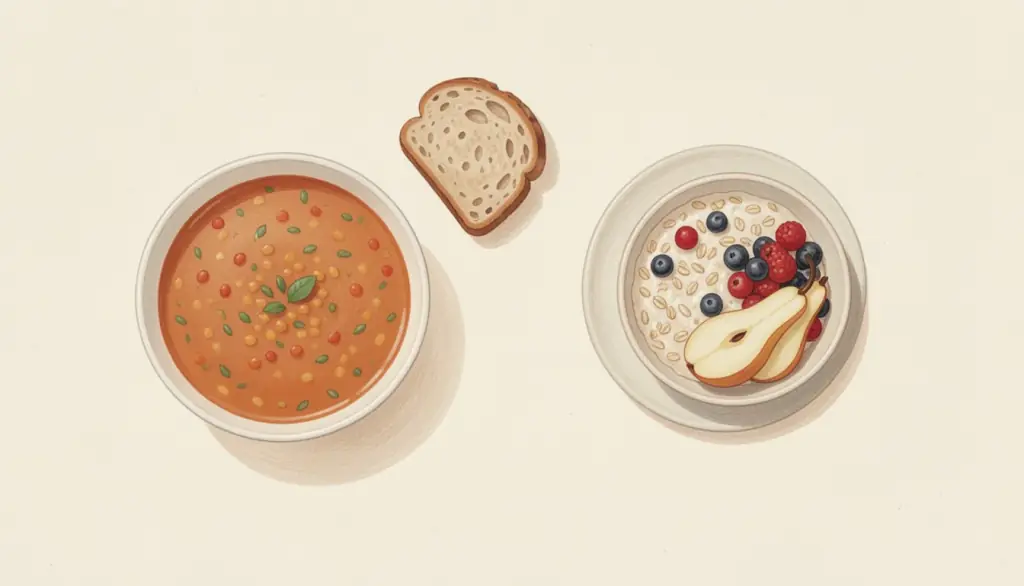
Common adult targets sit around 25 to 38 grams of fiber per day, depending on sex and age, and most people eat well below that. You do not have to count it exactly. Build meals around vegetables, fruit, beans and lentils, oats, brown rice, whole-grain bread, and nuts and seeds. For a deeper look at the different types of fiber and where to find them, see our complete guide to fibre. Regular physical activity, a healthy weight, not smoking, and limiting red and processed meat are also associated with lower risk, and they pair naturally with a fiber-rich plate. For a wider look at feeding your gut well, see our gut health foods guide, and our anti-inflammatory diet guide overlaps heavily with a high-fiber plate.
Everything you need to plan your week — free
- Meal calendar
- Grocery list
- AI recipe ideas
Nuts, seeds, corn, and popcorn: the outdated warning
For decades, people with diverticular disease were told to avoid nuts, seeds, corn, and popcorn on the theory that small particles could lodge in a pouch and cause inflammation. That advice was widely repeated, but it was never well supported. A large study of male health professionals, published in 2008 in JAMA, followed participants for years and found that eating nuts, corn, and popcorn was not associated with a higher risk of diverticulitis. In fact, higher nut and popcorn intake was associated with a lower risk.
Based on that and later research, current gastroenterology guidance no longer tells people with diverticulosis to avoid these foods. That does not mean everyone must eat them: if a specific food reliably causes you discomfort, or your doctor has advised otherwise because of your personal history, follow that. But there is no need to cut nuts, seeds, and popcorn out of your diet out of fear. They are good sources of fiber, healthy fats, and protein.
How to increase fiber without the bloating
Jumping from a low-fiber diet to a very high-fiber one overnight is a reliable way to end up with gas, cramps, and bloating. Go up gradually over a few weeks instead:
• Add one extra serving of a fiber-rich food every few days rather than changing everything at once. • Drink more water as fiber increases, since fiber works by absorbing water; aim for regular fluids throughout the day unless your doctor has told you to limit them. • Swap refined grains for whole grains one meal at a time, such as oatmeal for breakfast and brown rice at dinner. • Add beans or lentils to soups and salads in small amounts first. Canned beans, drained and rinsed, are fine. • Leave skins on fruit and vegetables where they are palatable, and eat the whole fruit rather than juice. • Move regularly, because activity supports normal bowel movement.
If fiber still causes persistent discomfort, a registered dietitian can help you find which types you tolerate best.
Foods to build a long-term plan around
These are good everyday choices for diverticulosis and for the gap between flares:
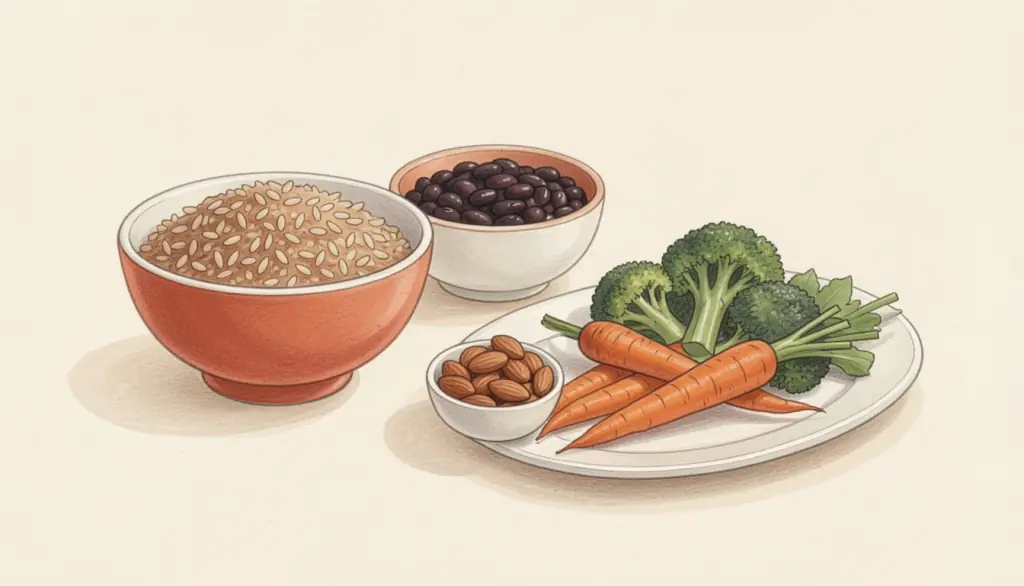
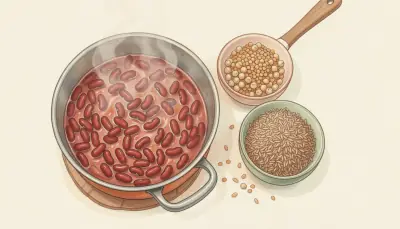
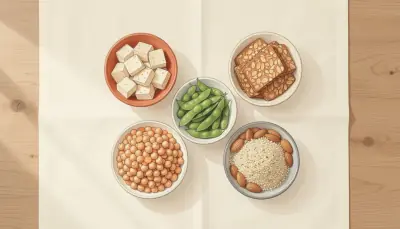
• Whole grains: oatmeal, barley, brown rice, whole-wheat bread and pasta, quinoa. • Legumes: lentils, chickpeas, black beans, split peas. • Vegetables: broccoli, carrots, leafy greens, squash, peas, and sweet potatoes. • Fruit: berries, pears, apples with skin, oranges, and prunes. • Nuts and seeds: almonds, walnuts, chia, and flax. • Lean protein and fish.
A few recipes help. Turkish red lentil soup is a high-fiber soup that is easy to make in bulk, creamy overnight oats are a simple make-ahead breakfast with fiber from oats and chia seeds, and baked cod with lentils pairs fish with lentils. If you are recovering from a flare and are not ready for fiber yet, Cantonese congee is a gentle, soft option you can return to solid food with, in agreement with your doctor.
A sample day of long-term eating
This sample applies to everyday eating between flares, not to a flare itself.
• Breakfast: overnight oats with chia seeds and berries, with water or tea. • Snack: a pear and a handful of almonds. • Lunch: lentil soup with a slice of whole-grain bread and a side salad. • Afternoon: carrot sticks with hummus. • Dinner: baked fish with roasted vegetables and brown rice or quinoa. • Throughout the day: water, plus herbal tea if you like.
Planning high-fiber meals in advance makes them stick. A meal planner calendar lets you lay out the week's meals and turn them into a shopping list, which helps when you are trying to raise fiber slowly and consistently.
When to see a doctor, and who should not self-manage
Diet cannot diagnose diverticulitis, and the symptoms overlap with other conditions. Seek prompt medical care for sudden or severe abdominal pain, particularly in the lower left abdomen, fever or chills, persistent nausea or vomiting, inability to keep fluids down, a swollen or rigid abdomen, or blood in your stool. Rectal bleeding, in particular, should always be evaluated, even if you already know you have diverticulosis.
People who have had repeated or complicated episodes, who are older, who have a weakened immune system, or who take medications such as long-term steroids or non-steroidal anti-inflammatory drugs should work closely with their doctor. A registered dietitian can also help if you have another condition, such as kidney disease, that limits some high-fiber foods. Your clinician may also recommend a follow-up colonoscopy after a flare to exclude other causes.
Key Takeaways
The key to diverticulitis eating is knowing which phase you are in. During a flare, follow your clinician's directions, which may include a brief period of clear liquids and low-fiber foods. Between flares, aim for a fiber-rich diet built on vegetables, fruit, legumes, and whole grains, increased gradually with plenty of fluids. The old warning about nuts, seeds, and popcorn is no longer supported by research, so there is no need to fear them. And for any severe pain, fever, or bleeding, the right move is medical care.
Frequently Asked Questions
Can I eat nuts, seeds, and popcorn with diverticulitis?▼
Should I eat a low-fiber diet if I have diverticulosis?▼
What can I eat during a diverticulitis flare?▼
Do I need a fiber supplement?▼
References
- [1]Peery AF, Shaukat A, Strate LL (2021). “AGA Clinical Practice Update on Medical Management of Colonic Diverticulitis: Expert Review.” Gastroenterology.
- [2]Strate LL, Liu YL, Syngal S, Aldoori WH, Giovannucci EL (2008). “Nut, corn, and popcorn consumption and the incidence of diverticular disease.” JAMA.
More in Diet Guides
View all
Free Kitchen Tools
Calculators and converters that pair with this page — no signup needed.
About This Article
Written by MCC Editorial Team, MyCookingCalendar Editorial Team. Published November 12, 2026. Updated November 12, 2026.
This article cites 2 peer-reviewed sources. See the full reference list below.
Editorial policy: Articles are drafted with the help of AI tools, link to the sources they rely on, and are updated when we find an error or newer evidence. Health articles are general information, not medical advice.
About the Author
Our in-house team that researches, writes and reviews recipes and nutrition articles, citing reputable sources.