
In This Article
Track what you eat
Snap your meal to log calories and macros, run fasting timers and track water in the free SnapCal app.
Related Guides
Medical disclaimer: The information in this article is for educational purposes only. Always consult a qualified healthcare professional before making significant dietary or lifestyle changes, especially if you have a medical condition.
Histamine is a natural chemical that your body makes and that also occurs in food, especially in foods that are aged, fermented, or not perfectly fresh. A small group of people report headaches, flushing, hives, digestive upset, or a stuffy nose after eating those foods, and the term histamine intolerance has grown up to describe it. It is a real topic of research, but it is also controversial: there is no single accepted diagnostic test, the symptoms overlap with many other conditions, and the proposed explanation, that some people do not break down dietary histamine efficiently, is still being studied. A low-histamine diet is therefore best treated as a short, structured experiment rather than a permanent lifestyle. This guide explains what is and is not known, which foods are usually higher in histamine, how freshness and storage matter, how a trial and reintroduction can work with a clinician, and why over-restricting carries its own risks.
Key Takeaways
A low-histamine diet is a time-limited experiment, not a proven cure.
• Histamine intolerance is not a settled diagnosis. Symptoms are nonspecific and can come from allergies, IBS, celiac disease, mast cell conditions, and more, so it should not be self-diagnosed. • Histamine tends to be higher in aged, fermented, cured, and smoked foods, and in leftovers and food that is not fresh. • Freshness and storage matter: cook fresh, cool leftovers quickly, and freeze portions rather than keeping them in the fridge for days. • Try the diet for a limited period, such as a few weeks, then reintroduce foods one at a time, ideally with a clinician or registered dietitian. • Cutting out many foods without guidance can lead to nutrient gaps and unnecessary fear of eating.
What histamine intolerance is thought to be
Histamine is involved in immune responses, stomach acid production, and signaling in the brain. In the gut, an enzyme called diamine oxidase, or DAO, helps break down histamine from food. The idea behind histamine intolerance is that in some people DAO activity is low, or histamine intake is high enough, that histamine builds up and triggers symptoms such as headaches, flushing, itching, nasal congestion, abdominal pain, diarrhea, or a racing heart.
Here is where the uncertainty comes in. Blood tests for DAO levels exist but are not considered reliable enough to diagnose the condition. Symptoms are common to many other problems, including food allergy, irritable bowel syndrome, celiac disease, and rarer conditions involving mast cells, which release histamine. Studies of low-histamine diets are small and mixed, and few have used rigorous blinded designs. A fair summary is that some people appear to improve on a low-histamine diet, but the condition is not well defined and the evidence is limited. This is a good reason to involve a doctor before assuming histamine is the cause.
Higher-histamine foods
Histamine forms when bacteria break down the amino acid histidine, so it accumulates during aging, fermentation, curing, and spoilage. Foods most often listed as higher in histamine (our fermented foods guide explains why fermentation is on the list) include:
• Aged cheese: parmesan, cheddar, gouda, blue cheese. • Fermented foods: sauerkraut, kimchi, yogurt and kefir, kombucha, soy sauce, miso, and vinegar. • Cured and smoked meats: salami, bacon, ham, sausages, and smoked fish. • Certain fish: tuna, mackerel, sardines, and anchovies, especially canned or not very fresh. • Alcohol, especially wine, beer, and champagne. • Some vegetables and fruit: tomatoes, spinach, eggplant, avocado, and some citrus and strawberries, which are often listed as higher or as histamine-releasing.
Lists vary between sources, and the quantity of histamine in a given food depends on freshness and processing. Some items, such as spinach and tomatoes, are listed because they are thought to contain or release histamine, but evidence for individual items is thin. Treat any list as a starting point, not a rulebook.
Freshness and storage matter as much as the food
Histamine continues to build as food sits, which is why the same food can be a problem when old and fine when fresh. This is the most practical and best-understood part of the approach, and it costs nothing:
• Buy fish and meat as fresh as possible, and cook or freeze them quickly. • Cook meals fresh, and eat them the same day where you can. • Cool leftovers fast and refrigerate promptly. For anything you will not eat within a day, freeze single portions instead. • Thaw in the fridge and reheat only once. • Avoid slow-cooked or long-simmered bone broths, which can concentrate histamine over time, in favor of quick-cooked stocks. • Be careful with leftover-based meals, canned fish, and anything that has been sitting at room temperature.
Good storage habits also protect you against ordinary food poisoning. Our guide to eating out with food intolerances has useful tactics for asking questions at restaurants, where freshness is harder to control.
Batch-cook and freeze in single portions the same day. A frozen portion that is thawed once is generally a safer bet than something that has lived in the fridge for four days.
Everything you need to plan your week — free
- Meal calendar
- Grocery list
- AI recipe ideas
Lower-histamine foods to build meals around
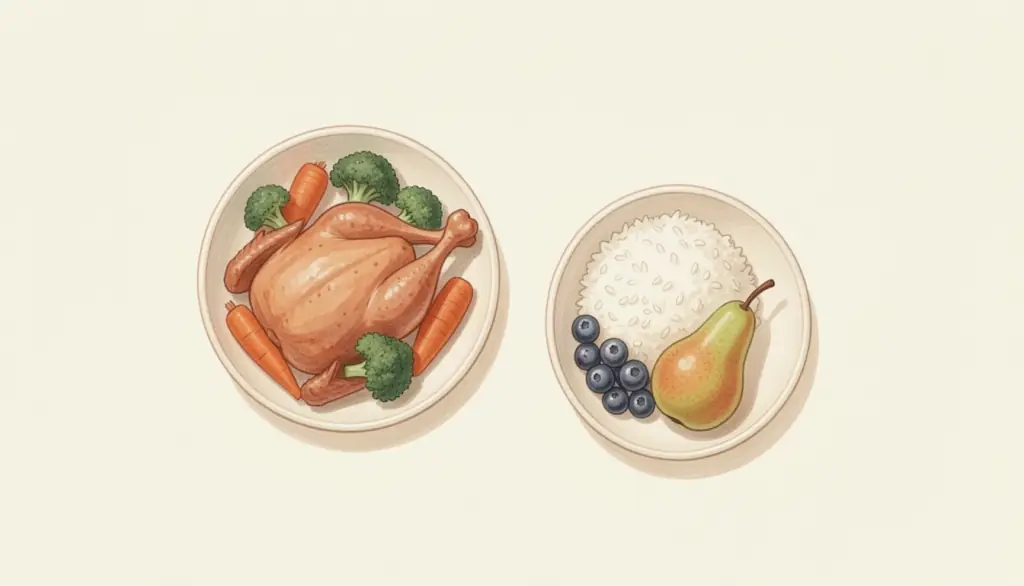
Foods that are usually included in a low-histamine trial are fresh, minimally processed, and cooked soon after purchase:
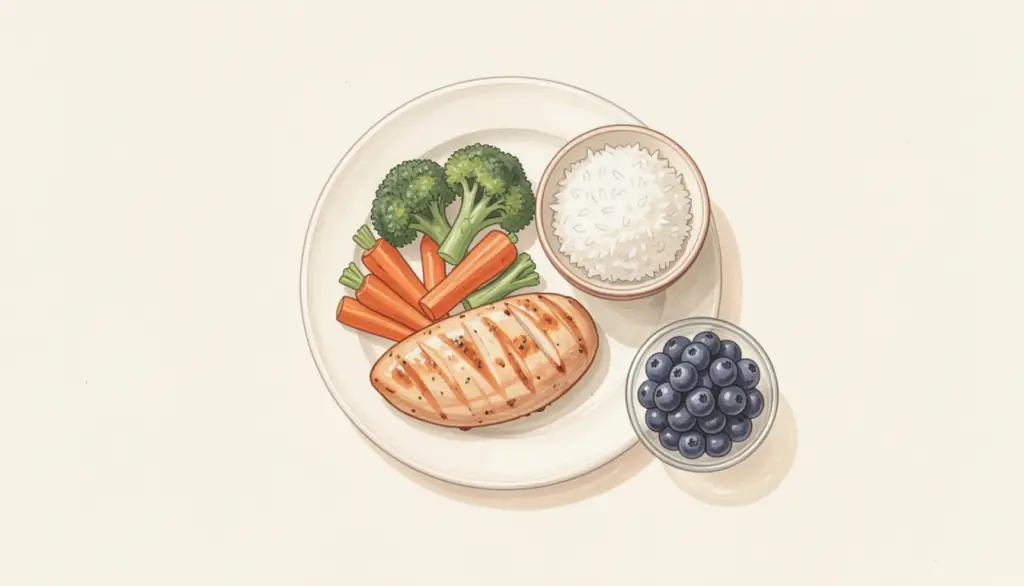
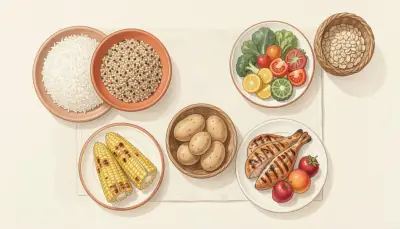
• Fresh poultry, beef, pork, and lamb, cooked fresh or frozen promptly. • Fresh eggs, if tolerated. • Most fresh vegetables except those on the higher list, such as carrots, broccoli, cauliflower, cucumber, zucchini, sweet potato, and fresh herbs. • Fresh fruit such as apples, pears, blueberries, and melon. • Rice, oats, quinoa, potatoes, and other gluten-free grains and starches; wheat is often tolerated. • Fresh olive oil, coconut milk, and plant milks without additives. • Herbal teas.
A few recipes fit when made fresh and eaten promptly. Grilled chicken with roasted carrots uses fresh chicken, herbs, and carrots (leave out the lemon juice and use a mild substitute if citrus is a trigger for you). Cantonese congee is a rice porridge that can be made with fresh water or a quick homemade stock; use a small amount of salt instead of soy sauce, which is fermented. Always read recipes against your own list, because ingredients like vinegar, aged cheese, and cured meats often hide in dishes.
A short trial, and how to reintroduce foods
A sensible process looks like this, ideally with a doctor or registered dietitian:
1. Rule out other causes first. Ask your doctor about allergy, celiac disease, IBS, and other conditions that can cause the same symptoms.
2. Keep a baseline diary. For one to two weeks, record what you eat and any symptoms, so you have something to compare against.
3. Do a limited elimination. Cut the higher-histamine foods for about two to four weeks, and focus on fresh cooking and good storage. Do not stretch it indefinitely.
4. Judge the result honestly. If there is no clear improvement, histamine may not be your problem, and you should return to a normal diet and revisit the diagnosis with your doctor. A placebo effect and natural ups and downs in symptoms are real.
5. Reintroduce one food at a time. Add back a single food group every few days, in a normal portion, and note any reaction. Many people find that only a few foods matter, and that dose and freshness count.
The goal is the widest diet you can tolerate, not the narrowest. A planner can make the process easier: a meal planner calendar lets you record the week's meals so you can match them against your symptom notes.
A sample day during a trial
A sample day, built from fresh, simple foods. Adjust to your own tolerances and your clinician's guidance.
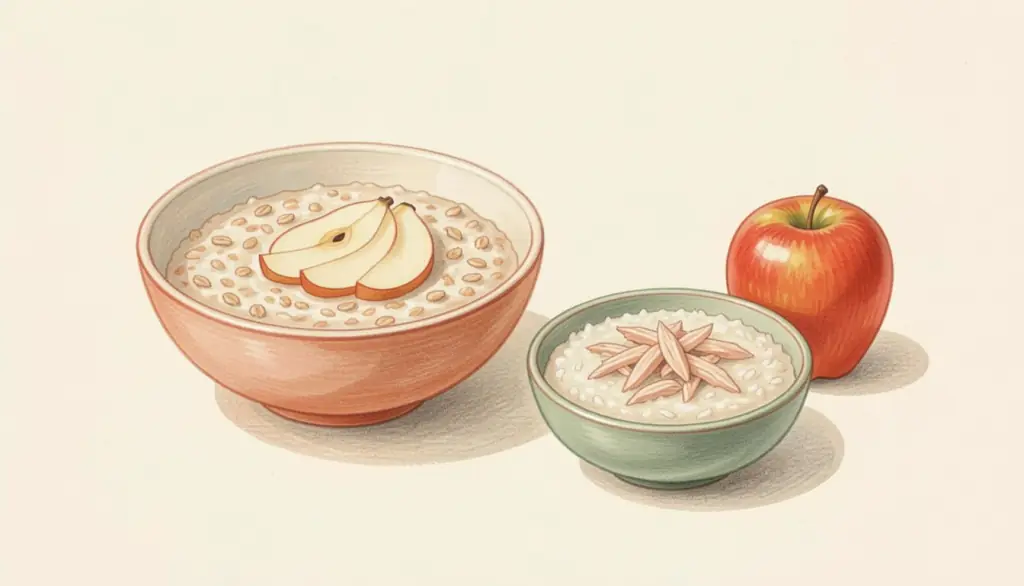
• Breakfast: oatmeal cooked with water or a plant milk, with fresh pear or blueberries. • Lunch: a freshly cooked chicken breast with rice and steamed carrots and broccoli, with olive oil and fresh herbs. • Snack: an apple, or a small handful of safe nuts if tolerated. • Dinner: rice porridge with ginger and freshly cooked chicken, or baked potato with sauteed zucchini. • Drinks: water and herbal teas.
Because a low-histamine plan depends on fresh cooking, shopping little and often tends to work better than a huge weekly shop. A grocery list that builds from your plan can help you buy only what you will cook in the next day or two.
The risks of over-restricting
Cutting out many food groups carries real costs. Dropping fermented foods, aged cheeses, tomatoes, spinach, fish, and more can reduce your intake of protein, calcium, iron, omega-3 fats, and fiber, depending on what you replace them with. Restrictive eating can also fuel food anxiety and, in people who are vulnerable, can contribute to disordered eating. Children, pregnant or breastfeeding women, older adults, and anyone with a history of eating disorders should not undertake a restrictive diet without professional supervision.
A second risk is anchoring: assuming histamine explains every symptom and delaying a diagnosis of something else. Persistent digestive problems, unexplained weight loss, severe or frequent hives, swelling of the lips or throat, or difficulty breathing need medical evaluation rather than another round of dietary tweaking. A registered dietitian can help keep a restricted trial nutritionally complete, and a gut-friendly overall pattern, such as the one described in our gut health foods guide, can be maintained within a low-histamine framework.
When to see a doctor, and who should not self-manage
Start with your doctor, not the diet. Make an appointment if you have recurring flushing, hives, headaches, digestive symptoms, or palpitations that you suspect are food-related, and especially if you have ever had swelling of the face or throat, wheezing, fainting, or other signs of a serious allergic reaction. Those are emergencies, and call emergency services if they happen.
A doctor can test for true food allergy, celiac disease, and other causes, and can discuss whether further tests, such as for mast cell conditions, make sense. If a trial is appropriate, a registered dietitian can guide the elimination and reintroduction, so that you end up with a varied diet. Be wary of products that promise to diagnose histamine intolerance from a home kit or a hair sample; these are not validated. DAO enzyme supplements are sold for this purpose, but the evidence is limited and you should discuss them with a clinician before use.
Key Takeaways
A low-histamine diet can be a useful short experiment for some people, but it rests on an uncertain diagnosis and should be handled carefully. Rule out other causes first, focus on fresh food and good storage, limit the trial to a few weeks, and then reintroduce foods one at a time so you keep the widest diet you can tolerate. If symptoms persist, or if you notice any signs of a serious reaction, the answer is a doctor, not a longer list of restrictions.
Frequently Asked Questions
How do I know if I have histamine intolerance?▼
Do leftovers really have more histamine?▼
How long should I stay on a low-histamine diet?▼
Do DAO supplements work?▼
Is a histamine allergy the same as histamine intolerance?▼
References
- [1]Comas-Baste O, Sanchez-Perez S, Veciana-Nogues MT, Latorre-Moratalla M, Vidal-Carou MC (2020). “Histamine Intolerance: The Current State of the Art.” Biomolecules.
More in Diet Guides
View all
Free Kitchen Tools
Calculators and converters that pair with this page — no signup needed.
About This Article
Written by Elena Vasquez, Health & Nutrition Writer. Published November 12, 2026. Updated November 12, 2026.
This article cites 1 peer-reviewed sources. See the full reference list below.
Editorial policy: Articles are drafted with the help of AI tools, link to the sources they rely on, and are updated when we find an error or newer evidence. Health articles are general information, not medical advice.
About the Author
Covers metabolic health, intermittent fasting and the gut microbiome, focused on summarising evidence in plain language.