
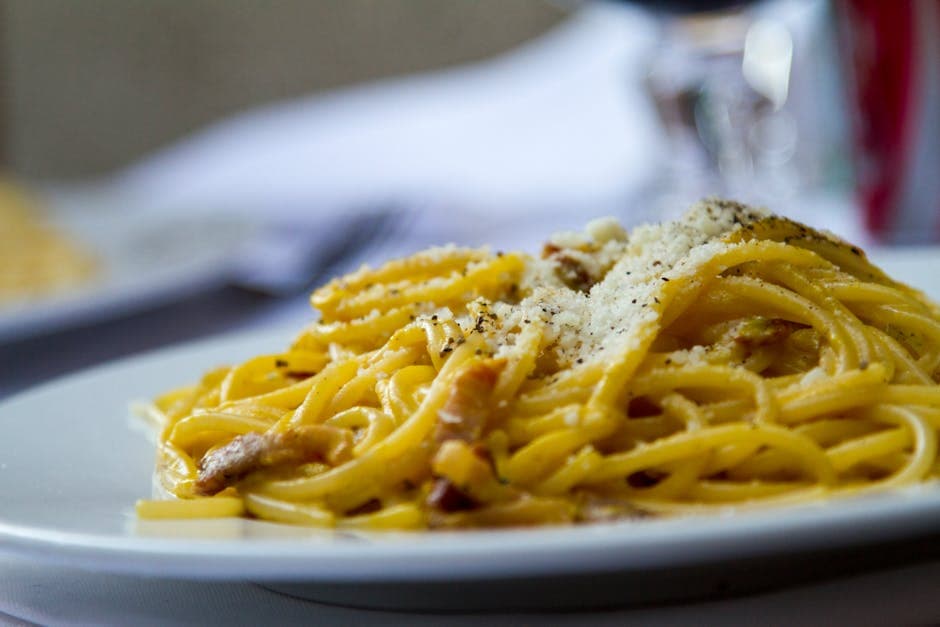
Carbonara Romana Classica
Rome's signature pasta — guanciale, eggs, Pecorino Romano, black pepper. No cream. Ever.
About This Recipe
Carbonara is Rome's most famous pasta — and the most argued-about. The recipe in its classical form has four ingredients: guanciale (cured pork jowl), eggs, Pecorino Romano, and black pepper. No cream. No garlic. No onion. No bacon. No Parmesan. The technique is purely about emulsion: the hot rendered guanciale fat combines with whisked eggs and grated cheese in the residual heat of the just-drained pasta to create a silky golden sauce that coats every strand. Get the temperature wrong and you have scrambled eggs. Get it right and it's one of the most extraordinary dishes in Italian cooking. Origin is debated: most likely 1944 in Rome, when American soldiers arrived with surplus bacon and powdered eggs; Romans adapted with their local guanciale and pecorino. The dish became Roman canon by the 1960s.
Ingredients
Serves 4
- 400 gspaghetti or rigatoni
- 200 gguanciale (not pancetta, not bacon), cut into 1 cm batons
- 4 largeegg yolks
- 1 wholeegg
- 80 gPecorino Romano, finely grated, plus more to serve
- 1.5 tspfreshly ground black pepper, plus more to serve
- coarse salt for the pasta water
Instructions
- 1
Boil the pasta
Bring a wide pot of water to a rolling boil. Salt lightly — Pecorino Romano is already salty. Drop in the pasta and cook to 1 minute less than the package's al dente time.
- 2
Render the guanciale
While the pasta cooks, place guanciale in a wide cold skillet (no oil — guanciale renders its own fat). Set over medium heat. Cook 6-8 minutes, stirring, until the fat has rendered and the guanciale is golden brown and slightly crisp — but the cubes should still be tender, not jerky-hard. Reserve the rendered fat in the pan.
- 3
Whisk the egg-cheese sauce
In a wide bowl, whisk together egg yolks, the whole egg, grated Pecorino, and black pepper into a smooth, thick paste. This is your sauce — uncooked.
- 4
Temper the eggs (key step)
Slowly drizzle 2-3 tablespoons of the hot guanciale fat (NOT the guanciale itself) into the egg mixture, whisking constantly. This raises the egg temperature gently without scrambling them.
- 5
Drain and capture water
Drain the pasta, reserving 250 ml of the starchy pasta cooking water. Do NOT rinse — the starch is critical.
- 6
Combine off the heat
Add drained pasta to the skillet with the rendered guanciale and its fat. Toss vigorously for 30 seconds OFF THE HEAT — the heat from the pan and pasta is enough.
- 7
Add the egg sauce
Pour the tempered egg-cheese mixture over the pasta. Toss vigorously and continuously for 60 seconds, off the heat. Add splashes of reserved pasta water as needed — usually 60-80 ml — until the sauce becomes silky, glossy, and coats every strand. If it looks too thick, more water; too thin, toss a bit more in the warm pan.
- 8
Plate immediately
Twirl into warm bowls. Shower with extra Pecorino and a generous twist of black pepper. Eat the moment it hits the table — carbonara waits for no one.
Did you make this?
Rate it and help other cooks find the recipes that actually work.
One tap to sign in, and we'll save the rating you just picked.
Everything you need to plan your week — free
- Meal calendar
- Grocery list
- AI recipe ideas
Track what you eat
Snap your meal to log calories and macros, run fasting timers and track water in the free SnapCal app.
Pro Tips
- →
Guanciale, not pancetta. Not bacon. The cured pig jowl is essential — its fat is the soul.
- →
Temper the eggs with hot fat first — this is the single technique that separates carbonara from scrambled eggs.
- →
Toss vigorously off the heat — the carry-over heat from pasta + pan cooks the eggs to creamy without scrambling.
Variations
- •
Authentic Roman 'gricia': skip the eggs. Just guanciale + Pecorino + pepper. The proto-carbonara.
- •
Cacio e pepe: skip the guanciale and eggs. Just Pecorino + pepper + pasta water. Three ingredients, monumental dish.
- •
Carbonara vegetariana: replace guanciale with 1 tbsp olive oil + a few sun-dried tomatoes for umami. Not authentic, but workable.
Storage
Eat immediately. Refrigerated leftovers reheat poorly — the eggs scramble. If you must, warm in a pan with a splash of cream (heresy, but it works).
History & Origin
Carbonara emerged in Rome around 1944. The most credible theory: American GIs after the Liberation of Rome had bacon and powdered eggs from their rations; Roman cooks adapted with local guanciale and pecorino. The first recipe in print appeared in 1950. By the 1960s, carbonara was considered classically Roman; today its method is fiercely defended by Roman pasta makers.
Frequently Asked Questions
Can I use pancetta or bacon?
Pancetta is acceptable in a pinch (different but ok). Bacon is not — smoking changes the flavor completely. American bacon carbonara is a different dish.
Why did my eggs scramble?
The pan was too hot when the egg mixture went in. Always toss off the heat; the residual warmth is enough.
What about cream?
No. There is no cream in classical carbonara. The 'creaminess' comes from the egg-cheese-fat emulsion. Adding cream is a French-American adaptation that Romans consider sacrilege.
Nutrition Facts
Per serving (320g / 11.3 oz) · 4 servings total
Time Summary
Have Questions?
Ask our AI cooking assistant anything about this recipe — substitutions, techniques, scaling.
Chat with AI Chef →Featured in Guides
This recipe is featured in the following curated guides:
More Italian Recipes
You Might Also Like
Similar dishes from other cuisines around the world.
Browse by Ingredient
More recipes built around the same core ingredients.
Free Kitchen Tools
Calculators and converters that pair with this page — no signup needed.
Put This Into a Plan
Schedule it, shop for it, and track what you already have.
Read Next
Longer reads that go deeper on the ideas behind this dish.
Community
Join the conversation
Sign in to leave a comment and save your favourite recipes