
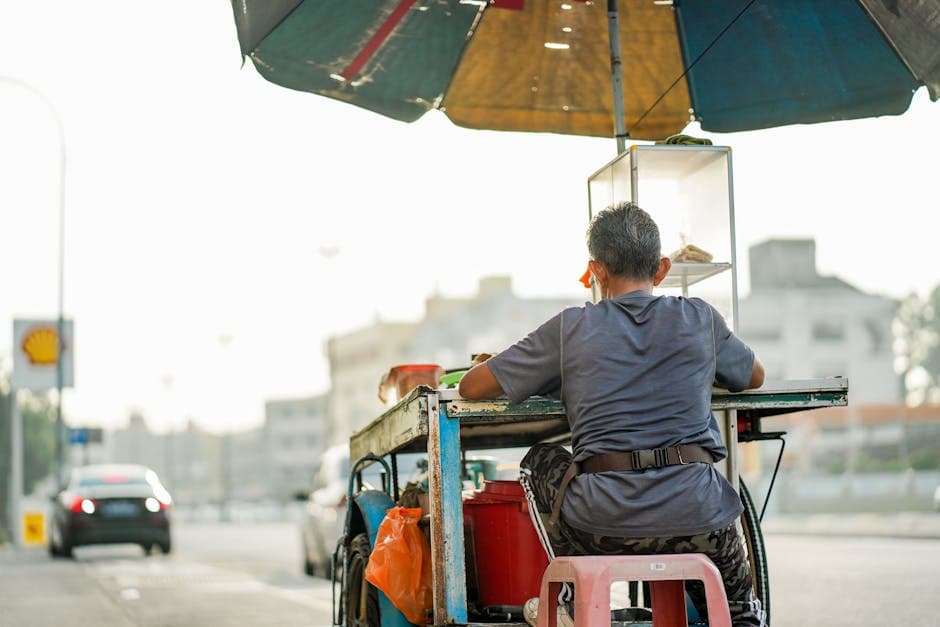
Char Kuey Teow
Penang's iconic stir-fried flat rice noodles with prawns, cockles, Chinese sausage and egg — cooked over ferocious heat for maximum wok hei.
About This Recipe
Char Kuey Teow (炒粿條) is Penang's most famous street food and one of the great noodle dishes of the world. Flat rice noodles are stir-fried at blistering heat in lard with prawns, blood cockles, Chinese sausage (lap cheong), bean sprouts, chives and egg, seasoned with soy sauce and chilli paste. The genius of CKT is wok hei — the smoky, charred breath of the wok that only comes from extreme heat. A skilled CKT hawker cooks each portion individually in a screaming-hot wok, producing noodles that are simultaneously silky, charred and intensely savoury.
Ingredients
Serves 2
- 300 gfresh flat rice noodles (kuey teow)(separated gently)
- 150 graw prawns(peeled)
- 80 gblood cockles(shelled (or clams))
- 50 gChinese sausage (lap cheong)(thinly sliced)
- 2eggs
- 80 gbean sprouts
- 4 stalksgarlic chives(cut into 4 cm pieces)
- 3 clovesgarlic(minced)
- 2 tbspdark soy sauce
- 1 tbsplight soy sauce
- 1 tbspoyster sauce
- 1 tbspchilli paste (sambal)(adjust to taste)
- 2 tbsplard or vegetable oil
Instructions
- 1
Mix sauce
Combine dark soy, light soy, oyster sauce and chilli paste in a small bowl.
- 2
Blast the wok
Heat wok over the highest possible heat until smoking intensely. Add lard.
This dish REQUIRES maximum heat. Use your most powerful burner and leave the extraction fan on.
- 3
Fry aromatics and sausage
Add garlic and Chinese sausage. Stir-fry 30 seconds.
- 4
Add prawns
Add prawns and cook 1 minute until just pink.
- 5
Add noodles
Add noodles and sauce. Spread across the wok, press down and leave undisturbed 30 seconds to char. Toss and repeat.
- 6
Egg and cockles
Push noodles aside. Crack in eggs, scramble briefly, then fold into noodles. Add cockles, bean sprouts and chives. Toss for 1 minute. Plate immediately.
Did you make this?
Rate it and help other cooks find the recipes that actually work.
One tap to sign in, and we'll save the rating you just picked.
Everything you need to plan your week — free
- Meal calendar
- Grocery list
- AI recipe ideas
Track what you eat
Snap your meal to log calories and macros, run fasting timers and track water in the free SnapCal app.
Pro Tips
- →
Cook one portion at a time — never overload the wok. Wok hei only happens with high heat and small quantity.
- →
Lard is traditional and gives the best flavour; vegetable oil is acceptable but less authentic.
- →
Taste and adjust salt at the very end — flavors concentrate as liquids reduce, and a final pinch of flaky salt sharpens the whole dish.
- →
Mise en place pays for itself: chop, measure and pre-mix everything before the heat goes on, especially for any step that moves fast.
Variations
- •
Make it without cockles for a simpler version.
- •
Add duck egg instead of chicken egg for a richer result.
- •
Use beanthread noodles (mee suah) for a different texture.
- •
Vegetarian: swap the protein for roasted king oyster mushrooms, smoked tofu or cooked chickpeas — adjust seasoning slightly upward to compensate.
Storage
Best eaten immediately — CKT does not reheat well.
History & Origin
Char Kuey Teow originated in Penang in the early 20th century as a cheap, filling meal for labourers and rickshaw pullers. The best-known hawker stalls have queues lasting an hour or more, with some operators retiring their recipes forever when they stop cooking.
Frequently Asked Questions
Can I make CKT without a wok?
A very large, well-seasoned cast-iron skillet over the highest heat is the best alternative. A non-stick pan cannot reach the temperatures needed for wok hei and will produce inferior results.
Are blood cockles essential?
Blood cockles (kerang) are a defining ingredient of Penang CKT — their briny richness is irreplaceable. If unavailable, use littleneck clams or simply omit; don't substitute with regular mussels.
Can I make this ahead of time?
Yes — most of the components can be prepared up to a day in advance and refrigerated separately. Reheat gently and assemble just before serving so textures stay distinct.
What can I substitute if I don't have all the ingredients?
Stay close to the role each ingredient plays: swap aromatics for similar ones (shallot for onion, lime for lemon), and keep the fat-acid-salt balance intact. Spice blends can usually be approximated with what's in the cupboard.
Nutrition Facts
Per serving · 2 servings total
Time Summary
Have Questions?
Ask our AI cooking assistant anything about this recipe — substitutions, techniques, scaling.
Chat with AI Chef →Featured in Guides
This recipe is featured in the following curated guides:
More Malaysian Recipes
You Might Also Like
Similar dishes from other cuisines around the world.
Browse by Ingredient
More recipes built around the same core ingredients.
Free Kitchen Tools
Calculators and converters that pair with this page — no signup needed.
Put This Into a Plan
Schedule it, shop for it, and track what you already have.
Read Next
Longer reads that go deeper on the ideas behind this dish.
Community
Join the conversation
Sign in to leave a comment and save your favourite recipes