
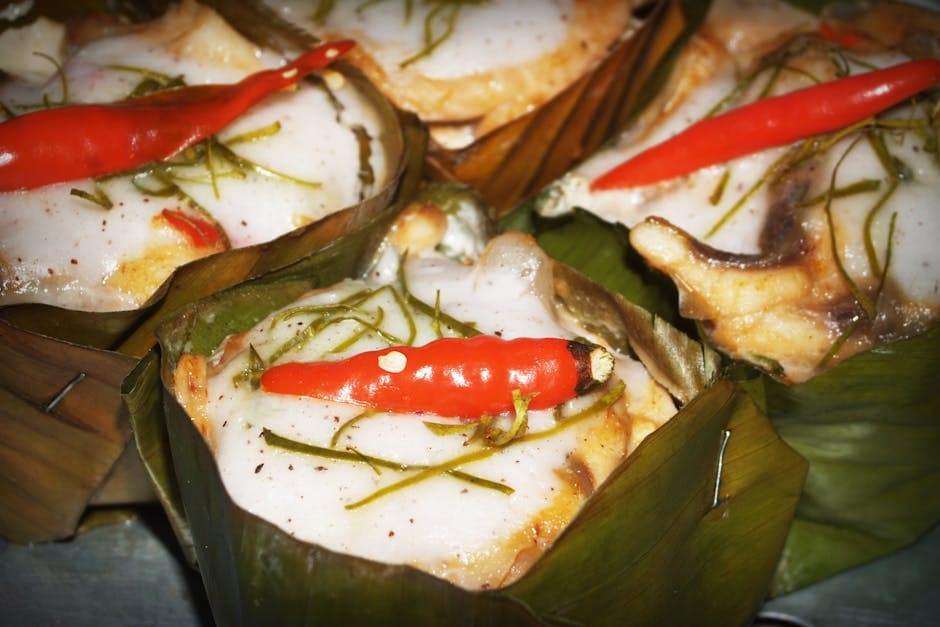
Fish Amok (Cambodian Coconut Fish Curry)
Cambodia's national dish: silky fish custard steamed in banana leaves with kroeung lemongrass paste and coconut cream.
About This Recipe
Fish amok (amok trei) is Cambodia's signature dish and one of Southeast Asia's most delicate curries. Freshwater fish — traditionally snakehead or catfish — is folded into a fragrant paste of lemongrass, galangal, turmeric, kaffir lime, and garlic (the holy quintet known as kroeung), enriched with coconut cream and palm sugar, and steamed in cups made from banana leaves until the mixture sets into a soft, savory custard. The texture is the magic: somewhere between a mousse and a curry, fragrant rather than fiery, with delicate noni or morning-glory leaves layered at the bottom. Amok is Cambodia's flag-bearer dish — served at Pchum Ben festivals, wedding banquets, and every restaurant catering to visitors in Siem Reap and Phnom Penh.
Ingredients
Serves 4
- 600 gwhite firm-fleshed fish (snakehead, catfish, cod, or tilapia), cubed
- 4 stalkslemongrass, tender white parts only, sliced
- 4 clovesgarlic
- 3shallots
- 1 thumbgalangal (or ginger as substitute)
- 1 thumbfresh turmeric (or 1 tsp dried)
- 6kaffir lime leaves, stems removed
- 1 tspshrimp paste (kapi)
- 2dried red chilies, soaked and seeded (optional)
- 400 mlthick coconut cream
- 2 tbspfish sauce
- 2 tbsppalm sugar, grated
- 2eggs, beaten
- 1 tbsprice flour
- 100 gnoni leaves or morning glory or baby spinach
- 4 squaresbanana leaves, softened over flame (or ramekins)
- 2red chilies, finely sliced for garnish
- 2kaffir lime leaves, finely shredded for garnish
Instructions
- 1
Make kroeung
Pound lemongrass, garlic, shallots, galangal, turmeric, kaffir lime leaves, shrimp paste, and chilies in a mortar (or pulse in a food processor) into a fine, fragrant green paste. This takes 8–10 minutes by hand.
Real kroeung is pounded, not blended — but a powerful processor with a tbsp of water gets you close.
- 2
Cook paste
Heat 3 tbsp coconut cream in a pan over medium. When the oil separates and shimmers, add kroeung. Fry 4 minutes until deeply aromatic and the color darkens.
- 3
Build base
Add remaining coconut cream, fish sauce, and palm sugar. Simmer 3 minutes. Taste — it should be salty-sweet-perfumed. Cool to lukewarm.
- 4
Combine
Whisk eggs and rice flour into the cooled mixture. Fold in fish cubes gently — they should be fully coated but not broken up.
- 5
Prepare cups
Form banana leaf squares into cups by overlapping two perpendicular leaves and pinning the corners with toothpicks. (Or use small ceramic ramekins.)
- 6
Layer and fill
Place a few noni leaves or spinach in the bottom of each cup. Spoon fish mixture on top to fill three-quarters.
- 7
Steam
Steam cups over simmering water for 22–25 minutes until set — the surface should be firm but yield slightly when pressed.
Don't oversteam — past 25 minutes the custard goes rubbery.
- 8
Garnish and serve
Drizzle each amok with a spoon of fresh coconut cream. Top with sliced red chili and shredded kaffir lime leaves. Serve with jasmine rice.
Did you make this?
Rate it and help other cooks find the recipes that actually work.
One tap to sign in, and we'll save the rating you just picked.
Everything you need to plan your week — free
- Meal calendar
- Grocery list
- AI recipe ideas
Cook this hands-free
Get AI meal plans, step-by-step cooking mode, and your saved recipes in the free Bento app.
Pro Tips
- →
Authentic amok depends on kroeung — don't substitute Thai red curry paste, which is harsher and chili-heavier. Make your own or buy a Cambodian-labeled paste.
- →
Use the thickest coconut cream you can find (Aroy-D or Chao Koh) — light coconut milk won't set into a proper custard.
- →
If you can find them, slok ngor (noni leaves) are the traditional bed; the leaves are slightly bitter and balance the rich coconut.
Variations
- •
Amok sat (chicken amok): use boneless chicken thigh cubed; cook 5 extra minutes.
- •
Vegetarian amok: tofu and mushroom; use soy sauce in place of fish sauce, mushroom paste in place of shrimp paste.
- •
Open-pan amok: omit eggs and rice flour; serve as a thicker coconut-fish stew over rice.
Storage
Best eaten fresh. Refrigerate up to 2 days; reheat by steaming again for 6 minutes — never microwave (the custard separates).
History & Origin
Fish amok dates to the Angkor period (9th–15th centuries), when steaming foods in banana leaves was the dominant cooking technique. The shrimp-paste-and-coconut combination reflects centuries of trade with Indian, Malay, and Chinese cooking traditions across the Mekong basin.
Frequently Asked Questions
What is kroeung?
Kroeung is the foundational Khmer flavor paste of pounded lemongrass, galangal, turmeric, kaffir lime leaves, garlic, shallots, and shrimp paste. There are red, yellow, and green varieties used across Cambodian cooking.
Can I make amok without banana leaves?
Yes — small ceramic ramekins or steamer cups work perfectly. The banana leaf is traditional and adds a subtle herbaceous note, but is not essential to the dish's success.
Why is my amok watery instead of set?
You either used light coconut milk instead of thick cream, didn't include the egg/rice flour binders, or undercooked it. Set requires a custard-like ratio of fat and protein plus 20+ minutes of gentle steam.
Is amok spicy?
Authentic Khmer amok is fragrant, not fiery — most versions use no chili at all. The character is herbal and floral from the kroeung, with sweet and salty undertones. Add chili to taste but don't dominate.
Nutrition Facts
Per serving (240g / 8.5 oz) · 4 servings total
Time Summary
Have Questions?
Ask our AI cooking assistant anything about this recipe — substitutions, techniques, scaling.
Chat with AI Chef →Featured in Guides
This recipe is featured in the following curated guides:
More Cambodian Recipes
You Might Also Like
Similar dishes from other cuisines around the world.
Free Kitchen Tools
Calculators and converters that pair with this page — no signup needed.
Put This Into a Plan
Schedule it, shop for it, and track what you already have.
Read Next
Longer reads that go deeper on the ideas behind this dish.
Community
Join the conversation
Sign in to leave a comment and save your favourite recipes