
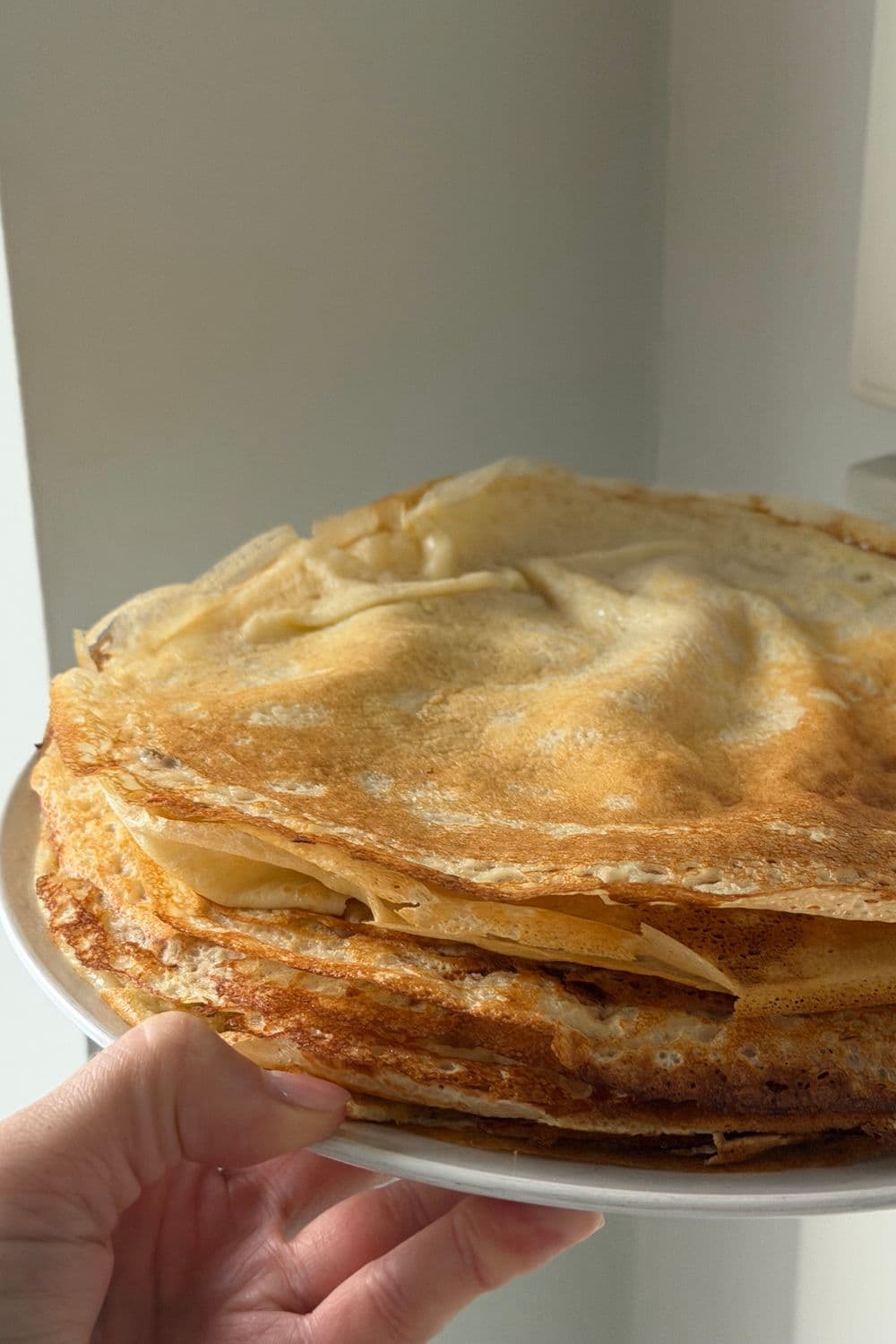
Classic French Crêpes Recipe
Paper-thin French crêpes that are perfectly crisp at the edges and soft in the centre — for sweet or savoury fillings. This easy crêpe recipe works for everything from Nutella and strawberries to ham and cheese.
About This Recipe
A proper French crêpe should be so thin you can almost see through it — lacy and golden at the edges, pliable in the centre. The secret is a very thin batter, a hot and well-seasoned pan, and confidence when pouring and swirling. The batter must rest for at least 30 minutes so the flour fully hydrates and the gluten relaxes, which is what keeps the finished crêpe tender instead of rubbery or prone to tearing. Crêpes have been a staple of Breton and Norman cooking for centuries, originally made with buckwheat before the lighter, all-purpose-flour version became the everyday breakfast and dessert crêpe eaten across France today — buckwheat crêpes (galettes) are still the savoury tradition in Brittany, kept separate from the sweet wheat-flour crêpe. What separates a home cook's crêpe from a lacy, restaurant-thin one usually comes down to pan technique rather than the recipe itself: a properly hot pan, just enough batter to coat it in one quick swirl, and the confidence to pour it back out if there's too much. The first crêpe from a new pan is almost always a write-off — cooks traditionally treat it as the 'tester' and don't judge the batter by it. Because the batter keeps well in the fridge for a day or two, crêpes are also one of the most practical make-ahead breakfasts: stack the cooked crêpes between sheets of parchment and reheat briefly in a dry pan just before filling.
Ingredients
Serves 8
- 125 gplain flour
- 2large eggs
- 300 mlwhole milk
- 30 gunsalted butter(melted, plus more for the pan)
- 0.5 tspfine salt
- 1 tspcaster sugar(omit for savoury crêpes)
- 1 tspvanilla extract(for sweet crêpes)
Instructions
- 1
Make the batter
Whisk flour and salt in a bowl. Make a well and add eggs. Whisk to a smooth paste. Gradually whisk in milk until a thin, lump-free batter forms. Whisk in melted butter and vanilla (if using). Rest 30 minutes at room temperature.
Resting is non-negotiable — it relaxes the gluten and prevents rubbery crêpes.
- 2
Cook the crêpes
Heat a 20cm / 8-inch non-stick pan over medium-high heat. Melt a small knob of butter. Pour in 3 tbsp batter and immediately swirl the pan to coat thinly. Cook 1–2 minutes until the edges are golden and the surface looks dry.
- 3
Flip and finish
Flip with a spatula (or bravely with a wrist flick). Cook 30 seconds on the second side. Stack on a plate with baking paper between layers.
Did you make this?
Rate it and help other cooks find the recipes that actually work.
One tap to sign in, and we'll save the rating you just picked.
Everything you need to plan your week — free
- Meal calendar
- Grocery list
- AI recipe ideas
Track what you eat
Snap your meal to log calories and macros, run fasting timers and track water in the free SnapCal app.
Pro Tips
- →
The first crêpe is always a test crêpe — don't be discouraged if it's imperfect.
- →
Swirl the pan the moment you pour the batter — speed creates the thin, even layer.
- →
A ladle or measuring jug (not a spoon) pours more controlled amounts.
Variations
- •
Crêpes Suzette: flambéed in orange butter and Grand Marnier — the classic French dessert.
- •
Savoury galettes: use buckwheat flour instead of plain flour for traditional Breton galettes (naturally gluten-free).
Storage
Stack cooked crêpes with baking paper between each. Keep refrigerated for 3 days or freeze for 1 month. Reheat in a dry pan for 30 seconds.
History & Origin
Crêpes originated in Brittany, north-west France, where buckwheat grows readily. The traditional Breton version (galette) is made with buckwheat and filled with savoury ingredients. Thin wheat-flour crêpes became associated with Chandeleur (Candlemas on 2 February) across France and are now eaten year-round.
Frequently Asked Questions
Why are my crêpes thick?
The batter is too thick. Gradually add more milk — the batter should be the consistency of thin cream.
Why do my crêpes tear when flipping?
Either the batter needed more resting time, the pan wasn't hot enough, or you flipped too early. The crêpe is ready to flip when the edges look golden and the surface looks completely dry.
Can crêpe batter be made the night before?
Yes — the batter actually improves after resting overnight in the fridge. Bring to room temperature and stir before using.
What is the difference between a crêpe and a pancake?
Crêpes use no leavening agent (no baking powder) and far more liquid, resulting in paper-thin, flexible wraps rather than thick, fluffy pancakes.
Nutrition Facts
Per serving (150g / 5.3 oz) · 8 servings total
Time Summary
Have Questions?
Ask our AI cooking assistant anything about this recipe — substitutions, techniques, scaling.
Chat with AI Chef →Featured in Guides
This recipe is featured in the following curated guides:
More French Recipes
You Might Also Like
Similar dishes from other cuisines around the world.
Browse by Ingredient
More recipes built around the same core ingredients.
Free Kitchen Tools
Calculators and converters that pair with this page — no signup needed.
Put This Into a Plan
Schedule it, shop for it, and track what you already have.
Read Next
Longer reads that go deeper on the ideas behind this dish.
Community
Join the conversation
Sign in to leave a comment and save your favourite recipes