
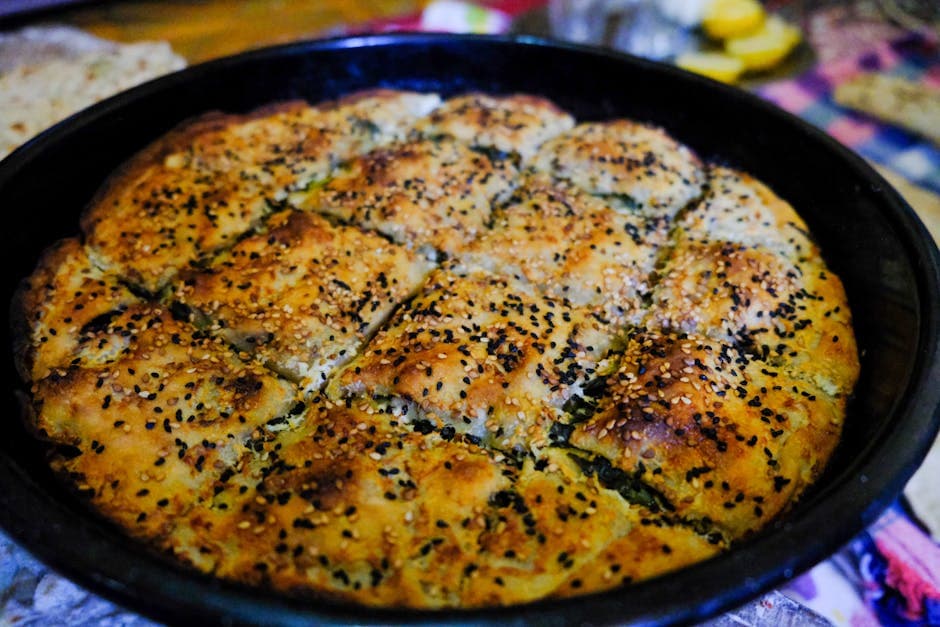
Malawach (Yemeni Jewish Flaky Pan Bread)
Yemen's extraordinary flaky layered bread — laminated with clarified butter and pan-fried until the layers separate into a crispy, honeycomb-like structure. Served with grated tomato, zhug and honey.
About This Recipe
Malawach (מלאווח) is one of the great breads of the world and, after the mass immigration of Yemeni Jews to Israel in the 1940s and 50s, has become a defining element of Israeli breakfast and street food culture. It is a laminated bread — layers of dough separated by clarified butter, folded repeatedly (like croissant or filo technique), then pan-fried rather than baked, which causes the layers to separate into a crispy, honeycombed structure that is simultaneously crunchy at the edges and chewy within. The traditional accompaniments: grated fresh tomato (salted and drained, served cold), zhug (Yemeni green chilli paste) and a drizzle of honey — the combination of crispy bread, raw tomato acidity, spicy zhug and sweet honey is extraordinary.
Ingredients
Serves 4
- 2 cupsplain flour
- 0.5 tspsalt
- 1 tspsugar
- 0.5 cupwarm water(approximately)
- 100 gclarified butter (ghee) or regular butter(softened)
- 3tomatoes(halved and grated on a box grater (grated tomato))
- 1 tspsalt
- 3 tbsphoney
- 4 tbspzhug or green chilli sauce
Instructions
- 1
Make dough
Mix flour, salt and sugar. Add enough water to form a smooth, soft dough. Knead 5 min. Rest covered 20 min.
- 2
Divide and rest
Divide into 4 equal balls. Flatten each slightly, brush with soft butter, stack with butter between. Refrigerate 30 min.
- 3
Laminate
Working with one portion, roll into a very thin rectangle (30×20cm). Spread a thin layer of soft butter over the surface. Fold in thirds (like a letter). Rotate 90° and roll thin again. Fold in thirds again. Flatten gently into a disc.
The more butter layers, the flakier the result. Cold butter is easier to work with.
- 4
Pan-fry
Heat a dry frying pan over medium heat. Cook malawach 3–4 min per side until deep golden and crispy, with the layers visibly separating at the edges.
- 5
Serve
Serve immediately with grated tomato (seasoned with salt), zhug alongside, and honey for drizzling over.
Did you make this?
Rate it and help other cooks find the recipes that actually work.
One tap to sign in, and we'll save the rating you just picked.
Everything you need to plan your week — free
- Meal calendar
- Grocery list
- AI recipe ideas
Track what you eat
Snap your meal to log calories and macros, run fasting timers and track water in the free SnapCal app.
Pro Tips
- →
The dough should be very thin when laminated — aim for translucency. The layers are what give the honeycombed texture.
- →
Cook in a dry pan — no oil — the butter within the layers provides all the fat needed.
- →
Taste and adjust salt at the very end — flavors concentrate as liquids reduce, and a final pinch of flaky salt sharpens the whole dish.
- →
Mise en place pays for itself: chop, measure and pre-mix everything before the heat goes on, especially for any step that moves fast.
Variations
- •
Jachnun: a slow-baked overnight Yemeni bread using the same laminated dough
- •
Fill with cheese before the final fold for a stuffed version
- •
Serve with labneh instead of grated tomato for a creamier accompaniment
- •
Vegetarian: swap the protein for roasted king oyster mushrooms, smoked tofu or cooked chickpeas — adjust seasoning slightly upward to compensate.
Storage
Uncooked, laminated malawach discs freeze very well between layers of parchment. Cook from frozen — add 2 extra minutes per side.
History & Origin
Malawach comes from the Yemeni Jewish tradition and was brought to Israel by Yemeni immigrants in the 1948 and 1950 aliyot (waves of immigration). In Yemen, it was weekend and holiday food — the lamination technique is labour-intensive. In Israel it became street and café food, sold in dedicated malawach shops (especially in the southern city of Beersheba, a centre of Yemeni-Israeli culture).
Frequently Asked Questions
What is zhug?
Zhug (also spelled schug or zhoug) is a fiery Yemeni chilli paste made from fresh green or red chillies, garlic, cilantro, cardamom and cumin. It is the essential condiment of Yemeni-Israeli cooking — a few spoonfuls transform everything from bread to falafel to shakshuka. It is sold in jars in Middle Eastern grocery stores.
Can I make this ahead of time?
Yes — most of the components can be prepared up to a day in advance and refrigerated separately. Reheat gently and assemble just before serving so textures stay distinct.
What can I substitute if I don't have all the ingredients?
Stay close to the role each ingredient plays: swap aromatics for similar ones (shallot for onion, lime for lemon), and keep the fat-acid-salt balance intact. Spice blends can usually be approximated with what's in the cupboard.
How do I know it's authentic?
Authenticity sits on a spectrum — what matters more is honoring the technique and balance of flavors. If the dish tastes harmonious and respects how cooks in its home region would build it, you're on solid ground.
Nutrition Facts
Per serving · 4 servings total
Time Summary
Have Questions?
Ask our AI cooking assistant anything about this recipe — substitutions, techniques, scaling.
Chat with AI Chef →Featured in Guides
This recipe is featured in the following curated guides:
More Israeli Recipes
You Might Also Like
Similar dishes from other cuisines around the world.
Browse by Ingredient
More recipes built around the same core ingredients.
Free Kitchen Tools
Calculators and converters that pair with this page — no signup needed.
Put This Into a Plan
Schedule it, shop for it, and track what you already have.
Read Next
Longer reads that go deeper on the ideas behind this dish.
Community
Join the conversation
Sign in to leave a comment and save your favourite recipes