
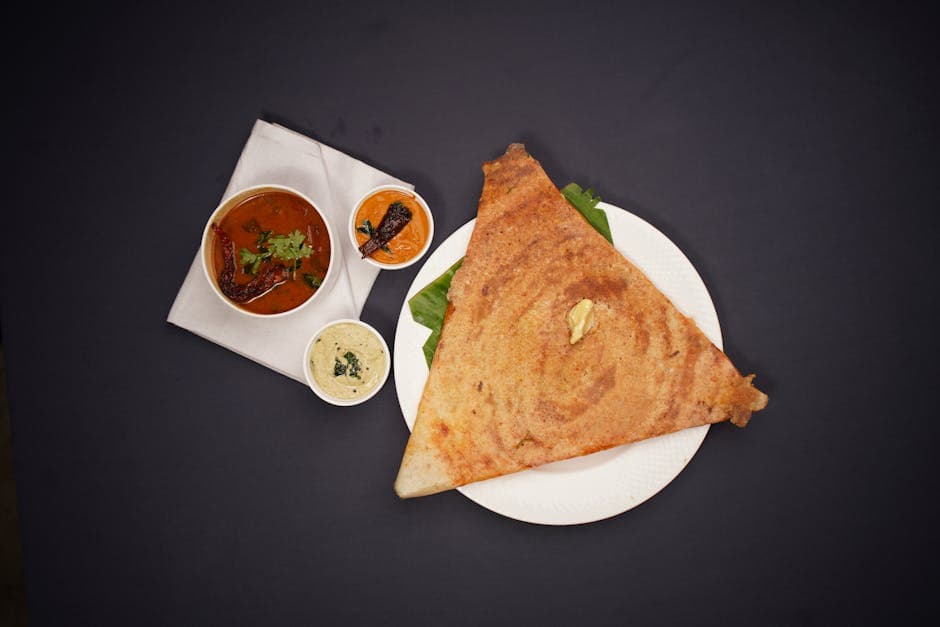
Masala Dosa (South Indian Crispy Rice Crepe with Potato)
South India's iconic breakfast — a paper-thin, golden, crisp fermented rice and lentil crepe folded around a spiced potato filling, served with coconut chutney and sambar.
About This Recipe
Masala dosa is one of South India's greatest contributions to world cuisine — a paper-thin, lacily-crisp fermented crepe of rice and urad dal, wrapped around a buttery, mustard-seed-tempered potato filling and served with a coconut chutney and a fiery, sour sambar dal. The technique is centuries old: rice and split black gram are soaked separately for hours, ground to a smooth batter, fermented overnight until tangy and full of small bubbles, then poured in a thin disk on a screaming-hot griddle and pushed outward with the bottom of a steel cup until it covers the whole pan in a translucent skin. A pat of ghee, a sprinkle of dosa podi spice powder, the potato filling at the center, and a confident fold — that's the whole dish. The masala filling itself is what distinguishes the dosa: boiled potatoes broken up roughly with mustard seed and urad dal tempered in oil, sweet brown onions cooked down with green chili and curry leaves, turmeric for color, and a final brightening of lime and fresh coriander. Eaten at the great Udupi and Karnataka diners of Bangalore, Madras and Bombay, masala dosa is breakfast, lunch and street food all at once — and at its best, when it arrives folded as long as your forearm with the chutney already plated, it is genuinely one of the most pleasure-giving meals on Earth.
Ingredients
Serves 4
- 300 graw rice (parboiled or sona masuri), soaked separately
- 100 gwhole skinned urad dal (split black gram), soaked separately
- 1 tbspfenugreek seeds, soaked with the dal
- 0.5 tspsalt for the batter
- 500 gwaxy potatoes, boiled and peeled
- 2 mediumyellow onions, finely sliced
- 2green chillies, slit lengthwise
- 15fresh curry leaves
- 1 tspblack mustard seeds
- 1 tspwhole urad dal (for tempering)
- 0.5 tspturmeric powder
- 1 small pieceginger, finely grated
- 1 small bunchcoriander, chopped
- 1lime, juiced
- 4 tbspghee or coconut oil for cooking
- salt to taste, coconut chutney and sambar to serve
Instructions
- 1
Soak overnight
Rinse the rice and the urad dal+fenugreek separately. Soak each in plenty of cold water for 6 hours minimum. The fenugreek with the dal gives the dosa its golden color and aids fermentation.
- 2
Grind the batter
Drain the dal+fenugreek and grind to a silky-smooth, fluffy white paste with just enough cold water to keep it moving (about 200 ml) — should be the texture of whipped cream and roughly double in volume from aeration. Tip into a large bowl. Grind the rice separately to a slightly grainy semolina-like texture with ~150 ml water; combine with the dal batter, add ½ tsp salt and mix with your hand for 2 minutes to incorporate air (the natural yeasts on your skin help fermentation).
- 3
Ferment 8–14 hours
Cover loosely and leave in a warm place (24–28°C ideal) for 8 hours in summer or up to 14 in winter. The batter is ready when it has doubled in volume, smells pleasantly sour, and shows small bubbles when stirred. Refrigerate if you're not cooking immediately.
- 4
Make the masala filling
Crush the boiled potatoes coarsely — leave some lumps for texture. Heat 2 tbsp ghee in a wide pan over medium. Splutter the mustard seeds 30 seconds, add whole urad dal and fry until golden, then curry leaves, green chili, ginger, and finally the sliced onion. Cook 8 minutes until the onion is sweet and translucent.
- 5
Combine and finish the filling
Sprinkle in the turmeric and a teaspoon of salt, stir 30 seconds, then add the crushed potatoes with 100 ml water. Mash gently and cook 4 minutes until everything comes together as a soft, slightly moist mixture. Finish with lime juice and coriander. Keep warm.
- 6
Heat the griddle properly
Heat a heavy non-stick or seasoned cast-iron tava (or flat pan) over medium-high until a flick of water on the surface evaporates instantly. Rub the surface with half an onion dipped in oil — this seasons and lowers the temperature to perfect dosa heat. Wipe with paper towel between dosas.
- 7
Spread the dosa
Ladle 80 ml of batter into the center. Working quickly and confidently, spread it outward in a spiral motion with the back of a flat-bottomed steel cup or ladle until you have a thin, even disk about 25 cm across. The thinner the dosa, the crispier; the goal is paper-thin with a translucent center.
- 8
Crisp and fill
Drizzle 1 tsp of ghee around the edges and over the surface. Cook 60–90 seconds — the bottom should turn deep golden brown and the edges should lift easily from the pan. Place a generous spoonful of masala in the center, fold the dosa in half or in thirds over it, and slide onto a plate. Serve immediately with coconut chutney and sambar.
Did you make this?
Rate it and help other cooks find the recipes that actually work.
One tap to sign in, and we'll save the rating you just picked.
Everything you need to plan your week — free
- Meal calendar
- Grocery list
- AI recipe ideas
Track what you eat
Snap your meal to log calories and macros, run fasting timers and track water in the free SnapCal app.
Pro Tips
- →
Fermentation is the make-or-break — too cold (under 20°C) and it never rises; too warm (over 32°C) and it goes sour. A turned-off oven with the light on is the ideal home environment.
- →
Mix the batter with your hand, not a spoon — Indian grandmothers will swear that the wild yeasts on your skin are part of what makes the ferment work. There's actually science behind this.
- →
The first dosa is always a disaster — call it the cook's portion and don't worry. By the third or fourth, the pan temperature and your technique sync up.
- →
Parboiled rice (idli rice) ferments faster and gives a crispier dosa than regular raw rice. Worth seeking out at an Indian grocery; sona masuri is the next best.
Variations
- •
Mysore masala dosa: spread a thin layer of red garlic-chilli chutney on the dosa before adding the potato — Mysore's signature variation.
- •
Rava dosa (instant): no fermentation needed — semolina, rice flour, all-purpose flour and yogurt batter. Lacy and crisp but a completely different beast.
- •
Set dosa: thicker, softer dosa cooked covered like a pancake — Karnataka morning specialty served stacked in sets of 3.
- •
Paneer masala dosa: substitute crumbled paneer and peas for some of the potato in the filling — a Punjabi-Tamil fusion.
Storage
Batter keeps refrigerated 4 days — bring to room temperature before using and add a splash of water if too thick. Cooked dosas don't reheat well; they lose their crispness. The masala filling refrigerates 3 days and freezes 2 months.
History & Origin
Dosa originated in the temple kitchens of medieval Tamil Nadu and Karnataka, with the earliest written references appearing in 6th-century Sanskrit texts. The folded masala version with potato filling is a later 19th-century innovation associated with Udupi cuisine of coastal Karnataka, where the Krishna temple's kitchens served pilgrims and standardized the dish that is now found from Madras tiffin houses to Bangkok mall food courts.
Frequently Asked Questions
What if my batter doesn't ferment?
Either your kitchen is too cold (warm spot needed) or your dal was old (urad dal loses fermentation power with age — buy fresh). You can rescue under-fermented batter by adding ½ tsp eno fruit salt or a pinch of baking soda just before cooking — it won't taste sour but will rise.
Can I use a blender instead of a wet grinder?
Yes — a powerful blender works, but grind in small batches with minimal water and add ice cubes to prevent overheating (which kills fermentation). A stone wet grinder produces lighter, fluffier batter and is worth the investment if you make dosa often.
Why isn't my dosa crispy?
Either the pan isn't hot enough (test with water — it must evaporate instantly), or the batter is too thick (loosen with water to thin-pancake consistency), or you spread it too thick (must be paper-thin).
Do I need a tava?
Any heavy flat pan works — a well-seasoned cast iron, a non-stick crepe pan, or a flat griddle. A specialized Indian tava is ideal but not essential.
Nutrition Facts
Per serving (360g / 12.7 oz) · 4 servings total
Time Summary
Have Questions?
Ask our AI cooking assistant anything about this recipe — substitutions, techniques, scaling.
Chat with AI Chef →Featured in Guides
This recipe is featured in the following curated guides:
More Indian Recipes
You Might Also Like
Similar dishes from other cuisines around the world.
Browse by Ingredient
More recipes built around the same core ingredients.
Free Kitchen Tools
Calculators and converters that pair with this page — no signup needed.
Put This Into a Plan
Schedule it, shop for it, and track what you already have.
Read Next
Longer reads that go deeper on the ideas behind this dish.
Community
Join the conversation
Sign in to leave a comment and save your favourite recipes