
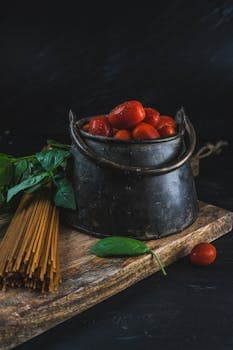
One-Pot Tomato Basil Pasta
Spaghetti, tomatoes, garlic, basil and olive oil cooked in a single pot — pasta water becomes the sauce in 12 minutes flat.
About This Recipe
The one-pot pasta technique — pioneered by Martha Stewart in 2013 and popularised across food media — cooks dry pasta directly in the sauce, with just enough water to absorb. The starch released from the pasta thickens the sauce naturally; no separate step. Done well, the result rivals traditional pasta with far less washing up.
Ingredients
Serves 4
- 400 gspaghetti or linguine
- 400 gripe cherry tomatoes(halved)
- 1 smallonion(thinly sliced)
- 5 clovesgarlic(thinly sliced)
- 1 tspred pepper flakes(optional)
- 1 Lboiling water(approximately)
- 60 mlextra-virgin olive oil
- 1 tspsalt(or more to taste)
- 1 largehandful fresh basil(torn)
- 60 gParmigiano-Reggiano(freshly grated, plus extra)
- freshly cracked black pepper(to taste)
Instructions
- 1
Combine in the pot
Place the spaghetti, halved cherry tomatoes, sliced onion, garlic, red pepper flakes, olive oil and salt in a wide pot or deep skillet. Pour in boiling water until just barely covering — about 1L for 400g pasta.
- 2
Cook actively
Bring to a hard boil over high heat. Cook for 9-12 minutes, stirring with tongs every minute to prevent the pasta from sticking together. The water should reduce dramatically, becoming a creamy starchy sauce.
Stir constantly — if you walk away, the pasta clumps.
- 3
Check the texture
The pasta should be al dente when most of the water has been absorbed and the sauce coats the strands. If pasta is undercooked but water is gone, splash in 60ml hot water and stir.
- 4
Finish off-heat
Off the heat, stir in fresh basil and most of the Parmigiano. Toss until everything is glossy and creamy. Taste and adjust salt.
- 5
Plate and serve
Twirl into warm bowls. Top with extra Parmigiano, more fresh basil, a crack of black pepper and a drizzle of olive oil. Serve immediately.
Did you make this?
Rate it and help other cooks find the recipes that actually work.
One tap to sign in, and we'll save the rating you just picked.
Everything you need to plan your week — free
- Meal calendar
- Grocery list
- AI recipe ideas
Track what you eat
Snap your meal to log calories and macros, run fasting timers and track water in the free SnapCal app.
Pro Tips
- →
Use a wide pot — too narrow and the pasta clumps.
- →
The starchy water IS the sauce — don't drain it.
- →
Best cherry tomatoes possible — this is essentially a tomato dish.
Variations
- •
Add Protein: stir in cooked Italian sausage or shrimp at the end.
- •
Creamy Version: stir in 4 tbsp mascarpone or cream cheese before serving.
- •
Pesto Variation: stir in 3 tbsp pesto at the end instead of fresh basil.
- •
With Vegetables: add halved zucchini or asparagus in the first 3 minutes of cooking.
Storage
Best eaten immediately — pasta absorbs sauce on standing.
History & Origin
The one-pot pasta technique was popularised by Martha Stewart's magazine in 2013 and went viral on food blogs throughout 2014-2016. The Italian cooking establishment was initially skeptical (you don't drain the water!) but the technique has become a recognised modern method for weeknight pasta.
Frequently Asked Questions
Won't the pasta taste starchy?
No — the released starch creates a creamy emulsified sauce, not a gluey one. The texture is similar to traditionally tossed pasta with reserved pasta water, just achieved in one step.
Can I use any pasta shape?
Long thin shapes (spaghetti, linguine, fettuccine) work best because they cook evenly when stirred. Tube shapes (penne, rigatoni) need more water and stirring; small shapes (orzo, ditalini) clump easily. Stick to long thin for reliable results.
Why do my pasta strands clump together?
Either too little water, not stirring frequently enough, or pasta added to non-boiling water. Stir with tongs every 60 seconds for the first 5 minutes to prevent sticking.
Can I add cream?
Yes — stir in 60ml double cream in the last minute of cooking for a creamier sauce. But the dish doesn't need it; the natural starch is plenty creamy.
Nutrition Facts
Per serving (380g / 13.4 oz) · 4 servings total
Time Summary
Have Questions?
Ask our AI cooking assistant anything about this recipe — substitutions, techniques, scaling.
Chat with AI Chef →Featured in Guides
This recipe is featured in the following curated guides:
More Italian Recipes
You Might Also Like
Similar dishes from other cuisines around the world.
Browse by Ingredient
More recipes built around the same core ingredients.
Free Kitchen Tools
Calculators and converters that pair with this page — no signup needed.
Put This Into a Plan
Schedule it, shop for it, and track what you already have.
Read Next
Longer reads that go deeper on the ideas behind this dish.
Community
Join the conversation
Sign in to leave a comment and save your favourite recipes