
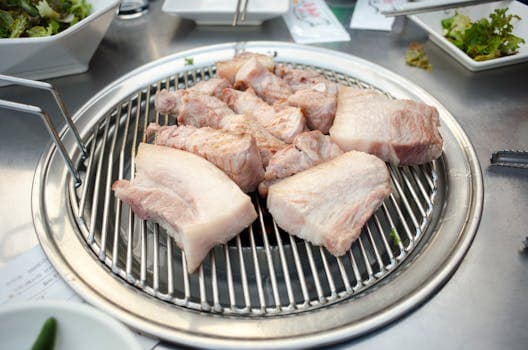
Samgyeopsal (Korean Grilled Pork Belly)
Korea's most popular BBQ — thick-cut pork belly grilled tableside and wrapped in lettuce with ssamjang, garlic, kimchi and perilla leaves.
About This Recipe
Samgyeopsal (삼겹살, literally 'three-layer flesh') is thick-cut pork belly grilled on a tabletop grill and eaten communally. It is the most popular dish at Korean BBQ restaurants and a cornerstone of Korean social eating. The cooking is interactive — slices of pork belly are grilled until the fat renders and the edges crisp, then wrapped in fresh perilla or lettuce leaves with a smear of ssamjang (fermented bean and chilli paste), raw garlic, kimchi, sliced chilli and spring onion. The contrast of the rich, fatty pork with the fresh lettuce, pungent garlic and fermented condiments is profoundly satisfying. It is eaten with rice, multiple banchan (side dishes) and shots of soju. Rooted in the everyday cooking of Korean kitchens, Samgyeopsal (Korean Grilled Pork Belly) balances technique and tradition: the thick-cut pork belly, sliced 1 cm is treated with care, drawing on time-honoured ratios that locals have refined across generations. The dish carries an unmistakable sensory signature — aromas that fill the kitchen as it cooks, layered textures that reveal themselves bite by bite, and a depth of flavour that comes from patient seasoning rather than shortcuts. Whether served as a weeknight dinner or as the centrepiece of a celebratory table, it reflects a regional pantry where local produce, seasoning habits and cooking vessels shape the final result. Home cooks who make this dish often note how forgiving it is once the core method is understood, and how a few small choices — the freshness of the thick-cut pork belly, sliced 1 cm, the order of additions, the resting time at the end — separate a good version from a memorable one. This recipe walks through those choices so the dish arrives with the character it has on its home turf.
Ingredients
Serves 4
- 800 gthick-cut pork belly, sliced 1 cm
- 2 headslettuce leaves (butter or green leaf)
- handfulfresh perilla (kkaennip) leaves
- 4 tbspssamjang (dipping sauce)
- 6garlic cloves, sliced thin
- 2fresh green chillies, sliced
- 200 gkimchi
- 3spring onions, sliced
- 2 tbspsesame oil
- 1 tbspsalt and black pepper
- cooked rice to serve
Instructions
- 1
Prepare condiments
Arrange lettuce, perilla leaves, ssamjang, sliced garlic, chillies and kimchi on the table. Mix sesame oil with salt and pepper in a small dish for dipping.
- 2
Grill pork belly
Heat a grill pan, cast iron skillet or tabletop grill over high heat. Cook pork belly slices for 3–4 minutes per side until deeply golden with crispy fat. Use scissors to cut into bite-sized pieces.
- 3
Make ssam (wraps)
Place a piece of pork belly in a lettuce leaf. Add a smear of ssamjang, a slice of garlic, a piece of kimchi and a perilla leaf. Fold and eat in one bite.
Did you make this?
Rate it and help other cooks find the recipes that actually work.
One tap to sign in, and we'll save the rating you just picked.
Everything you need to plan your week — free
- Meal calendar
- Grocery list
- AI recipe ideas
Track what you eat
Snap your meal to log calories and macros, run fasting timers and track water in the free SnapCal app.
Pro Tips
- →
Use scissors (with tongs) to cut the pork belly as it cooks on the grill — this is the traditional way.
- →
The combination in the ssam wrap is everything — don't skip the ssamjang.
- →
Grill garlic slices alongside the pork — they become sweet and mellow.
- →
Source the freshest thick-cut pork belly, sliced 1 cm you can find — it is the flavour anchor of the dish.
- →
Season in layers as you go; tasting at each stage prevents a flat or over-salted final result.
Variations
- •
Daeji bulgogi: marinate pork in gochujang, soy, garlic and sesame before grilling for a spicy version.
- •
Makchang: substitute pork large intestine for an adventurous offal version popular in Korean BBQ.
- •
Vegetarian: replace the main protein with mushrooms, paneer, tofu or hearty beans for a meat-free version.
- •
Spicier: add fresh chilli, a chilli paste or a pinch of cayenne with the aromatics for a warmer profile.
- •
Lighter: reduce the fat by a third and use stock in its place — flavour stays intact but the dish feels less rich.
Storage
Best cooked and eaten fresh. Raw pork belly can be refrigerated for 2 days. Refrigerate in an airtight container for up to 3–4 days. Reheat gently on the stove over low heat with a splash of water or stock to loosen, or microwave at 60% power covered so it warms without drying. Freezes well for up to 2 months in portioned containers; thaw overnight in the fridge before reheating. Dishes built on dairy or fried elements may shift in texture after freezing — refresh with a crisp garnish.
History & Origin
Korean BBQ as a social institution dates to the Goguryeo era (37 BC–668 AD) when meat was grilled over fire on iron grills. The communal tabletop grill format became commercialised in Seoul in the 20th century and spread globally with the Korean Wave (Hallyu).
Frequently Asked Questions
Can I make Samgyeopsal (Korean Grilled Pork Belly) ahead of time?
Yes — most components hold well in the fridge for a day or two. Reheat gently with a splash of liquid to bring it back to life.
What can I substitute for thick-cut pork belly, sliced 1 cm?
If thick-cut pork belly, sliced 1 cm is hard to find, the closest substitutes share its texture and water content. Adjust seasoning slightly since substitutes often carry less character of their own.
Is this recipe authentic to Korean cooking?
It follows the most widely accepted home-cook template. Regional variants exist and we note the main ones in the variations section.
Why did my version turn out bland?
Usually under-seasoning or rushing the aromatic stage. Build flavour in layers, taste as you go, and finish with a touch of acid or salt to brighten the dish.
Nutrition Facts
Per serving · 4 servings total
Time Summary
Have Questions?
Ask our AI cooking assistant anything about this recipe — substitutions, techniques, scaling.
Chat with AI Chef →Featured in Guides
This recipe is featured in the following curated guides:
More Korean Recipes
You Might Also Like
Similar dishes from other cuisines around the world.
Browse by Ingredient
More recipes built around the same core ingredients.
Free Kitchen Tools
Calculators and converters that pair with this page — no signup needed.
Put This Into a Plan
Schedule it, shop for it, and track what you already have.
Read Next
Longer reads that go deeper on the ideas behind this dish.
Community
Join the conversation
Sign in to leave a comment and save your favourite recipes