
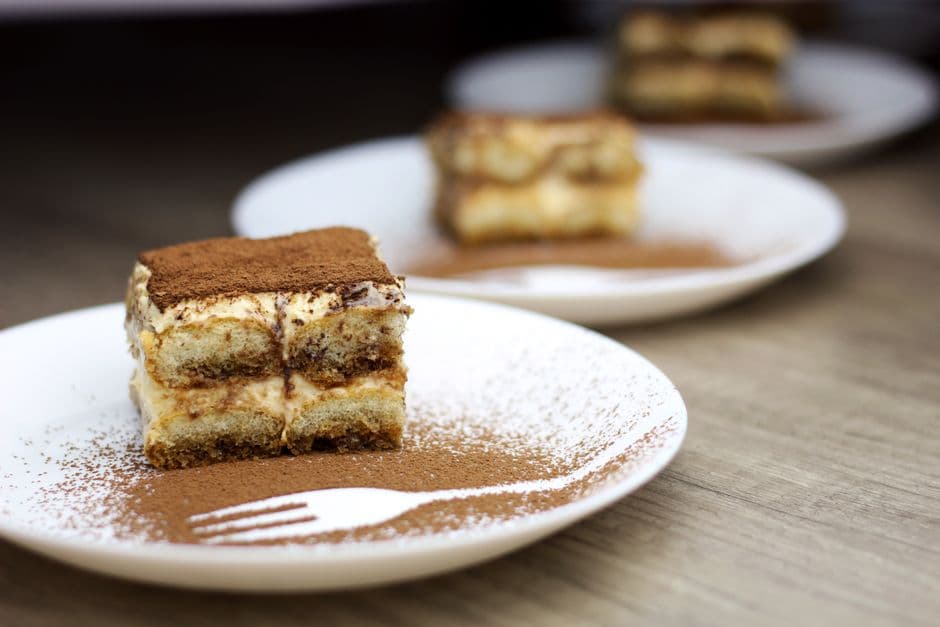
Classic Tiramisu
Le dessert au café italien par excellence : des couches de boudoirs imbibés d'espresso et de crème fouettée au mascarpone, saupoudrées de cacao aigre-doux.
À propos de cette recette
Le tiramisu, qui signifie « viens me chercher » en italien, est l'un des produits d'exportation les plus appréciés d'Italie. Né dans la région de Vénétie dans les années 1960 ou 1970, il superpose de délicats biscuits savoiardi trempés dans un expresso fort avec une crème mascarpone semblable à un nuage enrichie de jaunes d'œufs et de vin marsala. Le dessert doit être préparé à l'avance et réfrigéré, permettant aux saveurs de se fondre en quelque chose de bien plus grand que la somme de ses parties. Aucune cuisson n'est nécessaire, mais le résultat est un chef-d'œuvre de la tradition pâtissière italienne.
Ingrédients
Sert 8
- 6large egg yolks
- 120 gsucre cristallisé
- 500 gfromage mascarpone(température ambiante)
- 300 mlcrème fraîche épaisse
- 3 c. à s.vin marsala ou rhum brun
- 300 mlstrong espresso(cooled)
- 2 c. à s.liqueur d'espresso ou liqueur de café(optional)
- 200 gbiscuits savoiardi aux boudoirs(environ 24 à 28 biscuits)
- 3 c. à s.poudre de cacao de bonne qualité(for dusting)
- 30 gchocolat noir(facultatif, finement râpé)
Étapes
- 1
Fouetter la base de jaune d'oeuf
Dans un grand bol résistant à la chaleur posé sur une casserole d'eau à peine frémissante (bain-marie), fouettez vigoureusement les jaunes d'œufs et le sucre en poudre pendant 8 à 10 minutes jusqu'à ce que le mélange soit pâle, épais et ait doublé de volume. Le fouet doit laisser une trace de ruban lorsqu'il est soulevé. Retirer du feu et incorporer le vin marsala. Laisser refroidir 10 minutes.
Le bain-marie cuit doucement les jaunes à une température sécuritaire tout en les gardant onctueux et crémeux. Ne laissez pas le bol toucher l'eau.
- 2
Incorporer le mascarpone
Ajouter le mascarpone à température ambiante au mélange de jaunes refroidi. À l'aide d'une spatule ou d'un batteur à main à basse vitesse, plier jusqu'à ce qu'il soit complètement lisse et sans grumeaux. Assurez-vous que le mascarpone est à température ambiante, sinon il créera des grumeaux lorsqu'il sera mélangé aux jaunes.
- 3
Fouetter et incorporer la crème
Dans un autre bol froid, fouettez la crème double jusqu'à obtenir des pics mous : elle doit conserver sa forme tout en restant soyeuse et légère. Incorporez délicatement la chantilly au mélange de mascarpone en deux étapes, à l'aide d'une grande cuillère en métal dans un mouvement en huit pour retenir le plus d'air possible. La crème doit être bien mélangée mais toujours aérée.
- 4
Préparez le trempage du café
Mélangez l'espresso refroidi avec la liqueur de café dans un plat peu profond suffisamment large pour y tremper les biscuits. Le trempage doit être proche du café mais pas trop intense. Goûtez-le : si vous utilisez un expresso non sucré, vous pouvez ajouter une cuillère à café de sucre pour équilibrer l'amertume.
Trempez chaque biscuit pendant seulement 1 à 2 secondes de chaque côté. Un trempage excessif rend les couches détrempées et le tiramisu s'effondrera au moment de servir.
- 5
Étalez le tiramisu
En travaillant rapidement, trempez les boudoirs un à la fois et disposez-les en une seule couche au fond d'un plat de 23 × 33 cm (9 × 13 pouces) ou de verres individuels. Répartir uniformément la moitié de la crème mascarpone sur la couche de biscuit. Répéter avec une deuxième couche de biscuits trempés, puis recouvrir du reste de crème en lissant le dessus avec une spatule.
- 6
Réfrigérer et saupoudrer
Couvrir hermétiquement le plat d'un film alimentaire et réfrigérer au moins 6 heures, idéalement toute la nuit. Le temps de repos est essentiel : il permet aux biscuits d'absorber pleinement la crème et le café, créant ainsi cette texture fondante caractéristique. Juste avant de servir, saupoudrez généreusement de poudre de cacao à travers un tamis à mailles fines et parsemez de chocolat noir râpé si vous en utilisez.
Vous l'avez cuisinée ?
Notez-la et aidez les autres à trouver les recettes qui fonctionnent vraiment.
Connectez-vous en un geste : nous enregistrons la note que vous venez de choisir.
Tout ce qu'il faut pour planifier votre semaine — gratuit
- Calendrier des repas
- Liste de courses
- Idées de recettes IA
Cuisinez les mains libres
Profitez de plans de repas IA, d'un mode cuisine pas à pas et de vos recettes enregistrées dans l'appli gratuite Bento.
Conseils de pro
- →
Utilisez de véritables savoiardi italiens (les Pavesini sont trop fins et s'effondrent). Les biscuits plus épais absorbent le café sans devenir pâteux.
- →
Préparez-le la veille – le tiramisu s’améliore véritablement du jour au lendemain à mesure que les couches se mélangent.
- →
Si vous le servez à des enfants ou à ceux qui évitent l'alcool, remplacez le marsala par 2 cuillères à soupe supplémentaires d'espresso et une cuillère à café d'extrait de vanille.
- →
Pour des tranches propres, passez un couteau chaud sous l’eau chaude et essuyez-le entre chaque coupe.
Variantes
- •
Tiramisu aux fraises : remplacez le café par du coulis de fraises et ajoutez des fraises fraîches tranchées entre les couches.
- •
Tiramisu au limoncello : remplacez le marsala par du limoncello et ajoutez du zeste de citron à la crème mascarpone pour une version lumineuse et estivale.
- •
Tiramisu au chocolat : étalez une fine couche de Nutella entre les couches de mascarpone pour une touche chocolatée gourmande.
- •
Végétarien : remplacez la protéine par des champignons de panier rôtis, du tofu fumé ou des pois chiches cuits — ajustez l'assaisonnement légèrement vers le haut pour compenser.
Stockage
Conserver couvert au réfrigérateur jusqu'à 3 jours. La texture reste optimale dans les 48 premières heures. Le tiramisu peut être congelé (sans la garniture au cacao) jusqu'à 1 mois : décongelez-le toute la nuit au réfrigérateur et saupoudrez de cacao juste avant de servir.
Histoire et origine
Les origines du tiramisu sont passionnément disputées entre Trévise et Frioul-Vénétie Julienne. L'histoire d'origine la plus citée attribue au restaurant Le Beccherie à Trévise, où le chef pâtissier Loli Linguanotto l'aurait créé au début des années 1970. Le dessert est devenu un phénomène mondial dans les années 1980, alors que les restaurants italiens se sont répandus dans le monde entier, et il reste l'une des recettes de desserts les plus recherchées sur Internet.
Foire aux questions
Le tiramisu peut-il être mangé sans danger avec des œufs crus ?
Le tiramisu traditionnel utilise une méthode de sabayon cuit (jaunes d'œufs au bain-marie), qui amène les jaunes à une température sûre supérieure à 70°C (160°F). Cette recette suit cette approche. Si vous êtes enceinte, immunodéprimée ou si vous servez de très jeunes enfants, utilisez des œufs pasteurisés par mesure de précaution supplémentaire. Vous pouvez également utiliser une base de crème anglaise entièrement cuite comme substitut sûr au mélange de jaunes.
Puis-je faire du tiramisu sans mascarpone ?
Le mascarpone est au cœur du tiramisu authentique et difficile à reproduire exactement. À la rigueur, vous pouvez mélanger 225 g de fromage à la crème entier avec 60 ml de crème sure et 60 ml de crème double pour se rapprocher de la richesse et du piquant du mascarpone. La saveur sera légèrement plus piquante et la texture un peu plus dense, mais le résultat reste tout de même délicieux. Évitez de la remplacer par de la ricotta, qui est trop granuleuse.
Pourquoi mon tiramisu est-il trop liquide ou trop ferme ?
Le tiramisu qui coule est généralement causé par un trempage excessif des biscuits, une crème pas assez fouettée ou un mascarpone trop chaud. Le tiramisu ferme ou granuleux résulte généralement d'un fouettage excessif de la crème jusqu'à obtenir des pics fermes ou du mascarpone froid qui grippe une fois plié. Fouettez la crème uniquement jusqu'à obtenir des pics mous, assurez-vous que le mascarpone est à température ambiante et gardez tous les composants au frais mais pas froids lors de l'assemblage.
Puis-je préparer cela à l'avance ?
Oui — la plupart des composants peuvent être préparés jusqu'à un jour à l'avance et réfrigérés séparément. Réchauffez doucement et assemblez juste avant de servir pour que les textures restent distinctes.
Faits nutritionnels
Par portion (180g) · 8 portions totales
Résumé du temps
Vous avez des questions ?
Demandez quoi que ce soit à notre assistant culinaire IA sur cette recette : substitutions, techniques, mise à l'échelle.
Discutez avec AI Chef →Présenté dans les guides
Cette recette est présentée dans les guides sélectionnés suivants :
Plus de recettes italiennes
Vous Aimerez Aussi
Des plats similaires venus d'autres cuisines du monde.
Pavê (dessert à la crème étagé brésilien)
brésiliennes · 30 min.
Parfait au yaourt argentin Dulce de Leche
argentines · 20 min.
Cheesecake de New York - Cheesecake Dense et Crémeux Classique avec Croûte de Biscuits Graham
américaines · 120 min.
Brigadeiro Brésilien – Truffes Fudge Chocolat
brésiliennes · 25 min.
Parcourir par Ingrédient
D'autres recettes construites autour des mêmes ingrédients principaux.
Outils de Cuisine Gratuits
Calculateurs et convertisseurs qui accompagnent cette page — sans inscription.
Transformer en Plan
Programmez-le, faites les courses et suivez ce que vous avez déjà.
À Lire Ensuite
Des articles de fond sur les idées derrière ce plat.
Communauté
Rejoignez la conversation
Connectez-vous pour laisser un commentaire et enregistrer vos recettes préférées