
Ajvar (Serbian Roasted Red Pepper Relish)
Serbian autumn ritual — fire-roasted red peppers cooked down with eggplant and oil into a deep, smoky, spoonable preserve.
About This Recipe
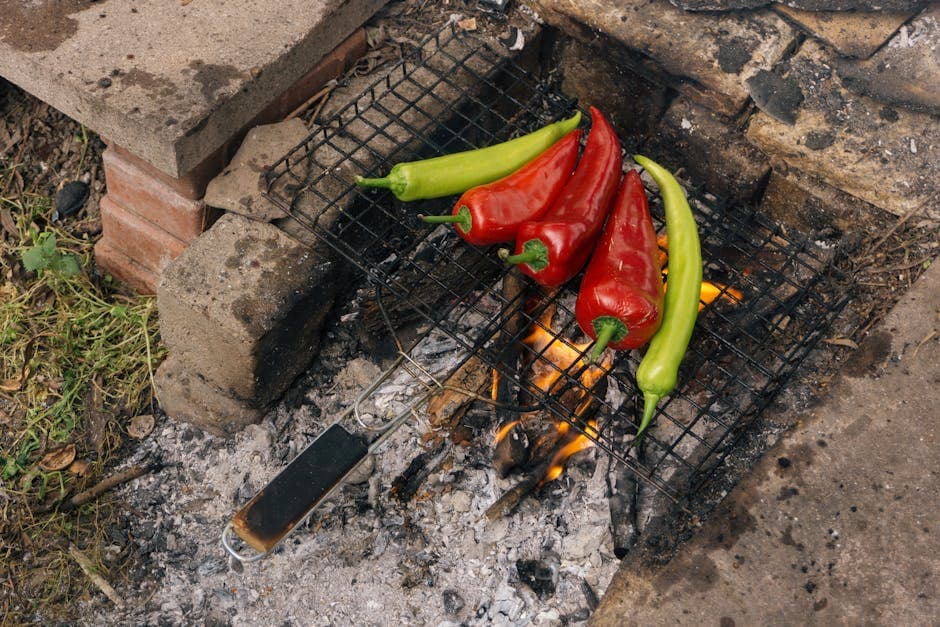
Ajvar is the king of Serbian preserves, made every autumn when the long red horn peppers (paprika roga) ripen on Vojvodina farms. Whole peppers are charred over open flames until blistered black, peeled, drained of their juice, then minced and slowly cooked with roasted eggplant, sunflower oil, garlic, salt, and a touch of vinegar for two to three hours of patient stirring until the mixture darkens to deep brick-red and a spoon dragged through reveals the pan bottom. Real Serbian ajvar is heavy, glossy, and almost meaty in texture — never watery, never bright orange (that's the supermarket impostor). Spread thick on warm bread, spooned alongside grilled meats, layered with kajmak in a sandwich, or stirred into soups. Every Serbian family has its grandmother's recipe and argues about whether eggplant belongs at all.
Ingredients
Serves 12
- 3 kglong red horn peppers (paprika roga or romano)
- 500 geggplant (1 medium)
- 200 mlsunflower oil
- 6 clovesgarlic, finely minced
- 1.5 tbspfine salt, plus more to taste
- 2 tbspwhite wine vinegar
- 1 tspsugar (optional, balances acidity)
- 0.5 tspchili flakes (optional, for ljuti ajvar)
Instructions
- 1
Char the peppers
Heat a grill, gas burner, or oven broiler to maximum. Char whole peppers, turning frequently, until skins are blackened and blistered all over — about 8 minutes on a gas burner or 20 in a 250°C oven. Work in batches.
- 2
Steam and peel
Pile hot peppers into a covered bowl or sealed bag. Let steam 20 minutes. Peel skins (they slip off), remove stems and seeds. Crucial: do not rinse — you'd wash away flavor.
- 3
Drain
Place peeled peppers in a colander lined with cheesecloth, set over a bowl. Let drain at least 1 hour, pressing gently — getting rid of this juice is the difference between real ajvar and watery slop.
- 4
Roast eggplant
Pierce the eggplant in a few spots and roast at 220°C for 40 minutes until completely collapsed. Cool, scoop flesh, drain in a colander 30 minutes.
- 5
Mince
Run drained peppers and eggplant through a meat grinder on the coarse plate, or pulse in a food processor in short bursts — you want texture, not purée.
- 6
Cook down — phase 1
Heat a wide heavy pot or large skillet over medium-low. Add half the oil, then the minced peppers and eggplant. Stir with a wooden spoon and let the mixture bubble gently for 1 hour, stirring every 5 minutes. Watch for sticking.
- 7
Cook down — phase 2
Drizzle in remaining oil bit by bit. Add salt and garlic. Continue cooking and stirring 60–90 more minutes until the mixture darkens to deep brick-red, the oil sheens on top, and a spoon dragged across reveals the pan bottom for a clean second.
- 8
Season and jar
Stir in vinegar, sugar if using, and chili if making spicy version. Taste; adjust salt. Spoon while piping hot into sterilized jars, leaving 1 cm headspace. Drizzle a film of oil on top to seal.
- 9
Seal
Close lids tightly. Invert jars 5 minutes, then upright. For long storage, water-bath process 20 minutes. Unprocessed jars keep refrigerated 3 months.
Did you make this?
Rate it and help other cooks find the recipes that actually work.
One tap to sign in, and we'll save the rating you just picked.
Everything you need to plan your week — free
- Meal calendar
- Grocery list
- AI recipe ideas
Cook this hands-free
Get AI meal plans, step-by-step cooking mode, and your saved recipes in the free Bento app.
Pro Tips
- →
Paprika roga peppers are non-negotiable for authentic flavor — bell peppers make a sweet, flat ajvar with no character.
- →
The pour-off pepper juice is liquid gold for soup stock; freeze it instead of binning.
- →
Stir with a wooden spoon only; metal reacts with the acidic pepper juices.
Variations
- •
Ljuti ajvar — hot version with 2 charred fresh chilies added to the grinder.
- •
Pindjur — chunkier Macedonian version that includes tomato.
- •
Vegan kajmak-style — fold 100 g whipped tofu cream into finished ajvar for a Belgrade brunch spread.
Storage
Sealed, water-bath processed jars keep 12 months in a cool pantry. Once opened, refrigerate and use within 2 weeks; oil top-up extends life.
History & Origin
Ajvar's name comes from Turkish 'havyar' (caviar) — a reference to its prized, dense, spreadable texture. It became a Serbian household staple in the 19th century when Vojvodina's red-pepper trade boomed, and every village still holds 'ajvar weekends' each October to put up enough jars for winter.
Frequently Asked Questions
Can I make ajvar without eggplant?
Yes — many Serbian grandmothers omit it. The result is a brighter, sweeter, more intensely pepper-forward ajvar. Eggplant adds body and a darker, more savory edge.
Why did my ajvar turn out orange and watery?
Three usual culprits — bell peppers instead of roga, peppers not drained enough, or undercooked. Real ajvar must reduce by half its volume.
Is ajvar served warm or cold?
Room temperature, always. Cold from the fridge dulls the flavor; warming caramelizes it unpleasantly. Spoon it out 30 minutes before serving.
Nutrition Facts
Per serving (80g / 2.8 oz) · 12 servings total
Time Summary
Have Questions?
Ask our AI cooking assistant anything about this recipe — substitutions, techniques, scaling.
Chat with AI Chef →Featured in Guides
This recipe is featured in the following curated guides:
More Serbian Recipes
You Might Also Like
Similar dishes from other cuisines around the world.
Free Kitchen Tools
Calculators and converters that pair with this page — no signup needed.
Put This Into a Plan
Schedule it, shop for it, and track what you already have.
Read Next
Longer reads that go deeper on the ideas behind this dish.
Community
Join the conversation
Sign in to leave a comment and save your favourite recipes