
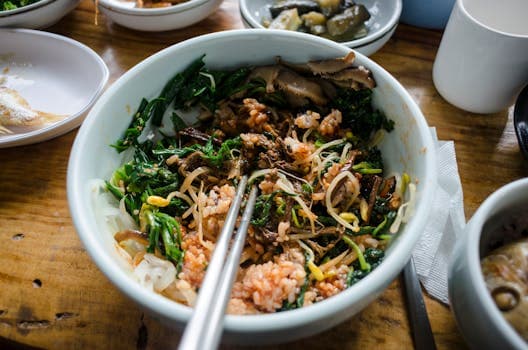
Bibimbap (Korean Mixed Rice Bowl)
Korea's iconic mixed rice bowl — warm rice topped with seasoned vegetables, bulgogi beef, fried egg and vibrant gochujang sauce, mixed at the table.
About This Recipe
Bibimbap (literally 'mixed rice') is one of Korea's most beloved and versatile dishes. A bowl of warm steamed rice is topped with an artful arrangement of individually seasoned namul (blanched or sautéed vegetables), thinly sliced bulgogi or raw beef, a fried egg and a generous spoonful of gochujang (fermented red chilli paste). Everything is mixed vigorously at the table before eating, creating a harmonious blend of flavours and textures. The dolsot version, served in a sizzling stone pot that crisps the bottom layer of rice into a golden crust (nurungji), is considered the ultimate form. Bibimbap is endlessly adaptable — the toppings change with season and region — but the combination of savoury, spicy, nutty and fresh in a single bowl remains constant. Rooted in the everyday cooking of Korean kitchens, Bibimbap (Korean Mixed Rice Bowl) balances technique and tradition: the short-grain rice, cooked is treated with care, drawing on time-honoured ratios that locals have refined across generations. The dish carries an unmistakable sensory signature — aromas that fill the kitchen as it cooks, layered textures that reveal themselves bite by bite, and a depth of flavour that comes from patient seasoning rather than shortcuts. Whether served as a weeknight dinner or as the centrepiece of a celebratory table, it reflects a regional pantry where local produce, seasoning habits and cooking vessels shape the final result. Home cooks who make this dish often note how forgiving it is once the core method is understood, and how a few small choices — the freshness of the short-grain rice, cooked, the order of additions, the resting time at the end — separate a good version from a memorable one. This recipe walks through those choices so the dish arrives with the character it has on its home turf.
Ingredients
Serves 4
- 600 gshort-grain rice, cooked
- 300 gbeef sirloin or mince (or omit for vegetarian)
- 200 gspinach
- 200 gbean sprouts
- 1carrot, julienned
- 1courgette (zucchini), julienned
- 150 gshiitake mushrooms, sliced
- 4eggs
- 3 tbspsesame oil
- 3 tbspsoy sauce
- 3 clovesgarlic, minced
- 4 tbspgochujang (Korean chilli paste)
- 1 tbsprice vinegar
- 1 tspsugar
- 2 tbspsesame seeds
- 4 tbspvegetable oil
- to tastesalt
Instructions
- 1
Prepare gochujang sauce
Mix gochujang with 1 tbsp sesame oil, rice vinegar, sugar and 1 tbsp soy sauce. Set aside.
- 2
Season and cook beef
Toss beef with 1 tbsp soy sauce, 1 tsp sesame oil, garlic and a pinch of sugar. Stir-fry in a hot wok until cooked through, 3–4 minutes. Set aside.
- 3
Cook vegetables separately
Cook each vegetable separately: blanch spinach and bean sprouts in boiling water, then season each with sesame oil, salt and garlic. Stir-fry carrot, courgette and mushrooms separately with a splash of soy and sesame oil.
- 4
Fry eggs
Fry eggs sunny-side up in a little oil. The yolk should be slightly runny.
- 5
Assemble bowls
Divide hot rice between 4 bowls. Arrange each vegetable, the beef and a fried egg in separate sections over the rice.
- 6
Serve
Add a spoonful of gochujang sauce to each bowl. Drizzle with sesame oil and scatter sesame seeds. Mix vigorously before eating.
Did you make this?
Rate it and help other cooks find the recipes that actually work.
One tap to sign in, and we'll save the rating you just picked.
Everything you need to plan your week — free
- Meal calendar
- Grocery list
- AI recipe ideas
Track what you eat
Snap your meal to log calories and macros, run fasting timers and track water in the free SnapCal app.
Pro Tips
- →
Cook each vegetable separately — mixing them produces muddiness rather than the distinct flavour layers bibimbap requires.
- →
The rice should be warm, not hot. Cold rice makes the vegetables cool too quickly.
- →
Mix everything together completely before eating — bibimbap is not a composed dish, it is a mixed one.
- →
Source the freshest short-grain rice, cooked you can find — it is the flavour anchor of the dish.
- →
Season in layers as you go; tasting at each stage prevents a flat or over-salted final result.
Variations
- •
Dolsot bibimbap: heat a stone pot (dolsot) until very hot, add sesame oil, then rice and toppings. The bottom rice crisps into nurungji (scorched rice crust).
- •
Vegetarian bibimbap: omit beef and add tofu or extra mushrooms.
- •
Vegetarian: replace the main protein with mushrooms, paneer, tofu or hearty beans for a meat-free version.
- •
Spicier: add fresh chilli, a chilli paste or a pinch of cayenne with the aromatics for a warmer profile.
- •
Lighter: reduce the fat by a third and use stock in its place — flavour stays intact but the dish feels less rich.
Storage
The seasoned vegetables and sauce keep in the fridge for 3 days. Assemble bowls fresh.
History & Origin
Bibimbap dates to at least the Joseon Dynasty (14th–19th centuries). It is believed to have originated as a way of using up leftover banchan (side dishes) with rice. The dish is closely associated with Jeonju city, which claims the most traditional version.
Frequently Asked Questions
Can I make Bibimbap (Korean Mixed Rice Bowl) ahead of time?
Yes — most components hold well in the fridge for a day or two. Reheat gently with a splash of liquid to bring it back to life.
What can I substitute for short-grain rice, cooked?
If short-grain rice, cooked is hard to find, the closest substitutes share its texture and water content. Adjust seasoning slightly since substitutes often carry less character of their own.
Is this recipe authentic to Korean cooking?
It follows the most widely accepted home-cook template. Regional variants exist and we note the main ones in the variations section.
Why did my version turn out bland?
Usually under-seasoning or rushing the aromatic stage. Build flavour in layers, taste as you go, and finish with a touch of acid or salt to brighten the dish.
Nutrition Facts
Per serving · 4 servings total
Time Summary
Have Questions?
Ask our AI cooking assistant anything about this recipe — substitutions, techniques, scaling.
Chat with AI Chef →Featured in Guides
This recipe is featured in the following curated guides:
More Korean Recipes
You Might Also Like
Similar dishes from other cuisines around the world.
Browse by Ingredient
More recipes built around the same core ingredients.
Free Kitchen Tools
Calculators and converters that pair with this page — no signup needed.
Put This Into a Plan
Schedule it, shop for it, and track what you already have.
Read Next
Longer reads that go deeper on the ideas behind this dish.
Community
Join the conversation
Sign in to leave a comment and save your favourite recipes