
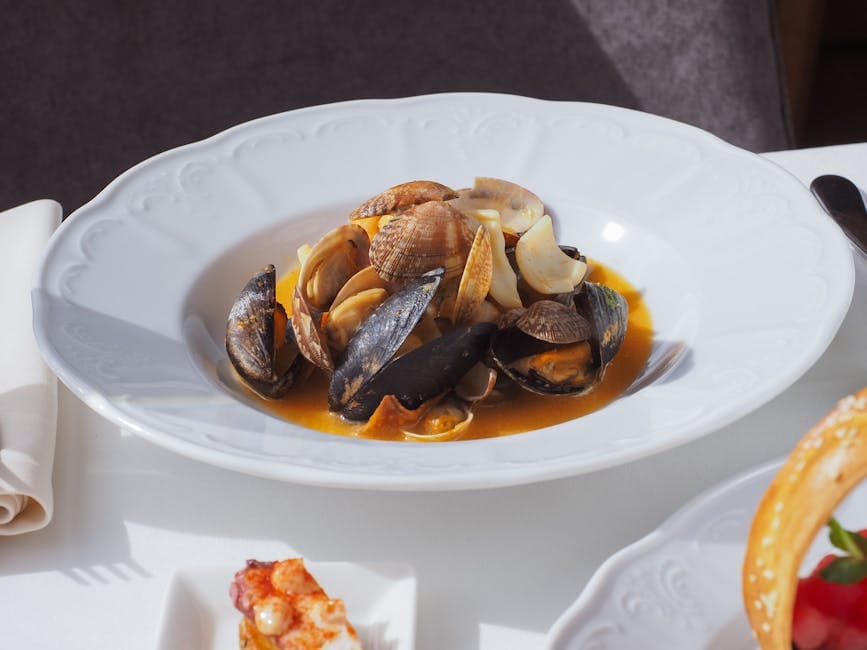
Bouillabaisse Marseillaise (Marseille Fish Stew)
Provence's legendary fisherman's stew — saffron and fennel-perfumed broth with rascasse, conger and rockfish, served with rouille-slathered toasts.
About This Recipe
Bouillabaisse is the great fisherman's dish of Marseille and one of the most ceremonious meals in French cuisine. Born on the rocky calanques of the old port, it was originally a way for fishermen to use the spiny, bony, less-marketable rockfish they couldn't sell — rascasse (scorpionfish), galinette (gurnard), Saint-Pierre (John Dory), conger eel — by simmering them with fennel, tomatoes, garlic, saffron and olive oil into a deeply orange, fragrant broth. The Marseille charter of 1980, signed by the great bouillabaisse restaurants, lays down rules: at least four fish from a specified list, a base of fennel and tomato, saffron from start to finish, and service in two courses — first the broth ladled over toasted bread rubbed with garlic and topped with rouille (a fiery saffron-garlic-pepper mayonnaise), then the whole fish presented separately on a platter and filleted at the table. A proper bouillabaisse takes investment — multiple fish species, fish trimmings for the stock, real saffron, the rouille from scratch — but the experience is unlike any other seafood stew, with a complexity that comes from the layered briny umami of multiple fish, the perfume of saffron and fennel, and the punch of garlic and chili in the rouille.
Ingredients
Serves 6
- 2 kgmixed firm white fish on the bone — ideally scorpionfish, gurnard, monkfish, John Dory, conger eel; minimum 4 species
- 500 gfish bones and heads from white fish (ask the fishmonger), gills removed and rinsed of blood
- 2 largefennel bulbs, sliced; 2 large onions, sliced; 1 head garlic split across
- 500 gripe tomatoes, chopped (or a 400 g tin in winter), plus 1 tbsp tomato paste
- 1 large pinchsaffron threads (1 g), divided
- 200 mlProvençal extra virgin olive oil, divided
- 150 mldry white wine (Cassis or Picpoul)
- 1 stripdried orange peel; 1 bouquet garni (thyme, bay, fennel stalks, parsley); 1 tsp aniseed or 30 ml Pastis
- 1 loafday-old country bread, sliced 1.5 cm thick and dried in the oven
- 1 reciperouille — 2 garlic cloves, 1 small red chili, pinch saffron, 1 egg yolk, 200 ml olive oil, 1 tbsp lemon juice
Instructions
- 1
Prep the fish
Scale and gut all fish, leaving heads on. Cut larger fish into 8 cm cross-sections. Rinse the bones in cold water until they run clear (15 minutes — blood ruins the stock). Salt the fish pieces lightly and refrigerate while you make the broth.
- 2
Build the broth base
In a wide pot, heat 4 tbsp olive oil over medium. Sweat the fennel, onion and garlic 12 minutes without colour until completely soft. Add the tomatoes and tomato paste and cook 8 minutes until jammy and the raw smell has gone.
- 3
Add bones and infuse
Add the rinsed fish bones and heads to the vegetables. Pour over the white wine and let it bubble away for 2 minutes. Add 2 L cold water, the orange peel, bouquet garni, half the saffron, and the aniseed. Bring just to a simmer.
- 4
Simmer the stock
Cook at a gentle simmer 35 minutes, skimming foam off the top regularly. Do not let it boil hard or the stock turns bitter and cloudy. Pass through a fine sieve, pressing the solids firmly to extract every drop, then return the strained broth to a clean pot.
- 5
Make the rouille
In a mortar, pound the garlic, chili, saffron and a pinch of salt to a paste. Whisk in the egg yolk, then drizzle the olive oil drop by drop, whisking constantly, until you have a thick, glowing-orange mayonnaise. Whisk in the lemon juice and 1 tbsp of warm broth to loosen.
Traditionalists thicken rouille with a chunk of boiled potato or soaked bread crumb instead of egg yolk — both work; bread is more rustic.
- 6
Cook the fish in order of firmness
Bring the strained broth to a robust simmer. Add the remaining saffron and the firmest fish first (monkfish, conger) — simmer 6 minutes. Add medium-firm fish (gurnard, John Dory) — simmer 5 minutes. Add the most delicate fish last (scorpionfish, sea bream) — simmer 4 minutes. Total bouillabaisse simmer: 12–15 minutes.
- 7
Toast the bread
Toast the bread slices until golden and rub each lightly with a halved raw garlic clove. Set out one toast per bowl, with a small dish of rouille and a small grater of Gruyère alongside.
- 8
Serve in two acts
Act one: ladle the broth into bowls over a garlic-rubbed toast and a generous spoon of rouille. Act two: present the fish on a warm platter, drizzled with olive oil and scattered with fresh parsley. Diners eat the broth course first, then help themselves to fish in the same bowl.
Did you make this?
Rate it and help other cooks find the recipes that actually work.
One tap to sign in, and we'll save the rating you just picked.
Everything you need to plan your week — free
- Meal calendar
- Grocery list
- AI recipe ideas
Track what you eat
Snap your meal to log calories and macros, run fasting timers and track water in the free SnapCal app.
Pro Tips
- →
Use as many different fish species as you can — the layered flavours of mixed rockfish are the whole point of bouillabaisse. A single-species version is a fish soup, not bouillabaisse.
- →
Save and rinse the bones obsessively. Bloody bones = bitter, cloudy stock. Soak in salted water 20 minutes if your fishmonger doesn't clean them.
- →
Real saffron, not turmeric and not 'Mexican saffron' (safflower). For 6 servings you need at least 1 g — it sounds a lot but it's the defining flavour.
- →
Add the fish in firmness order, last 12–15 minutes only. Bouillabaisse is murdered by long-cooking the fish; the fish flesh should be opaque and just flaking, no more.
Variations
- •
Bouillabaisse de morue — a Provençal Lent variant made with salt cod and potatoes instead of fresh fish.
- •
Bourride sétoise — a cousin from Sète, with white fish only (no rascasse) and finished with aioli stirred into the broth to make it creamy.
- •
Modern individual portions — fillet the fish in the kitchen and serve already plated for restaurant elegance, losing some of the ceremony.
- •
Lobster bouillabaisse — add a halved lobster in the last 7 minutes; controversial in Marseille but spectacular for special occasions.
Storage
Best the day of cooking — bouillabaisse fish goes mushy if reheated. The strained broth alone keeps 3 days refrigerated or 2 months frozen, and is wonderful as a soup base. Rouille keeps 3 days refrigerated in a sealed jar.
History & Origin
Bouillabaisse evolved among the fishermen of the Vieux-Port of Marseille from the medieval period onwards as a way to use unsellable rockfish from the daily catch. The 1980 'Charter of Bouillabaisse', signed by 11 leading Marseille restaurants, codified the recipe to protect it from tourist-trap simplifications.
Frequently Asked Questions
Can I make this with only one or two fish?
Honestly no — it becomes a fish soup, not bouillabaisse. The whole identity of the dish comes from layered umami of multiple species. Look for mixed 'soupe de poisson' packs at good fishmongers, or supplement with frozen monkfish, gurnard, and conger.
Is the orange peel essential?
Yes — it's one of the defining Provençal flavours. Use dried orange peel (sun-dried for 2 days) for the most intense flavour; fresh works too but is less concentrated.
My rouille split — can I save it?
Yes — start a new yolk and a teaspoon of broth in a clean bowl, then drizzle in the broken rouille very slowly, whisking constantly. It rebuilds the emulsion. Most likely cause: oil added too fast or ingredients were cold.
What wine pairs with bouillabaisse?
A bone-dry Provençal rosé (Bandol, Côtes de Provence) or a crisp white from Cassis or Picpoul de Pinet. Avoid heavy whites and all reds — bouillabaisse needs acidity to cut through the saffron and rouille.
Nutrition Facts
Per serving (480g / 16.9 oz) · 6 servings total
Time Summary
Have Questions?
Ask our AI cooking assistant anything about this recipe — substitutions, techniques, scaling.
Chat with AI Chef →Featured in Guides
This recipe is featured in the following curated guides:
More French Recipes
You Might Also Like
Similar dishes from other cuisines around the world.
Browse by Ingredient
More recipes built around the same core ingredients.
Free Kitchen Tools
Calculators and converters that pair with this page — no signup needed.
Put This Into a Plan
Schedule it, shop for it, and track what you already have.
Read Next
Longer reads that go deeper on the ideas behind this dish.
Community
Join the conversation
Sign in to leave a comment and save your favourite recipes