
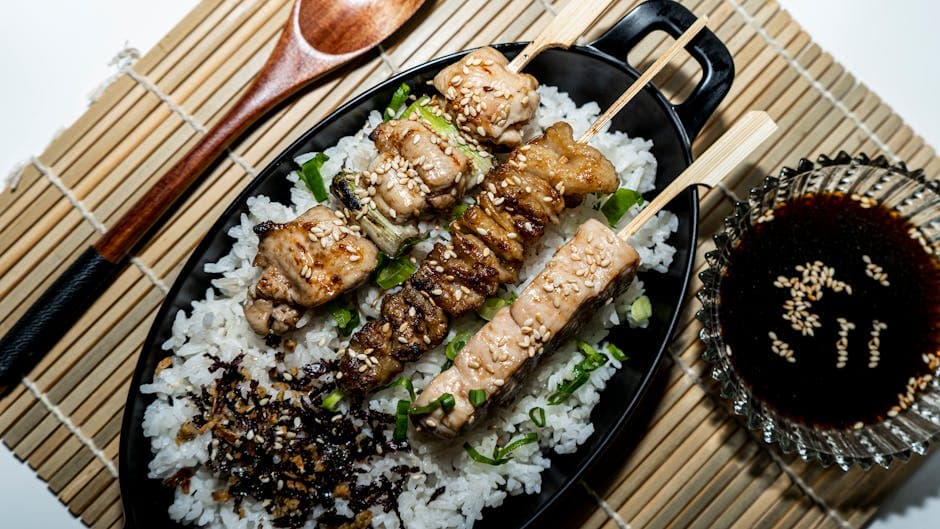
Chicken Yakitori (Japanese Grilled Skewers)
Charcoal-grilled chicken skewers glazed with sweet-savory tare sauce — the classic Japanese izakaya snack served straight from the binchotan grill.
About This Recipe
Yakitori means simply 'grilled bird,' but in Japan it has been refined over a century into one of the world's great street and izakaya foods. The classic version uses chicken thigh and scallion (negima), threaded onto bamboo skewers and grilled hot and fast over high-grade Japanese binchotan charcoal, which burns nearly smokeless and gives off intense infrared heat. The skewers are basted repeatedly with tare — a sweet-savory glaze of soy, mirin, sake and sugar that thickens as it caramelizes onto the chicken — or finished simply with salt (shio) when the meat is good enough to stand alone. A proper yakitori-ya may offer twenty or thirty parts of the bird, from skin (kawa) to gizzard (zuri) to soft bone (nankotsu), each charred to its own ideal point. Made at home over a small grill or even under a broiler, yakitori is forgiving and fast: the key is fierce heat, regular basting, and stopping while the meat is still juicy.
Ingredients
Serves 4
- 700 gboneless skin-on chicken thigh, cut into 2.5 cm cubes
- 6scallions (white and pale-green parts only), cut into 3 cm batons
- 12short bamboo skewers, soaked in water 30 minutes
- 180 mlJapanese soy sauce (Kikkoman or Yamasa)
- 180 mlmirin
- 120 mlsake
- 4 tbspgranulated sugar
- 1scallion green, smashed
- 1 small pieceginger, sliced
- 1garlic clove, smashed (optional, non-traditional)
- shichimi togarashi, to serve
- flaky salt, for shio-style skewers
Instructions
- 1
Make the tare
Combine soy, mirin, sake, sugar, smashed scallion, ginger and garlic in a small saucepan. Bring to a strong simmer over medium-high heat and reduce by about a third (15–18 minutes) until the sauce coats a spoon. Strain into a tall, narrow glass for easy dipping. The narrow vessel lets you dunk the whole skewer.
- 2
Skewer the chicken
Alternate cubes of chicken and batons of scallion on each skewer — typically 3 pieces of chicken and 2 of scallion. Pack them tightly so they cook evenly; loose skewers char on the edges and stay raw in the center.
Keep the tip of the skewer clean by leaving 4 cm bare — gives diners a handle.
- 3
Preheat your heat source
Light a charcoal grill (binchotan if you have it; lump charcoal works) and let it ash over. Alternatively, set an oven broiler to high with the rack 10 cm below the element. You want fierce heat — yakitori needs to color fast.
- 4
First sear — dry
Place skewers over direct heat. Sear 2 minutes per side without sauce — this sets the surface and prevents the tare from burning later. Skin should crisp and the meat should release easily from the grates.
- 5
First glaze
Dunk each skewer into the tare, lift, let drip 2 seconds, return to the grill. Cook 60–90 seconds per side until the glaze bubbles and darkens but does not burn. Watch closely — sugar in the tare can scorch in 10 seconds.
- 6
Repeat glazing
Dunk and grill twice more, building lacquered layers. By the third glaze the skewers should be mahogany-glossy and the chicken just cooked through (internal 72°C / 162°F).
- 7
Finish and serve
Pull from heat, give a final brush of fresh (not used) tare for shine, and dust with shichimi togarashi. For shio-style skewers, skip the tare entirely — just season with flaky salt before and after grilling.
Did you make this?
Rate it and help other cooks find the recipes that actually work.
One tap to sign in, and we'll save the rating you just picked.
Everything you need to plan your week — free
- Meal calendar
- Grocery list
- AI recipe ideas
Track what you eat
Snap your meal to log calories and macros, run fasting timers and track water in the free SnapCal app.
Pro Tips
- →
Bone-in skin-on thigh is non-negotiable — chicken breast goes dry on a fast grill. Skin is essential for the lacquered finish.
- →
Never re-dip skewers into the master tare batch after they've touched chicken — set aside a small amount for the final brush. Pros keep a 'master tare' for years, but only when it's never been contaminated by raw meat.
- →
If you don't have a grill, a cast-iron skillet over high heat plus a brief blast under the broiler at the end works surprisingly well.
- →
Binchotan charcoal is available online (Korin, Japan Knife Society) — expensive but it transforms yakitori. Lump hardwood is the next best option.
Variations
- •
Tsukune — minced chicken meatballs on skewers with shiso and tare, served with a raw egg yolk for dipping.
- •
Kawa — chicken skin only, threaded ribbon-style and grilled until shatter-crisp, then salted.
- •
Negima with quail egg — add a small parboiled quail egg between chicken pieces for a richer skewer.
- •
Vegetarian: tofu and scallion 'yakitori' with the same tare — surprisingly satisfying.
Storage
Best eaten straight off the grill. Leftover skewers refrigerate 2 days; reheat under a hot broiler 90 seconds, never in a microwave (rubberizes the meat). Tare keeps refrigerated 3 weeks in a sealed jar.
History & Origin
Yakitori in its modern form dates to the post-Meiji period (late 19th century) when chicken became affordable in Japanese cities and street vendors began grilling cheaper cuts for laborers. The dedicated yakitori-ya restaurant emerged in postwar Tokyo around 1950, and the cuisine was refined further during Japan's economic boom of the 1970s and 1980s.
Frequently Asked Questions
Can I make tare in advance?
Yes — tare actually improves after a few days as the flavors meld. Make it up to a month ahead and refrigerate in a sealed jar. Never reuse tare that has touched raw meat, though.
Why is my yakitori dry?
Either you used chicken breast (use thigh), you grilled at too low a heat (yakitori needs fierce heat to char fast), or you overcooked it. Pull at internal 72°C / 162°F — it'll carry over to 75°C off the grill.
What if I can't find mirin?
Mix 3 parts dry sherry with 1 part sugar dissolved in warm water as a stand-in. Honjozo-style sake at a pinch also works. Avoid 'cooking mirin' if you can — it contains corn syrup and added salt.
Can I use metal skewers instead of bamboo?
Metal works for home cooks — no soaking needed and they don't burn. Bamboo gives the traditional look and conducts less heat (so the chicken cooks only from outside). Both produce excellent results.
Nutrition Facts
Per serving (220g / 7.8 oz) · 4 servings total
Time Summary
Have Questions?
Ask our AI cooking assistant anything about this recipe — substitutions, techniques, scaling.
Chat with AI Chef →Featured in Guides
This recipe is featured in the following curated guides:
More Japanese Recipes
You Might Also Like
Similar dishes from other cuisines around the world.
Browse by Ingredient
More recipes built around the same core ingredients.
Free Kitchen Tools
Calculators and converters that pair with this page — no signup needed.
Put This Into a Plan
Schedule it, shop for it, and track what you already have.
Read Next
Longer reads that go deeper on the ideas behind this dish.
Community
Join the conversation
Sign in to leave a comment and save your favourite recipes