
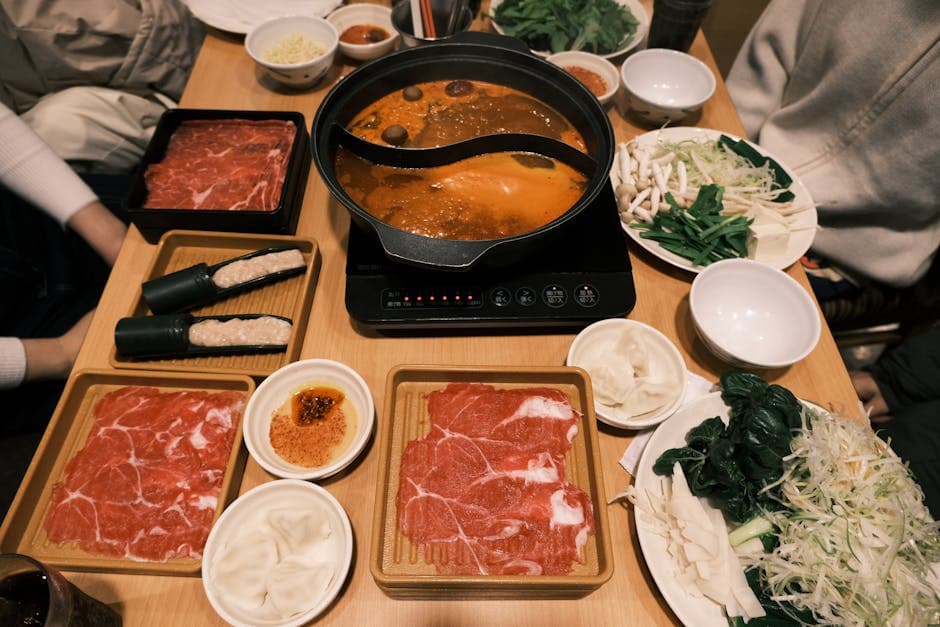
Sukiyaki (Japanese Beef Hot Pot)
A communal Japanese hot pot of marbled beef, tofu, mushrooms and shungiku simmered tableside in sweet-savory warishita broth.
About This Recipe
Sukiyaki is one of Japan's most celebratory dishes — a tableside hot pot eaten in winter, on New Year's Eve, and at family reunions. Thinly sliced marbled beef (ideally wagyu or US prime ribeye sliced paper-thin) sizzles first in beef fat or butter at the bottom of a heavy iron sukiyaki nabe, then it is doused with warishita — a sweet, dark broth of soy, mirin, sake and sugar that defines the dish. Tofu, enoki and shiitake mushrooms, scallion, shungiku (chrysanthemum leaves), shirataki noodles, and napa cabbage are added in stages and simmer in the bubbling broth. The Kanto (Tokyo) and Kansai (Osaka/Kyoto) styles diverge: Kanto cooks build the broth first and add everything to it, while Kansai cooks sear the beef in fat, sprinkle it with sugar, deglaze with soy, then add the rest. In both, each diner dunks pieces from the pot into a small bowl of raw beaten egg before eating — a step that may sound strange but transforms the dish, mellowing the salt and giving every bite a silken coating.
Ingredients
Serves 4
- 600 gwell-marbled beef ribeye or sirloin, sliced 2 mm thin (ask the butcher to use a slicer)
- 1 block (300 g)firm tofu, drained and cut into 3 cm cubes
- 200 gshirataki noodles, rinsed and briefly blanched
- 8fresh shiitake mushrooms, stems trimmed and tops scored
- 1 pack (100 g)enoki mushrooms, root trimmed and separated
- 4long scallions (Tokyo negi), cut diagonally into 4 cm pieces
- 1 bunch (150 g)shungiku (chrysanthemum greens) or watercress
- 0.25napa cabbage, cut into 4 cm pieces
- 1 small piecebeef suet or 2 tbsp unsalted butter
- 120 mlJapanese soy sauce
- 120 mlmirin
- 80 mlsake
- 3 tbspsugar
- 180 mldashi or water
- 4 largevery fresh eggs (pasteurized recommended), for dipping
- steamed Japanese rice, to serve
Instructions
- 1
Make warishita
Combine soy sauce, mirin, sake, sugar and dashi in a small saucepan. Bring to a simmer just until the sugar dissolves, about 2 minutes. Pour into a heatproof jug — this is the broth you'll add to the pot in stages.
- 2
Arrange everything tableside
Lay all ingredients on a large platter — beef in one section, vegetables in another, tofu and noodles in another. Sukiyaki is a tableside performance: everything needs to be within reach.
Slicing beef yourself? Freeze the block 45 minutes first — it cuts much thinner.
- 3
Heat the pot
Place a sukiyaki nabe or heavy 28 cm cast-iron pan on a portable burner at the table. Heat over medium-high. Rub the bottom of the pot with the beef suet until it's slick and shiny.
- 4
Kansai-style start (recommended)
Add a few slices of beef and sear briefly, just until they color. Sprinkle 1 tablespoon of sugar directly onto the beef, then splash with a few tablespoons of warishita. The sugar caramelizes — that's the foundation flavor.
- 5
Build the pot
Push the seared beef to one side. Add scallion, mushrooms, tofu, shirataki and cabbage in clusters. Pour in enough warishita to come about a third up the vegetables — not to cover. Each ingredient cooks in its own bubbling spot.
- 6
Simmer 5–7 minutes
Cover loosely and simmer. The cabbage releases water, the broth deepens, and the tofu and mushrooms drink in flavor. Add shungiku in the last minute — overcooked it turns bitter.
- 7
Dip and eat
Each diner cracks an egg into a small bowl and beats it lightly. Pick a piece from the pot with chopsticks, dunk briefly in egg, eat over rice. Refresh the pot with more beef and vegetables as you go, topping up with warishita.
Did you make this?
Rate it and help other cooks find the recipes that actually work.
One tap to sign in, and we'll save the rating you just picked.
Everything you need to plan your week — free
- Meal calendar
- Grocery list
- AI recipe ideas
Track what you eat
Snap your meal to log calories and macros, run fasting timers and track water in the free SnapCal app.
Pro Tips
- →
Beef must be sliced paper-thin — about 2 mm. A standard butcher knife won't do it; ask your butcher to use a deli slicer or buy pre-sliced sukiyaki/shabu beef from a Japanese or Korean market.
- →
The raw egg dip is essential to authentic sukiyaki — it cools each bite and gives a creamy coating. Use pasteurized-in-shell eggs (Davidson's, Burnbrae) outside Japan to be safe.
- →
Don't crowd the pot. Sukiyaki is meant to be cooked in batches, with each diner picking pieces as they're ready. Refresh the pot 3–4 times during the meal.
- →
Use a thin-walled iron sukiyaki nabe if possible — they hold heat steadily and the patina builds flavor. A 28 cm cast-iron skillet substitutes well.
Variations
- •
Kanto-style: start with warishita already in the pot, then add beef and vegetables — softer, more soupy result.
- •
Kyoto-style: includes a splash of fresh yuzu juice in the final broth and uses Kyoto-grown shungiku.
- •
Pork sukiyaki (buta-suki): substitute thinly sliced pork belly — popular in Kyushu and considerably cheaper.
- •
Vegetarian: skip the beef, double the mushrooms, and use yaki-dofu (grilled tofu) seared in sesame oil at step 4.
Storage
Sukiyaki is best at the table, but leftovers refrigerate 2 days. Reheat gently in a pot — never microwave (toughens the beef). The next-day version is excellent over fresh rice with an egg cracked on top.
History & Origin
Sukiyaki emerged in the Meiji era (late 1860s) when Emperor Meiji formally lifted Japan's 1200-year ban on eating beef, encouraging Western-style meat consumption. The word 'sukiyaki' originally meant 'cooked on a plowshare' (suki = plow blade), referring to rural workers who grilled meat on their farm tools.
Frequently Asked Questions
Can I make sukiyaki without sake or mirin?
You can substitute dry sherry for sake and a 3:1 mix of dry sherry to sugar for mirin in a pinch. The flavor will be close but slightly less rounded. Avoid 'cooking sake' or 'cooking mirin' from supermarkets — they contain added salt and corn syrup.
Is the raw egg dip safe?
In Japan, yes — eggs are produced for raw consumption. Outside Japan, use pasteurized-in-shell eggs to eliminate any salmonella risk. The hot beef pieces also briefly cook the egg as you dip.
What's the difference between sukiyaki and shabu-shabu?
Shabu-shabu uses a clear kombu broth and you swish raw beef in for seconds; sukiyaki uses a sweet soy warishita and the beef is briefly seared before simmering. Sukiyaki is sweeter and richer; shabu-shabu is cleaner and lighter.
Can I use frozen sliced beef?
Yes — frozen and thawed thin sliced beef works perfectly. Many Japanese grocery stores sell pre-sliced sukiyaki beef frozen; just thaw in the refrigerator overnight before cooking.
Nutrition Facts
Per serving (540g / 19.0 oz) · 4 servings total
Time Summary
Have Questions?
Ask our AI cooking assistant anything about this recipe — substitutions, techniques, scaling.
Chat with AI Chef →Featured in Guides
This recipe is featured in the following curated guides:
More Japanese Recipes
You Might Also Like
Similar dishes from other cuisines around the world.
Browse by Ingredient
More recipes built around the same core ingredients.
Free Kitchen Tools
Calculators and converters that pair with this page — no signup needed.
Put This Into a Plan
Schedule it, shop for it, and track what you already have.
Read Next
Longer reads that go deeper on the ideas behind this dish.
Community
Join the conversation
Sign in to leave a comment and save your favourite recipes