
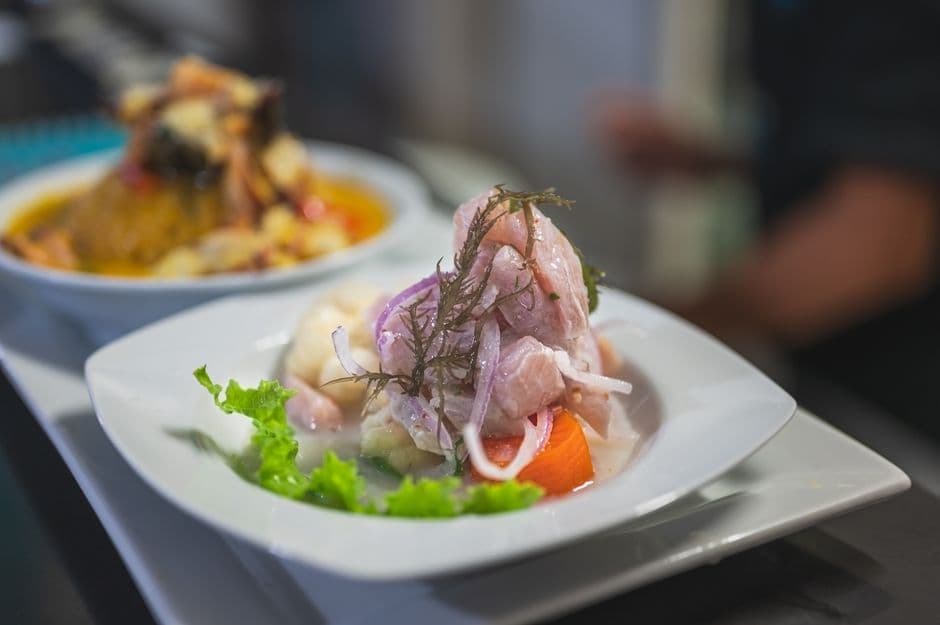
Kokoda (Fijian Fish Ceviche)
Tender raw fish cured in fresh citrus juice and tossed with rich coconut milk, chilli, and vegetables — Fiji's beloved national dish.
About This Recipe
Kokoda is Fiji's answer to ceviche, a dish that has graced Fijian tables for generations along the island's coastline. Fresh-caught reef fish — traditionally walu or mahi-mahi — is 'cooked' by the acid in lime juice until opaque and silky, then bathed in thick coconut cream drawn from freshly grated coconut. The interplay of sweet coconut milk, sharp citrus, and fiery chilli captures the spirit of the Pacific perfectly. Kokoda is served on special occasions and casual beach gatherings alike, often presented in half a coconut shell for dramatic effect.
Ingredients
Serves 4
- 500 gfresh firm white fish (walu or mahi-mahi), skinless, cut into 2 cm cubes
- 120 mlfresh lime juice (about 6 limes)
- 250 mlthick coconut cream
- 1small red onion, finely diced
- 1red chilli, deseeded and finely chopped
- 1green capsicum, finely diced
- 2ripe tomatoes, deseeded and diced
- 1 tspsea salt
- 2 tbspfresh coriander leaves, roughly chopped
Instructions
- 1
Cure the fish
Place the fish cubes in a glass or ceramic bowl. Pour over the lime juice, ensuring all pieces are submerged. Cover and refrigerate for 2–3 hours until the fish is opaque throughout.
- 2
Drain
Drain off most of the lime juice, leaving just a tablespoon or two for residual acidity.
- 3
Combine
Add the red onion, chilli, capsicum, and tomatoes to the fish. Pour over the coconut cream and stir gently to combine. Season with salt.
- 4
Chill and serve
Refrigerate for 30 minutes to allow flavours to meld. Garnish with coriander and serve in coconut shells or small bowls with taro chips.
Did you make this?
Rate it and help other cooks find the recipes that actually work.
One tap to sign in, and we'll save the rating you just picked.
Everything you need to plan your week — free
- Meal calendar
- Grocery list
- AI recipe ideas
Track what you eat
Snap your meal to log calories and macros, run fasting timers and track water in the free SnapCal app.
Pro Tips
- →
Use the freshest fish possible — sashimi-grade if available.
- →
Do not over-cure; 2–3 hours gives the best texture.
- →
Coconut cream from a fresh coconut is far superior to tinned.
- →
Taste and adjust salt at the very end — flavors concentrate as liquids reduce, and a final pinch of flaky salt sharpens the whole dish.
Variations
- •
Add diced cucumber for extra crunch.
- •
Use prawns or scallops instead of white fish.
- •
Add a splash of coconut vinegar for extra tang.
- •
Vegetarian: swap the protein for roasted king oyster mushrooms, smoked tofu or cooked chickpeas — adjust seasoning slightly upward to compensate.
Storage
Best eaten fresh. Leftovers can be stored in the fridge for up to 12 hours.
History & Origin
Kokoda has roots in the ancient Fijian tradition of preserving fish using acidic fruits. The dish evolved as coconut cream became a staple ingredient throughout the Pacific islands, and today it is considered the unofficial national dish of Fiji.
Frequently Asked Questions
Is raw fish safe to eat in kokoda?
The citric acid in lime juice denatures the fish proteins, 'cooking' the flesh without heat. Use the freshest fish possible and cure for the full recommended time.
Can I use tinned coconut cream?
Yes, full-fat tinned coconut cream works well, though fresh coconut cream has a superior flavour.
Can I make this ahead of time?
Yes — most of the components can be prepared up to a day in advance and refrigerated separately. Reheat gently and assemble just before serving so textures stay distinct.
What can I substitute if I don't have all the ingredients?
Stay close to the role each ingredient plays: swap aromatics for similar ones (shallot for onion, lime for lemon), and keep the fat-acid-salt balance intact. Spice blends can usually be approximated with what's in the cupboard.
Nutrition Facts
Per serving (200g / 7.1 oz) · 4 servings total
Time Summary
Have Questions?
Ask our AI cooking assistant anything about this recipe — substitutions, techniques, scaling.
Chat with AI Chef →Featured in Guides
This recipe is featured in the following curated guides:
More Fijian Recipes
You Might Also Like
Similar dishes from other cuisines around the world.
Free Kitchen Tools
Calculators and converters that pair with this page — no signup needed.
Put This Into a Plan
Schedule it, shop for it, and track what you already have.
Read Next
Longer reads that go deeper on the ideas behind this dish.
Community
Join the conversation
Sign in to leave a comment and save your favourite recipes