
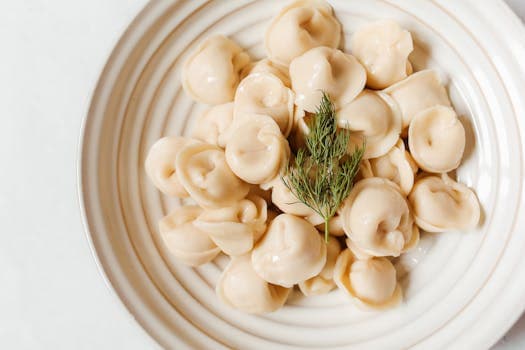
Russian Pelmeni – Siberian Meat Dumplings
Thin pasta dough pockets filled with a mix of pork and beef, boiled and served with butter and sour cream.
About This Recipe
Pelmeni are Russia's answer to ravioli — small, tightly sealed pasta dumplings filled with a seasoned mix of minced pork and beef, boiled in salted water and served with butter, sour cream, mustard or vinegar. They are the definitive Russian comfort food: filling, cheap, infinitely freezeable, and deeply associated with family gatherings where everyone sits around the table making them together — a Russian tradition as important as the dumplings themselves. Originally from Siberia and the Ural region, pelmeni were the food of hunters and fur trappers who would make enormous batches in winter, leave them outside to freeze, and carry them as portable rations — essentially Russia's original frozen food. The filling is characteristically simple — raw minced meat with onion and pepper — and the wrapping technique is precise, with the edges sealed so tightly that not a drop of juice escapes during boiling. Making pelmeni from scratch is a labour of love, but the results are incomparably better than shop-bought. The thin, silky dough (made without eggs in the Siberian tradition, or with eggs for a richer version) should be rolled paper-thin, the filling should be cold and well-seasoned, and the finished dumplings must be served immediately — they toughen as they cool.
Ingredients
Serves 6
- 400 gplain flour(plus extra for dusting)
- 180 mlcold water
- 1 tspsalt
- 250 gminced pork
- 250 gminced beef
- 1large onion(finely grated)
- 1 tspsalt
- 0.5 tspblack pepper
- 2 tbspcold water(for the filling)
- butter and sour cream(to serve)
Instructions
- 1
Make the dough
Mix flour and salt. Add cold water gradually, mixing until a firm, smooth dough forms. Knead 5–8 minutes until silky. Wrap and rest 30 minutes.
- 2
Make the filling
Mix minced pork, beef, grated onion (with its juices), salt, pepper and cold water until well combined. The filling should be loose enough to be juicy — add more water if needed. Keep refrigerated.
Cold filling is easier to portion and stays inside the wrapper during forming.
- 3
Shape the pelmeni
Roll dough to 2mm thickness. Cut circles with a 7cm cutter. Place a teaspoon of filling in the centre. Fold into a semicircle, seal edges tightly, then bring the two corners together and press to form the classic pelmeni shape.
- 4
Boil and serve
Cook in plenty of salted boiling water for 6–8 minutes until they float and are cooked through. Serve immediately with butter, sour cream and mustard.
Did you make this?
Rate it and help other cooks find the recipes that actually work.
One tap to sign in, and we'll save the rating you just picked.
Everything you need to plan your week — free
- Meal calendar
- Grocery list
- AI recipe ideas
Track what you eat
Snap your meal to log calories and macros, run fasting timers and track water in the free SnapCal app.
Pro Tips
- →
Use a 50/50 mix of pork and beef — all-beef pelmeni are too dry.
- →
Grate the onion rather than chopping — the juice flavours the filling and keeps it moist.
- →
Freeze on a floured tray before bagging — they won't stick together and can go straight from freezer to boiling water.
Variations
- •
Siberian pelmeni: smaller, thinner, often all-beef or with wild game
- •
Fried pelmeni (zharennye pelmeni): pan-fry boiled pelmeni in butter until golden
- •
Pelmeni in broth: serve in a clear beef broth instead of just boiled water
Storage
Freeze uncooked for up to 3 months. Cook from frozen — add 2 minutes to boiling time.
History & Origin
Pelmeni originated with the indigenous peoples of Siberia — the Komi, Udmurt and other Uralic groups — who made meat-filled dumplings as portable winter food. The name comes from the Komi word 'pelnyan' (bread ear). Russian settlers adopted pelmeni, and they spread across the empire. Today they are Russia's most consumed home-cooked dish.
Frequently Asked Questions
How do I know when pelmeni are cooked?
Pelmeni are cooked when they float to the surface of the water and the dough is translucent rather than opaque. They typically take 6–8 minutes from when you drop them in, but float about 3–4 minutes in. Give them another 2 minutes after floating to ensure the filling is fully cooked.
Why do my pelmeni fall apart or burst open while boiling?
This usually means the edges weren't sealed tightly enough, or the dough was rolled too thin at the seal point. Pinch the edges firmly and check for gaps before freezing or cooking, and boil in plenty of well-salted water at a gentle rolling boil rather than a violent one, which can knock delicate dumplings apart.
Can pelmeni be cooked directly from frozen?
Yes — this is actually the standard way to cook them in Russian households, since they're almost always frozen in batches first. Drop them straight into boiling water without thawing, and add about 2 extra minutes of cooking time compared to fresh, until they float and the dough turns translucent.
Nutrition Facts
Per serving (350g / 12.3 oz) · 6 servings total
Time Summary
Have Questions?
Ask our AI cooking assistant anything about this recipe — substitutions, techniques, scaling.
Chat with AI Chef →Featured in Guides
This recipe is featured in the following curated guides:
More Russian Recipes
You Might Also Like
Similar dishes from other cuisines around the world.
Browse by Ingredient
More recipes built around the same core ingredients.
Free Kitchen Tools
Calculators and converters that pair with this page — no signup needed.
Put This Into a Plan
Schedule it, shop for it, and track what you already have.
Read Next
Longer reads that go deeper on the ideas behind this dish.
Community
Join the conversation
Sign in to leave a comment and save your favourite recipes