
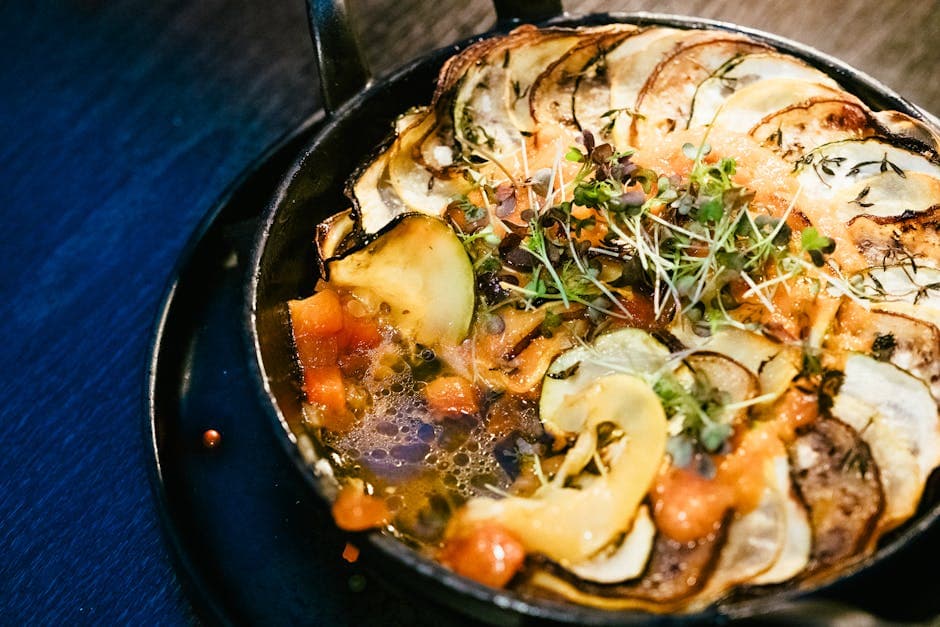
Ratatouille Provençal (Slow-Cooked Summer Vegetable Stew)
The classic Provençal stew of summer vegetables — eggplant, zucchini, peppers and tomato cooked separately then folded together with garlic, basil and olive oil.
About This Recipe
Ratatouille is the great summer dish of Provence — a slow-cooked, deeply olive-oil-rich stew of eggplant, zucchini, bell peppers, onion and tomato, perfumed with garlic, fresh thyme and torn basil. The dish's full name, ratatouille niçoise, anchors it to Nice and the Côte d'Azur, where it is traditionally made in mid-summer when local Provençal markets overflow with sun-ripened vegetables. The technique is the point of disagreement among French cooks: the rustic 'thrown-together' version dumps everything into one pot and stews it; the proper Provençal version (and the one Julia Child popularized in America in the 1960s) cooks each vegetable separately, browning them until they have caramelized and developed character, then layers and folds them together with the tomato sauce in the final minutes so the flavors marry without the vegetables turning to mush. The result is a stew where you can taste each vegetable distinctly — the smoky depth of the eggplant, the sweet-soft zucchini, the slightly bitter pepper, the bright tomato — all bound by garlic-perfumed olive oil. Eaten hot as a side to roast lamb or grilled fish, warm with a poached egg on top, cold the next day on a slice of crusty bread, or at room temperature as part of an antipasto plate, ratatouille is one of those dishes that genuinely tastes better the longer it sits, and one of the great expressions of Mediterranean vegetable cooking. (The famous Disney film's elegantly stacked 'confit byaldi' is a Thomas Keller invention; the real Provençal home version is rustic and chunky.)
Ingredients
Serves 6
- 2 mediumglobe eggplants, cut into 2.5 cm cubes
- 3 mediumzucchini, cut into 2 cm half-moons
- 2red bell peppers, cored and cut into 2 cm pieces
- 1yellow bell pepper, cored and cut into 2 cm pieces
- 2 largeyellow onions, finely sliced
- 800 gripe tomatoes (or 1 can San Marzano), peeled and chopped
- 6 clovesgarlic, sliced thin
- 8 tbspgood extra-virgin olive oil, divided
- 4 sprigsfresh thyme
- 2bay leaves
- 1 small bunchfresh basil leaves, torn (reserve some for serving)
- 1 tbspsalt (plus more to taste)
- freshly ground black pepper
Instructions
- 1
Salt the eggplant
Toss the eggplant cubes with 1 tbsp salt in a colander and let drain 30 minutes — this draws out bitter liquid and excess moisture so the eggplant browns rather than steams. Rinse briefly and pat very dry with paper towels. The drying step is as important as the salting.
- 2
Brown the eggplant
Heat 3 tbsp olive oil in a wide heavy skillet over medium-high heat. Fry the eggplant in two batches 6–8 minutes per batch, turning, until deeply caramelized on all sides and tender at the center. Transfer to a plate. Do not crowd the pan — crowding steams the eggplant and ruins the texture.
- 3
Brown the zucchini
Add another 2 tbsp olive oil to the same pan. Fry the zucchini 4–5 minutes, turning, until golden on the cut sides and still firm at the center. Don't overcook — zucchini turns to mush quickly. Transfer to the plate with the eggplant.
- 4
Cook the peppers
Add 2 tbsp more olive oil. Sauté the bell peppers 6 minutes until softened and lightly charred at the edges. Their natural sweetness intensifies as they cook. Transfer to the plate.
- 5
Build the tomato base
In the same skillet (or a wide Dutch oven), heat the final 2 tbsp olive oil. Add the sliced onions with a pinch of salt and cook 10 minutes over medium-low until soft, sweet and golden. Add the garlic and cook 60 seconds — don't brown it.
- 6
Add tomatoes and herbs
Add the chopped tomatoes, thyme and bay leaves. Bring to a simmer and cook 15 minutes over medium heat, stirring occasionally, until the tomatoes break down completely and form a thick, jam-like sauce. Crush any large chunks with the back of a spoon.
- 7
Combine and fold
Add all the browned vegetables (eggplant, zucchini, peppers) back to the pot. Fold gently to coat in the tomato sauce — don't stir aggressively or the vegetables will break apart. Reduce heat to low, cover loosely and cook 15 minutes for the flavors to marry.
- 8
Rest, season, finish with basil
Pull off the heat. Discard the bay leaves and thyme stems. Stir in half the torn basil and let the ratatouille rest 10 minutes off the heat — this is when the flavors come together. Taste and adjust salt and pepper. Drizzle with extra olive oil, scatter the remaining basil, and serve warm, room temperature, or chilled the next day.
Did you make this?
Rate it and help other cooks find the recipes that actually work.
One tap to sign in, and we'll save the rating you just picked.
Everything you need to plan your week — free
- Meal calendar
- Grocery list
- AI recipe ideas
Track what you eat
Snap your meal to log calories and macros, run fasting timers and track water in the free SnapCal app.
Pro Tips
- →
Cooking each vegetable separately is the entire technique — it preserves their individual flavors and textures. The one-pot version is faster but tastes muddled.
- →
Use a generous hand with olive oil — ratatouille is meant to be rich and slick. The oil carries the flavors and is the dish's connective tissue.
- →
Salt the eggplant! Skipping this gives bitter, oily eggplant that drinks endless oil and turns to mush.
- →
Ratatouille genuinely tastes better the next day. Make ahead; serve at room temperature on day two with crusty bread.
Variations
- •
Confit byaldi (Thomas Keller / Pixar's Ratatouille): vegetables sliced paper-thin, arranged in elegant spirals over a tomato-pepper sauce, then slowly baked. Visually stunning, takes 90 minutes longer.
- •
Provençal egg ratatouille: spoon hot ratatouille into ramekins, crack an egg on top, bake at 200°C for 8 minutes until the white is set — brunch hero.
- •
Ratatouille pasta: toss with rigatoni and finish with parmesan — heretical to purists but excellent.
- •
Add a tablespoon of capers or a few anchovies to the tomato base for a more pungent, Niçois-leaning version.
Storage
Refrigerates beautifully 5 days — genuinely improves on day 2 and 3. Freezes 3 months; thaw overnight in the fridge. Reheat gently or serve at room temperature. Can be served cold as a salad with crusty bread and goat cheese.
History & Origin
Ratatouille emerged from the peasant kitchens of late 18th-century Nice and the Provence countryside as a way to use up the abundance of summer vegetables. The word may derive from Occitan 'ratatolha' — a coarse stew — and the dish was first codified in print by Provençal cookbook author Albin Bavarel in the 1870s. It gained international fame through Julia Child's Mastering the Art of French Cooking (1961).
Frequently Asked Questions
Can I cook everything in one pot?
You can, and many French home cooks do — but the result is softer, the flavors more blended, and the vegetables less distinct. The separate-browning method takes 30 minutes longer but is worth it.
Do I have to peel the tomatoes?
If using fresh tomatoes, yes — the skin will curl up into unpleasant strips. Score, blanch 30 seconds, ice bath, and the skin slips off. Canned San Marzano tomatoes are already peeled and excellent.
Can I use dried herbs?
Fresh thyme and basil really matter for ratatouille — dried thyme is acceptable, dried basil is not (it tastes like sawdust). Use fresh herbs from a pot if needed.
Is ratatouille gluten-free and vegan?
Yes — naturally both. No adjustments needed.
Nutrition Facts
Per serving (380g / 13.4 oz) · 6 servings total
Time Summary
Have Questions?
Ask our AI cooking assistant anything about this recipe — substitutions, techniques, scaling.
Chat with AI Chef →Featured in Guides
This recipe is featured in the following curated guides:
More French Recipes
You Might Also Like
Similar dishes from other cuisines around the world.
Browse by Ingredient
More recipes built around the same core ingredients.
Free Kitchen Tools
Calculators and converters that pair with this page — no signup needed.
Put This Into a Plan
Schedule it, shop for it, and track what you already have.
Read Next
Longer reads that go deeper on the ideas behind this dish.
Community
Join the conversation
Sign in to leave a comment and save your favourite recipes