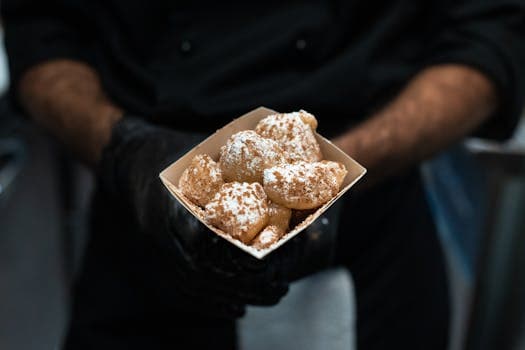
Crispy golden puffs drizzled with honey and cinnamon.
One of the oldest known desserts in the world, loukoumades are small, light yeast-leavened dough balls fried until golden and hollow inside, then drenched in warm honey, sprinkled with cinnamon, and topped with crushed walnuts.
Serves 6
Combine flour, yeast, sugar, and salt in a bowl. Add warm water and whisk until a smooth, sticky batter forms. Cover with cling film and rest in a warm place for 30–45 minutes until bubbly and doubled.
Heat oil in a deep saucepan to 180°C (350°F).
Using two wet spoons or a small ice cream scoop, drop walnut-sized balls of batter into the hot oil. Fry in batches of 6–8 for 2–3 minutes, turning occasionally, until golden brown all over.
Remove with a slotted spoon and drain briefly on paper towels.
Pile loukoumades in a bowl. Warm honey slightly and drizzle generously over the top. Sprinkle with cinnamon, walnuts, and sesame seeds. Serve immediately.
The batter should be sticky — do not add more flour.
Wet your spoons between each scoop to prevent sticking.
Weigh dry ingredients on a scale instead of using cups — grams are the difference between a tender and a tough crumb.
Bring eggs and dairy to room temperature before mixing; cold ingredients seize fats and produce a dense, uneven texture.
Drizzle with chocolate sauce instead of honey.
Add a pinch of cinnamon directly to the batter for extra warmth.
Vegetarian: swap the protein for roasted king oyster mushrooms, smoked tofu or cooked chickpeas — adjust seasoning slightly upward to compensate.
Spicier: add a finely chopped fresh chile or a teaspoon of crushed Aleppo/Urfa pepper to the aromatics for warm, layered heat instead of a single sharp hit.
Best eaten immediately. Leftovers can be re-crisped in a 180°C oven for 5 minutes.
Loukoumades (Greek Honey Donuts) is celebrating Greek table culture of olive oil, herbs and unhurried Mediterranean meals. Regional variations are the rule rather than the exception — neighboring villages, families and even individual cooks adapt the dish to what's in the pantry and what's in season, which is why no two versions taste exactly alike and why the recipe has stayed alive for so long.
Yes — most of the components can be prepared up to a day in advance and refrigerated separately. Reheat gently and assemble just before serving so textures stay distinct.
Stay close to the role each ingredient plays: swap aromatics for similar ones (shallot for onion, lime for lemon), and keep the fat-acid-salt balance intact. Spice blends can usually be approximated with what's in the cupboard.
Authenticity sits on a spectrum — what matters more is honoring the technique and balance of flavors. If the dish tastes harmonious and respects how cooks in its home region would build it, you're on solid ground.
The two most common issues are under-seasoning and rushing the heat. Taste as you go, season in layers, and give aromatics and proteins the time they need to develop color and depth before moving on.
Per serving (180g) · 6 servings total
Ask our AI cooking assistant anything about this recipe — substitutions, techniques, scaling.
Chat with AI Chef →Join the conversation
Sign in to leave a comment and save your favourite recipes