
In This Article
Track what you eat
Snap your meal to log calories and macros, run fasting timers and track water in the free SnapCal app.
Related Recipes
Related Guides
Medical disclaimer: The information in this article is for educational purposes only. Always consult a qualified healthcare professional before making significant dietary or lifestyle changes, especially if you have a medical condition.
Fatty liver disease, in which excess fat builds up in the liver of someone who does not drink heavily, is one of the most common liver conditions in the world. It used to be called nonalcoholic fatty liver disease, or NAFLD, and is now increasingly called metabolic dysfunction-associated steatotic liver disease, or MASLD, because it is closely tied to weight, blood sugar, and blood fats. Many people have no symptoms and learn about it from a scan or a blood test. The encouraging part is that the early stages often respond to lifestyle change, and eating patterns are central to that. This guide summarizes what major liver and nutrition bodies generally advise: weight loss as the main lever, a Mediterranean-style pattern, cutting back on sugary drinks and alcohol, and a realistic sample day. It is not a treatment plan on its own. Diagnosis, monitoring, and any medication belong with your doctor.
Key Takeaways
For most people with fatty liver, how much you weigh and what you drink matter most.
• Gradual weight loss is the best-supported dietary step for people with overweight; liver guidelines commonly cite losing roughly 5 to 10 percent of body weight as meaningful. • A Mediterranean-style pattern of vegetables, legumes, whole grains, fish, and olive oil is the eating style most often recommended. • Sugary drinks, large amounts of refined carbohydrates, and heavily processed foods are the first things to cut back on. • Alcohol can add to liver injury, so guidance generally advises limiting it, and avoiding it entirely if your doctor says there is advanced scarring. • Detox products and crash diets do not fix a fatty liver. Fatty liver needs proper medical follow-up because it can progress silently.
What fatty liver is, and why diet matters
The liver stores and processes fat, and a small amount of fat in the liver is normal. When fat makes up too large a share of the organ, it is called steatotic liver disease. In some people the fat is accompanied by inflammation and scarring, which can progress over years. Because the condition is tied to how the body handles energy and insulin, it commonly appears alongside excess abdominal weight, type 2 diabetes or prediabetes, high blood pressure, and abnormal cholesterol.
That link is exactly why diet matters. Eating patterns affect body weight, blood sugar, and blood fats, and trials of lifestyle change have shown improvements in liver fat for many participants. The honest limits are worth stating: how much a particular diet reverses scarring is less certain than how much it reduces fat, and some people with fatty liver are not overweight. Individual results vary, so regular check-ups matter even when you are doing everything right.
Weight loss is the main lever
If you have overweight or obesity, losing weight gradually is the single best-supported dietary step. Guidance from liver societies generally describes modest losses of around 5 percent of body weight as reducing liver fat, with larger losses, in the range of 7 to 10 percent, linked with improvements in inflammation and, for some people, scarring. Those figures are thresholds that appear in clinical guidance, not guarantees.
The pace matters. Very rapid weight loss through extreme restriction has been associated with worsening liver inflammation in some cases, so slow and steady is the safer path. A realistic target for many adults is a modest weekly loss sustained over months, set together with a clinician. Exercise helps on top of diet: regular aerobic activity and some resistance training can reduce liver fat even when the number on the scale changes little. If you want a structure to keep portions and shopping organized, a meal planner calendar with weekly totals is a practical way to stay consistent, and our guide to breaking through a weight loss plateau is worth reading when progress stalls.
A Mediterranean-style pattern
Of all the diets studied, the Mediterranean pattern is the one most often recommended for fatty liver, including in European guidance. It emphasizes vegetables, fruit, legumes, whole grains, nuts, fish, and olive oil, with limited red and processed meat and little added sugar. Studies suggest it can reduce liver fat even without much weight loss, probably through its effects on insulin sensitivity and inflammation, though most of the evidence comes from relatively small trials.
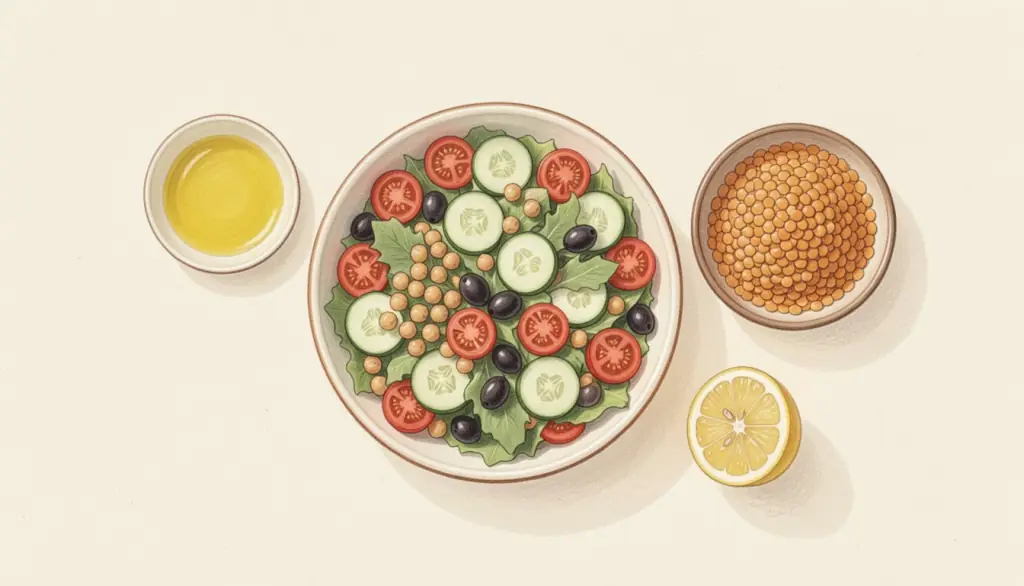
The pattern is also flexible and easy to live with, which is a real advantage when advice has to last for years rather than weeks. If you are new to it, our Mediterranean diet beginner's guide and the more detailed complete Mediterranean diet guide lay out the basics. Practical entry points include swapping butter for olive oil, making beans or lentils your protein a few times a week, and eating fish twice weekly.
Change one meal first. Making lunch Mediterranean-style every weekday is easier to sustain than overhauling every meal at once.
Everything you need to plan your week — free
- Meal calendar
- Grocery list
- AI recipe ideas
Sugary drinks, refined carbs, and processed foods
Of the foods most associated with liver fat, sugary drinks come up repeatedly. Sodas, sweetened juices, energy drinks, and sweetened coffee drinks deliver a lot of sugar, including fructose, with little fullness, and guidelines commonly recommend minimizing them. Water, sparkling water, and unsweetened tea are better defaults.
Beyond drinks, aim to cut back on foods that combine refined starch, added sugar, and saturated fat: pastries, sweet cereals, white bread in large amounts, fast food, and packaged snacks. You do not need to eliminate sweets forever, but treating them as occasional rather than daily changes the picture. For practical ways to reduce sugar without feeling deprived, see our guide to reducing sugar. On fats, favor unsaturated sources such as olive oil, nuts, and oily fish over fried foods and fatty processed meats.
Alcohol and coffee
Alcohol is processed by the liver, and even though fatty liver here is defined as not being caused mainly by heavy drinking, alcohol can add to liver injury, especially once scarring is present. Guidance generally advises limiting alcohol, and many clinicians recommend avoiding it altogether for anyone with advanced liver disease. What is safe for you depends on your stage and other health conditions, so ask your own doctor for a specific answer rather than relying on a general rule.
Coffee has an interesting profile. Observational studies have linked regular coffee drinking with lower rates of liver scarring and liver disease progression, and some guidelines mention it. But observational studies cannot prove cause and effect, and benefit does not mean you should start drinking coffee or add a lot of sugar and cream to it. If you already enjoy plain coffee and your doctor has no objection, it is reasonable to keep it. It is a nice-to-have, not a treatment.
Foods to build your plate around
These foods fit a liver-friendly, Mediterranean-style pattern:
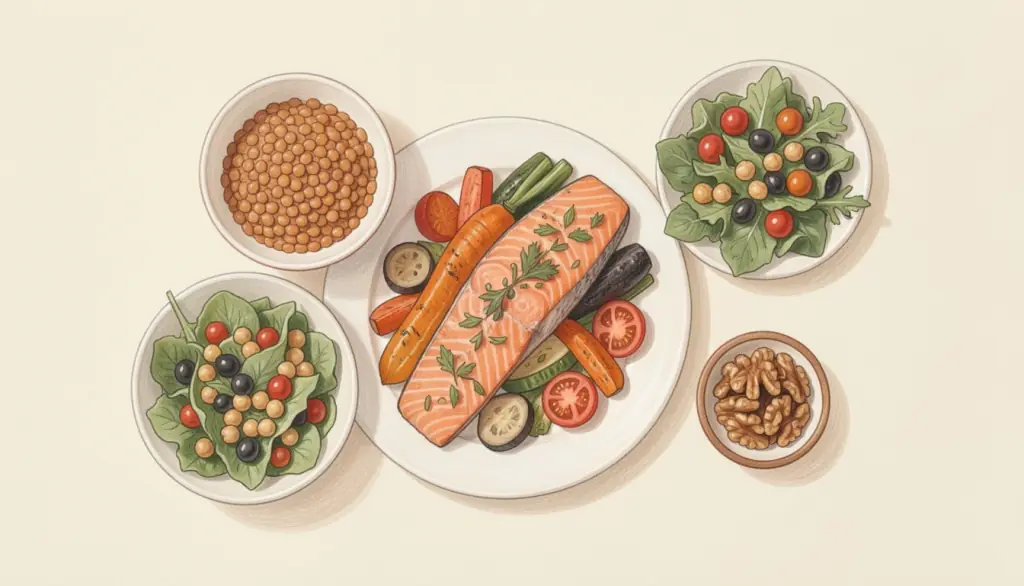
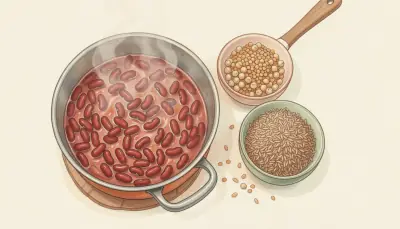
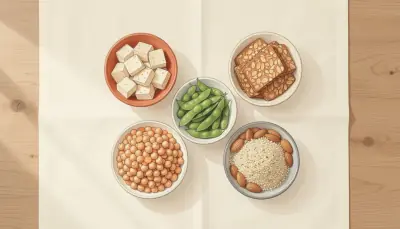
• Vegetables: leafy greens, broccoli, peppers, tomatoes, zucchini, and carrots, filling half of your plate where possible. • Legumes and whole grains: lentils, chickpeas, beans, oats, quinoa, brown rice, and whole-grain bread, which provide fiber and slow the rise in blood sugar. • Fish and lean protein: oily fish such as salmon, sardines, and mackerel, plus skinless poultry, eggs, and tofu. • Healthy fats: extra-virgin olive oil, nuts, seeds, and avocado, in measured amounts. • Fruit: whole fruit rather than juice.
Some recipes on this site match the pattern: baked cod with lentils pairs fish with fiber-rich lentils, and the Mediterranean quinoa bowl is a make-ahead bowl with vegetables, olives, and olive oil. Because nuts and oils are calorie-dense, portions still matter when weight loss is the goal.
A sample day of eating for fatty liver
A template to adapt, with portions scaled to your calorie target:
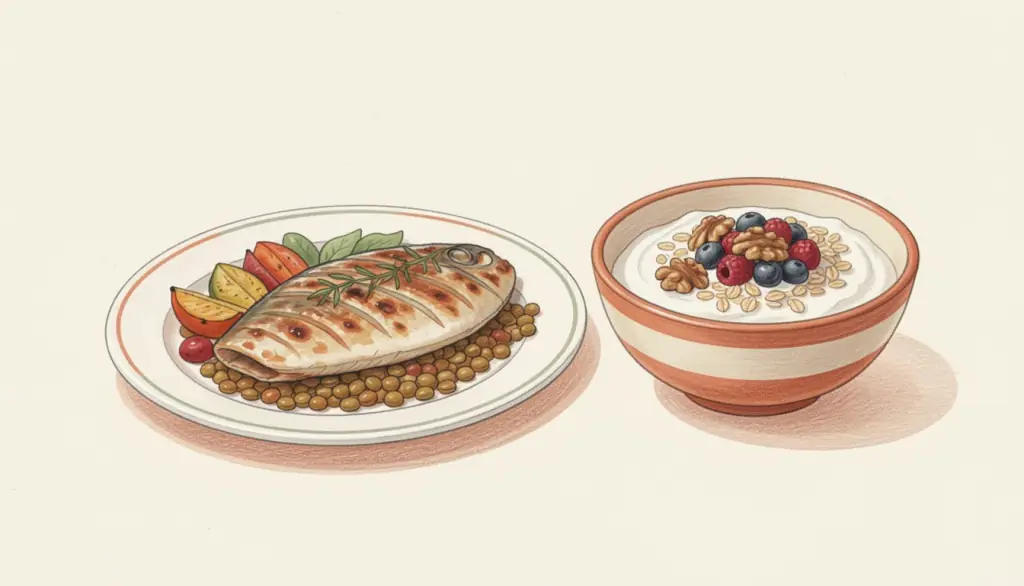
• Breakfast: plain Greek yogurt with oats, berries, and a spoonful of walnuts, or two eggs with sauteed spinach and whole-grain toast. Coffee or tea without sugar. • Lunch: a large salad with chickpeas, cucumber, tomatoes, olives, and a modest amount of feta, dressed with olive oil and lemon, plus a slice of whole-grain bread. • Snack: an apple and a small handful of almonds. • Dinner: baked salmon or cod with lentils and roasted vegetables. • Drinks: mostly water, with sparkling water or unsweetened tea if you want variety.
To keep a plan like this running, create a weekly shopping list so that the vegetables, beans, and fish you need are already in the house. A grocery list that builds from your plan built from your meal plan helps, as do batch-cooked lentils and a weekly sheet-pan of vegetables.
Detoxes do not help, and when to see a doctor
Because the liver is involved, fatty liver is a magnet for juice cleanses, detox teas, and supplement stacks. They are not recommended. The liver does not need a cleanse, and extreme restriction can backfire. Our article on the truth about detox diets and the liver goes through why. Herbal and high-dose supplements can themselves harm the liver, so check with a clinician before taking anything new.
Fatty liver needs medical follow-up. A doctor can check blood tests and assess how much scarring is present, using non-invasive tests or imaging, and can screen for related conditions such as diabetes and high cholesterol. See a doctor promptly for yellowing of the skin or eyes, a swollen abdomen, persistent abdominal pain, dark urine, pale stools, or unexplained fatigue and weight loss. If you are pregnant, take medication for diabetes, or have advanced liver disease, diet should be set with your care team or a registered dietitian rather than self-managed.
Key Takeaways
For most people with fatty liver, the plan is not exotic: lose weight gradually if you have extra to lose, eat in a Mediterranean style, cut back on sugary drinks and heavily processed foods, limit alcohol, and stay active. These are habits you can keep for years, which matters more than any short, dramatic reset. Pair them with regular medical follow-up so that changes in your liver are tracked, and treat food as one of several tools your care team can help you use well.
Frequently Asked Questions
Can fatty liver be reversed with diet?▼
Is NAFLD the same as MASLD?▼
Is fruit bad for fatty liver because of fructose?▼
Do I have to give up alcohol completely?▼
Does coffee protect the liver?▼
References
- [1]Rinella ME, Neuschwander-Tetri BA, Siddiqui MS, et al. (2023). “AASLD Practice Guidance on the clinical assessment and management of nonalcoholic fatty liver disease.” Hepatology.
- [2]European Association for the Study of the Liver (EASL), European Association for the Study of Diabetes (EASD), European Association for the Study of Obesity (EASO) (2024). “EASL-EASD-EASO Clinical Practice Guidelines on the management of metabolic dysfunction-associated steatotic liver disease (MASLD).” Journal of Hepatology.
More in Diet Guides
View all

Free Kitchen Tools
Calculators and converters that pair with this page — no signup needed.
About This Article
Written by Elena Vasquez, Health & Nutrition Writer. Published November 12, 2026. Updated November 12, 2026.
This article cites 2 peer-reviewed sources. See the full reference list below.
Editorial policy: Articles are drafted with the help of AI tools, link to the sources they rely on, and are updated when we find an error or newer evidence. Health articles are general information, not medical advice.
About the Author
Covers metabolic health, intermittent fasting and the gut microbiome, focused on summarising evidence in plain language.