
In This Article
Track what you eat
Snap your meal to log calories and macros, run fasting timers and track water in the free SnapCal app.
Related Recipes
Related Guides
Medical disclaimer: The information in this article is for educational purposes only. Always consult a qualified healthcare professional before making significant dietary or lifestyle changes, especially if you have a medical condition.
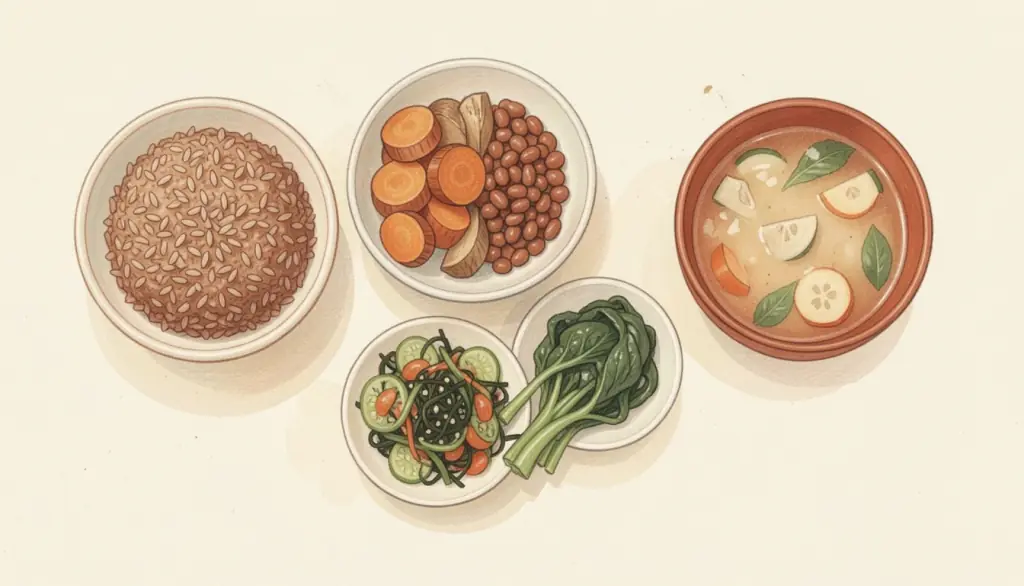
The macrobiotic diet is a plant-centered way of eating built on whole grains, vegetables, beans and sea vegetables, with a philosophy attached: that foods carry balancing qualities, which you can use to stay in harmony with your body and the seasons. Its Japanese roots, its popularity among people looking for a gentler, whole-food way of eating, and its long association with cancer claims have kept it in the conversation for decades. This guide separates the parts that are reasonable from the parts that are not supported. You will find what the diet includes, how it began, a sample day, the nutrients that tend to run short, and a clear statement about the evidence: there is no good evidence that a macrobiotic diet treats or cures cancer or any other disease.
Key Takeaways
The macrobiotic diet is a whole-food, mostly plant-based pattern with a philosophy layered on top.
• The core is whole grains such as brown rice, plus vegetables, beans, sea vegetables and miso soup, with occasional fish. • It was developed in Japan by George Ohsawa and popularized in the West by Michio Kushi. • Strict versions can fall short on vitamin B12, vitamin D, calcium, iron, zinc and protein. • There is no reliable evidence that it treats or cures cancer, and it should never replace medical care. • A flexible, well-planned version can be a healthy whole-food diet; the most restrictive versions carry real risks.
Where the macrobiotic diet came from
The term was used in older writings, but the modern diet traces to George Ohsawa, a Japanese teacher who in the early twentieth century combined traditional Japanese food habits with ideas about yin and yang, the balance of opposing qualities. He promoted brown rice and simple foods and, later, spread his teaching to the United States and Europe.
Michio Kushi, one of Ohsawa's students, moved to the United States in the 1950s and helped popularize the approach through teaching, books and natural-food stores. The movement shaped the early natural-foods industry in the West, which is why products like miso, tamari, brown rice, umeboshi and sea vegetables appear in many health-food stores.
The philosophy classifies foods as more yin or more yang and aims for balance, adjusted to the season, the climate and the individual. That framework is cultural and philosophical, not nutritional science, and you do not need to accept it to use the practical food guidance.
What you eat on a macrobiotic diet
Standard guidance, from many sources, describes a pattern along these lines:
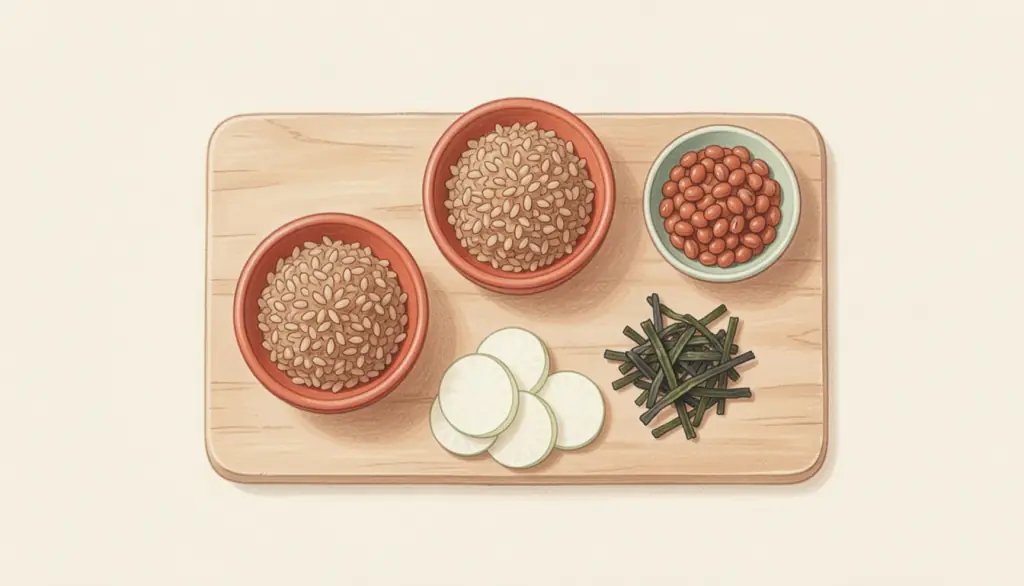
• Whole grains make up about half of each meal or more: brown rice, barley, millet, oats, buckwheat and whole-grain bread. • Vegetables are the next largest part, often locally grown and in season. Root vegetables, leafy greens, cabbage, squash and daikon appear most. • Beans and bean products such as lentils, chickpeas, adzuki beans, tofu and tempeh make up a smaller share. • Sea vegetables such as nori, wakame, kombu and hijiki appear in small daily amounts. • Soups, especially miso soup, are a daily habit. • Occasional foods: white-fleshed fish, fruit, nuts and seeds. • Avoided: meat, poultry, most dairy, eggs in many versions, sugar, refined and processed foods, and in stricter versions nightshade vegetables such as tomatoes, peppers and potatoes, plus coffee and alcohol.
There is no single official version. Some teachers allow more variety, and others prescribe progressively stricter stages.
What is reasonable about it
Stripped of its philosophy, the pattern has several features that match mainstream nutrition advice: plenty of whole grains and vegetables, regular legumes, little added sugar, little ultra-processed food, and a lot of fiber. Cooking from scratch and eating slowly are habits worth keeping.
It also overlaps with other plant-heavy styles of eating. If you want a less restrictive route to the same foods, our whole-food plant-based beginner's guide covers them without the philosophy, and the soy and sea vegetable side of the cuisine appears in our guide to miso, soy sauce and natto.
Everything you need to plan your week — free
- Meal calendar
- Grocery list
- AI recipe ideas
What the evidence says about cancer
This is the point to be clearest about. Macrobiotic diets have been promoted for decades as a way to treat cancer. Reviews of the research, including a published review of the macrobiotic diet in cancer, have found no reliable evidence that the diet cures or treats cancer or helps people live longer. The available studies are small, mostly observational, and do not show a benefit that can be separated from other factors.
And there is a risk: the most restrictive versions can leave people malnourished at exactly the moment when good nutrition matters most, and relying on diet instead of treatment can cost people valuable time. Major cancer organizations do not recommend it as a treatment. If you or someone you love is dealing with cancer, talk with the oncology team and ask for a referral to an oncology dietitian before making dietary changes.
Nutrients to plan for
A well-planned macrobiotic diet can supply most nutrients, but the pattern makes a few gaps likely. Studies of children raised on strict macrobiotic diets in the Netherlands found slower growth and more deficiencies in infants and young children, which is a key reason pediatric guidance is cautious.
• Vitamin B12 is found almost only in animal foods and fortified foods. Fermented soy and sea vegetables are not reliable sources. Our guide to vitamin B12 deficiency explains why a supplement or fortified foods are usually needed. • Vitamin D is low in a diet without fortified foods or oily fish; sunlight and supplements help. • Calcium comes from greens, tofu set with calcium and sesame seeds, but total intake can be low without dairy or fortified products. • Iron and zinc are present in grains and beans but absorbed less efficiently from plant sources. • Protein is adequate if beans, tofu and grains are eaten consistently, but easily falls short when the diet is mostly rice and vegetables. • Iodine can be too high with large amounts of kelp and other seaweed.
A general overview of avoiding gaps on plant-based patterns is in our vegan nutrition and deficiencies guide, most of which applies here.
Include a B12 source every day. A supplement or fortified food is the practical solution for any diet that is mostly or entirely plant-based.
A sample day of macrobiotic eating
Here is a gentler, flexible version that fits a normal kitchen.
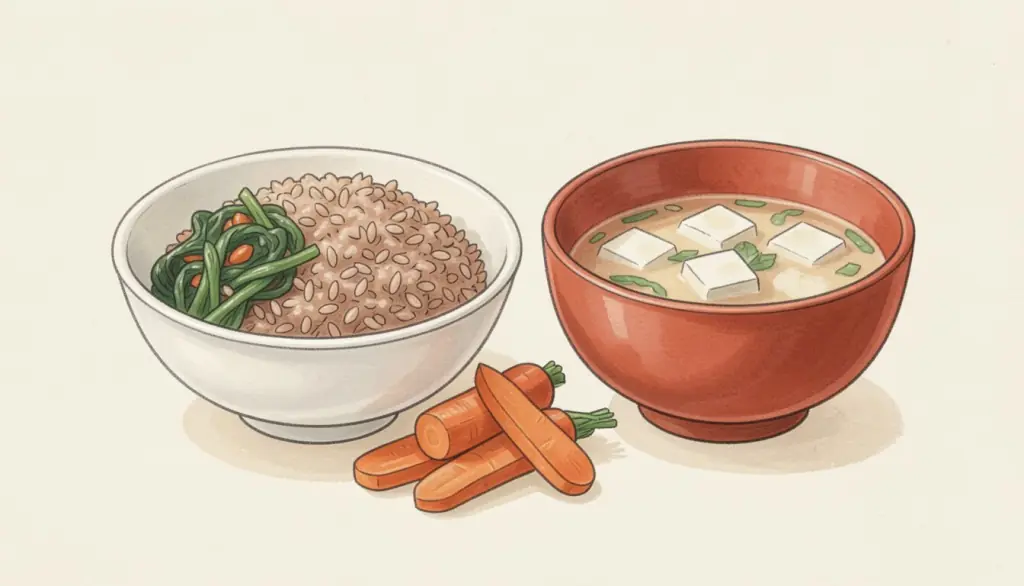
• Breakfast: oatmeal or rice porridge with sesame seeds and a little fruit, plus tea. • Lunch: brown rice with sautéed greens, simmered root vegetables and a handful of beans. Our ginger garlic broccoli brown rice is a quick way to cover the grain-and-vegetable core. • Dinner: a bowl of miso soup with tofu and wakame, a lentil and rice dish such as mujadara, and steamed or pickled vegetables. • Snack: roasted pumpkin seeds, a baked apple or rice cakes.
The key cooking habits are simple: choose whole grains, cook vegetables lightly with modest oil, and season with miso, tamari and sea salt rather than refined sugar.
Shopping and planning
The ingredients are inexpensive, and a large share of the shopping is dry goods: brown rice, barley, millet, dried beans, lentils, sea vegetables, miso, tamari and seeds. If you cook this way, building the list from your week of meals saves repeated trips; a grocery list that fills itself from your meal plan is one way to do that.
Batch-cook grains and beans once or twice a week, since both keep well in the refrigerator, and keep a pot of miso paste on hand for quick soups.
Cooking methods and everyday habits. Macrobiotic cooking favors simple methods: steaming, simmering, light sautéing and pressure-cooking grains. Brown rice is often cooked in a pressure cooker or with a strip of kombu, and soups are simmered slowly. Vegetables are cut in different shapes depending on how they will be cooked, and food is chewed thoroughly, often cited as thirty or more times per bite. Chewing slowly is a sound habit regardless of philosophy, since it slows eating and helps you notice fullness.
Seasonal eating is another hallmark: lighter, quicker dishes in summer, heartier stews and roasted roots in winter. This is easy to follow with a farmers market or a seasonal produce box, and it tends to keep food fresher and cheaper.
Cook a large pot of brown rice or barley at the start of the week. Reheated grains make quick lunches and keep the diet practical.
Who should be careful or avoid it
Stricter macrobiotic eating is not appropriate for everyone. Infants, children, teenagers, pregnant and breastfeeding people should not follow a restrictive macrobiotic diet without close supervision from a pediatrician or registered dietitian, because of documented risks of B12, vitamin D, calcium and energy shortfalls. The most restrictive stages, especially those built almost entirely on brown rice, have historically been linked to serious malnutrition and should be avoided entirely.
People with cancer, kidney disease, diabetes, thyroid conditions, osteoporosis or a history of disordered eating should not adopt it as a treatment or without medical guidance, and anyone on medication should discuss changes with their doctor first. If you are considering the diet for a health condition, work with your doctor or a registered dietitian rather than trying to treat the condition with food.
Key Takeaways
The macrobiotic diet is best understood as a whole-food, grain-and-vegetable pattern with a philosophy attached, not a medical therapy. The practical parts, whole grains, vegetables, beans, miso soup and little processed food, are easy to adopt in a flexible form. The parts to leave behind are the cancer claims and the strictest restrictions. If you try it, add a reliable B12 source, keep an eye on protein, calcium and vitamin D, and involve a health professional if you have a medical condition or are feeding children.
Frequently Asked Questions
Does the macrobiotic diet cure cancer?▼
Is the macrobiotic diet vegan?▼
Who started the macrobiotic diet?▼
Do you have to avoid tomatoes and potatoes?▼
References
- [1]Kushi LH, Cunningham JE, Hebert JR, Lerman RH, Bandera EV, Teas J (2001). “The macrobiotic diet in cancer.” Journal of Nutrition.
- [2]Dagnelie PC, van Staveren WA (1994). “Macrobiotic nutrition and child health: results of a population-based, mixed-longitudinal cohort study in The Netherlands.” American Journal of Clinical Nutrition.
More in Diet Guides
View all
Free Kitchen Tools
Calculators and converters that pair with this page — no signup needed.
About This Article
Written by Elena Vasquez, Health & Nutrition Writer. Published November 12, 2026. Updated November 12, 2026.
This article cites 2 peer-reviewed sources. See the full reference list below.
Editorial policy: Articles are drafted with the help of AI tools, link to the sources they rely on, and are updated when we find an error or newer evidence. Health articles are general information, not medical advice.
About the Author
Covers metabolic health, intermittent fasting and the gut microbiome, focused on summarising evidence in plain language.