
In This Article
Track what you eat
Snap your meal to log calories and macros, run fasting timers and track water in the free SnapCal app.
Related Recipes
Related Guides
Medical disclaimer: The information in this article is for educational purposes only. Always consult a qualified healthcare professional before making significant dietary or lifestyle changes, especially if you have a medical condition.
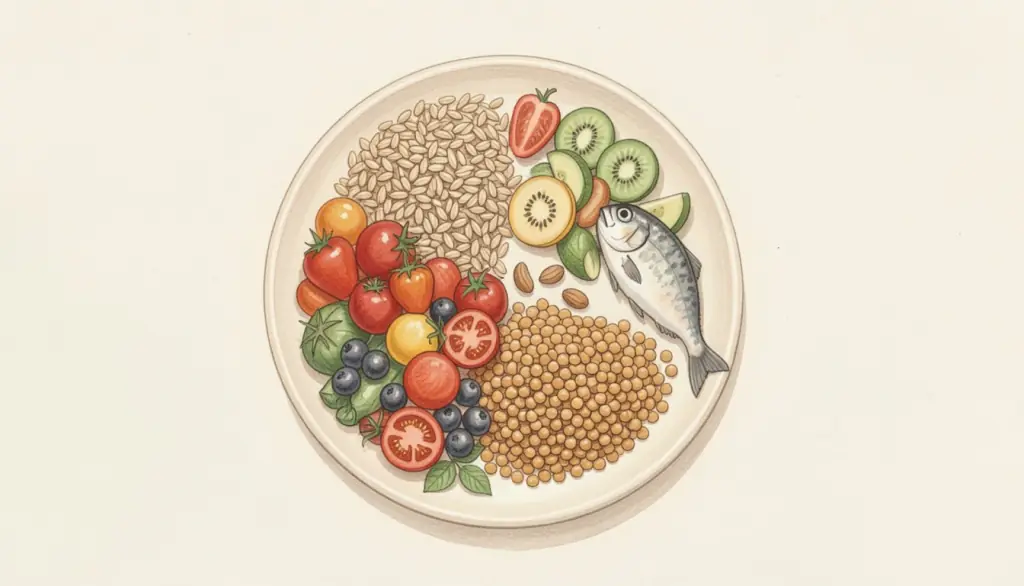
The Planetary Health Diet is the name given to the reference diet proposed in 2019 by the EAT-Lancet Commission, a group of scientists asked to describe what a healthy diet looks like when it also has to fit within the limits of the planet. It is not a weight-loss plan or a strict set of rules. It is a flexible pattern, built on vegetables, fruit, whole grains, legumes and nuts, with small amounts of fish, poultry, eggs and dairy, and very little red meat, refined grains and added sugar. Because it sits somewhere between a vegetarian diet and a Mediterranean one, many people find it easier to picture than to define. This guide explains the plate, what a week of eating can look like, and the real criticisms of the approach, including cost and questions about nutrient adequacy.
Key Takeaways
The Planetary Health Diet is a mostly plant-based pattern designed to support both health and environmental sustainability.
• Roughly half the plate is vegetables and fruit; the rest is mainly whole grains and plant proteins, with unsaturated plant oils. • Animal foods are included but modest, and red meat is very small. • It is a flexible global reference, not a rigid meal plan, and can be adapted to vegetarian, vegan or omnivore patterns. • Critics point to cost in lower-income settings and ask whether some nutrients are hard to get without careful planning. • For most healthy adults it is similar to other well-regarded patterns such as the Mediterranean diet.
Where the diet comes from
The EAT-Lancet Commission, published in The Lancet in 2019, brought together researchers in nutrition, agriculture, ecology and policy. Their question was whether it is possible to feed a growing population a healthy diet while staying within planetary boundaries for climate, land, water and biodiversity. The answer they proposed was a reference diet: not a prescription for individuals but a global target that can be adapted to local foods and cultures.
The resulting pattern is often called the Planetary Health Diet. It overlaps heavily with other plant-forward patterns, and the environmental case is discussed in our piece on the environmental impact of a plant-based diet. The commission's message is mainly about direction: more plants, less red meat, less ultra-processed food.
The plate: what goes where
The commission's visual summary describes a plate roughly as follows.
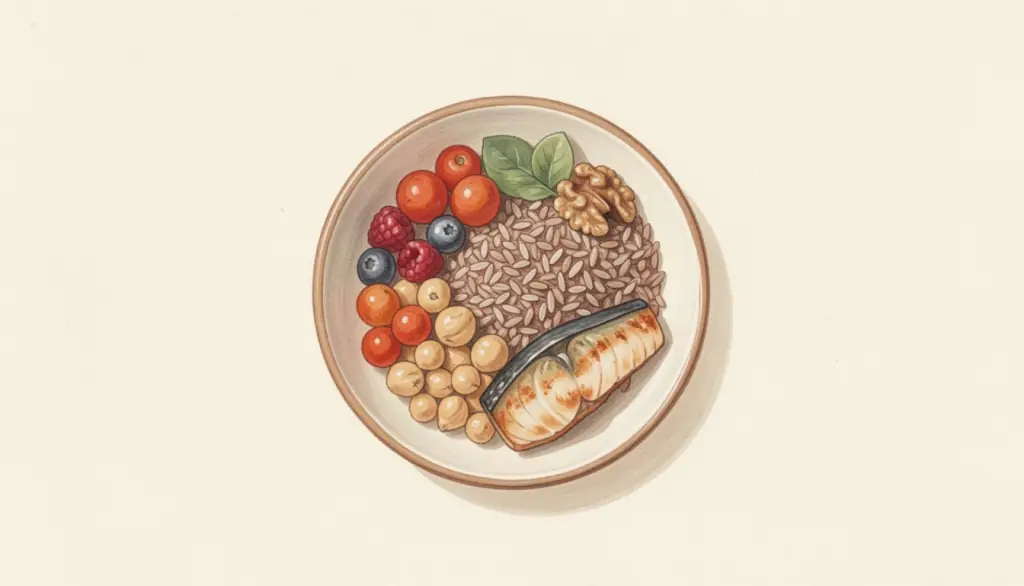
• About half is vegetables and fruit, with a wide variety of colors, plus a small share of starchy vegetables. • The other half is mostly whole grains, plant proteins such as beans, lentils, peas, soy foods and nuts, and unsaturated oils such as olive, canola or soybean oil. • Modest amounts of animal foods: fish, poultry, eggs and dairy, optional and in small quantities. • Very little red meat, refined grains, added sugar and starchy vegetables beyond the allowance.
The published reference is built on about 2,500 calories a day, with ranges for each food group rather than fixed rules. In grams, the reference includes about 50 g of nuts and about 75 g of dry legumes daily, and only around 14 g of red meat, which is about one serving every week or so. These are guideposts for the average adult, not targets to hit exactly. Your needs depend on age, size, activity and health, and the AI nutritionist can help translate a pattern like this into calories and macros for you.
Do not weigh food. Judge the plate by eye: fill half with vegetables and fruit before you add anything else.
What a week looks like
The pattern is easy to build from familiar meals. A typical week might include:
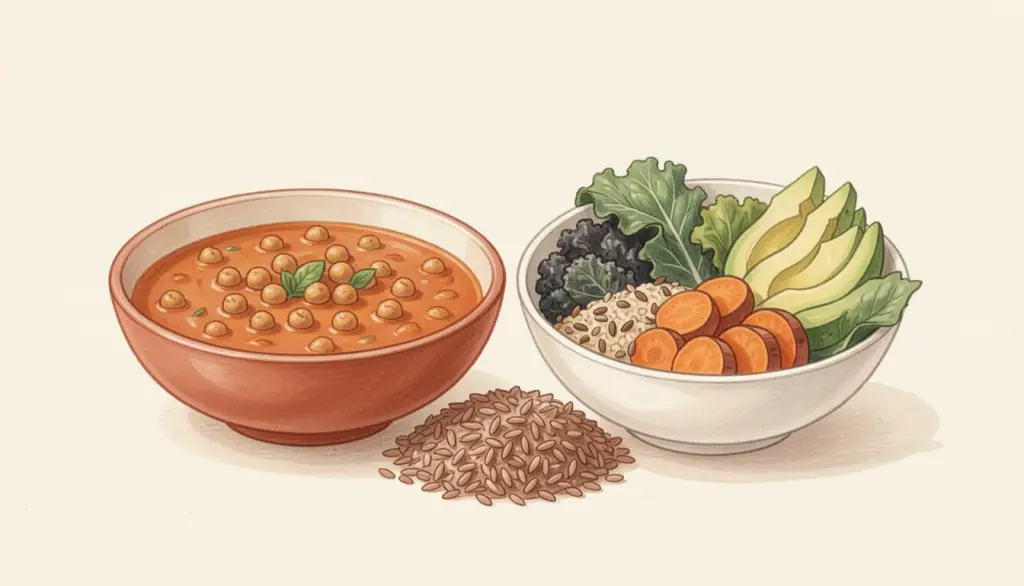
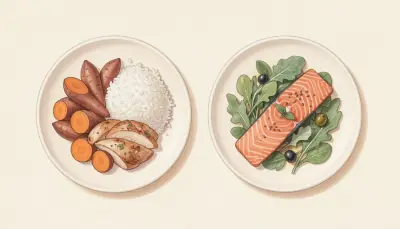
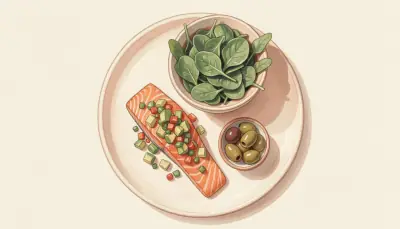
• Oatmeal with fruit and nuts for breakfast most days, eggs or yogurt a couple of times. • Lunches built around beans or lentils: soup, grain bowls, salads with chickpeas. • Dinners based on vegetables and whole grains, with fish once or twice, poultry once or twice, and a red meat meal only occasionally. • Snacks of fruit, nuts and vegetables.
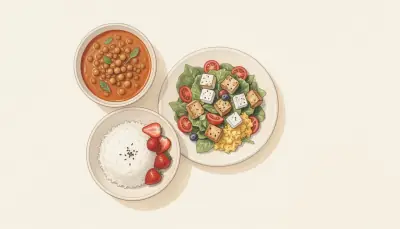
Some dishes that fit well include chana masala with brown rice, a rainbow buddha bowl with tahini dressing, and a lentil bolognese over whole-grain pasta. A big pot of vegetable soup covers a lot of the vegetable quota in a single sitting.
Planning the week in advance makes it easier to keep legumes and vegetables front and center; the meal planner calendar shows the nutrition totals alongside the meals.
Everything you need to plan your week — free
- Meal calendar
- Grocery list
- AI recipe ideas
How it compares with other diets
The Planetary Health Diet has a lot in common with the Mediterranean pattern: olive oil, vegetables, legumes, nuts, whole grains, and moderate fish. See our Mediterranean diet beginner's guide for that version. It is less strict than a vegan or whole-food plant-based diet, and it is closer to what is sometimes called a flexitarian approach; our flexitarian beginner's guide covers that style.
Where it differs is in its explicit goal: it is designed to be sustainable as well as healthy, and so it sets a low ceiling for red meat and processed foods. It also does not specify a calorie deficit, so it is not a weight-loss diet unless you adjust portions yourself.
Criticisms and open questions
The diet has drawn serious debate, and it is fair to list the main points.
Cost and access. An analysis of the reference diet found it would be unaffordable for a large share of people in low-income countries, because it includes foods such as fruit, vegetables, nuts, legumes and some animal foods that are expensive relative to staples. Even in wealthy countries, some foods like nuts and fish add to the grocery bill.
Nutrient adequacy. Some researchers argue that the low amounts of animal foods may leave gaps in vitamin B12, iron, zinc, calcium and some other nutrients, particularly for women of childbearing age, children and older adults, unless the diet is carefully planned or fortified. Supporters respond that the reference diet is designed to be nutritionally adequate and that the animal-food allowances are optional.
One size for everyone. A global reference cannot fit every culture, food system or health condition, and critics say it underweights the role of livestock for livelihoods and nutrition in some regions.
These debates are ongoing. If you are adopting the diet, the practical response is to keep some B12 and iron sources in mind, as described in our guide to plant-based protein sources, and to adapt the pattern to your budget.
It also helps to remember what the reference is for. It was written as a global yardstick for food systems, so the numbers describe an average across populations rather than a personal prescription. Read the gram amounts as a rough indication of proportions, and let your own appetite, health and culture decide the details.
Making it work on a budget
The diet does not have to be expensive. Dried beans, lentils, oats, brown rice, frozen vegetables, seasonal produce and canned tomatoes are among the cheapest foods in the supermarket. Buy nuts in bulk or choose cheaper options such as peanuts, and use fish canned or frozen. Cooking a large pot of beans or lentils and using it in several meals reduces both cost and time. The rule of thumb is to spend more on plants you will actually eat, and less on processed foods you will not need.
Simple swaps to move toward it
You do not have to overhaul your kitchen. Small substitutions add up: replace half the meat in a stew or sauce with lentils or beans, swap refined bread and pasta for whole-grain versions, choose olive oil over butter for everyday cooking, and keep a bowl of fruit and a bag of nuts within reach for snacks. Aim for a vegetable at breakfast and a legume at lunch or dinner, which together cover a large part of the plate.
If you eat meat daily now, try making two or three dinners a week meat-free before changing anything else. If you already eat mostly plants, the bigger levers might be reducing ultra-processed foods and added sugar. Because the diet is a reference, progress in the right direction counts, and a pattern you can keep for years matters more than one you follow perfectly for a month.
Change one meal at a time. Make breakfast the first plant-forward meal, then lunch, then dinner.
Who should be careful
For most healthy adults, a pattern based on vegetables, whole grains, legumes and nuts is safe. But the Planetary Health Diet should be adapted, with professional advice, for pregnancy and breastfeeding, for young children and teenagers, for older adults at risk of low protein or low weight, and for anyone with iron deficiency, anemia, osteoporosis, kidney disease or another medical condition. People with a history of disordered eating should not adopt rules about food groups without support. If any of these apply to you, speak with your doctor or a registered dietitian before changing how you eat.
Key Takeaways
The Planetary Health Diet is a helpful way to picture a plate that is good for you and kinder to the environment: half vegetables and fruit, the rest mostly whole grains and plant proteins, and animal foods in small supporting roles. It is not a strict plan, and its critics raise fair points about cost and nutrient adequacy. A sensible approach is to take the direction, more plants and less red meat, adapt it to your budget and your health, and watch B12, iron and calcium rather than following any reference literally.
Frequently Asked Questions
What is the Planetary Health Diet?▼
Is the Planetary Health Diet vegetarian?▼
Can I eat meat on the Planetary Health Diet?▼
Is it good for weight loss?▼
References
- [1]Willett W, Rockström J, Loken B, et al. (2019). “Food in the Anthropocene: the EAT-Lancet Commission on healthy diets from sustainable food systems.” The Lancet.
- [2]Hirvonen K, Bai Y, Headey D, Masters WA (2020). “Affordability of the EAT-Lancet reference diet: a global analysis.” The Lancet Global Health.
More in Diet Guides
View all
Free Kitchen Tools
Calculators and converters that pair with this page — no signup needed.
About This Article
Written by Amelia Thompson, Food & Sustainability Writer. Published November 12, 2026. Updated November 12, 2026.
This article cites 2 peer-reviewed sources. See the full reference list below.
Editorial policy: Articles are drafted with the help of AI tools, link to the sources they rely on, and are updated when we find an error or newer evidence. Health articles are general information, not medical advice.
About the Author
Writes about growing your own food, seasonal eating and where ingredients come from.