
In This Article
Track what you eat
Snap your meal to log calories and macros, run fasting timers and track water in the free SnapCal app.
Related Guides
Medical disclaimer: The information in this article is for educational purposes only. Always consult a qualified healthcare professional before making significant dietary or lifestyle changes, especially if you have a medical condition.
Search for keto and you will quickly meet a set of nicknames: lazy keto, dirty keto, clean keto, strict keto. None of them are official diagnoses or medical categories; they are informal labels that people use to describe how carefully they follow a very low-carb, high-fat way of eating. The differences matter, though, because they change what you track, how much effort the diet takes, and what ends up on your plate. This guide defines each style, compares what it tracks and where it falls short, and offers a simple way to choose. It covers the styles themselves; for the underlying science, see our complete science-based keto guide.
Key Takeaways
The four keto styles in short.
• Strict keto tracks carbs, protein and fat, and often ketones, with a tight carb limit and mostly whole foods. • Clean keto keeps the carb limit and emphasizes whole, minimally processed foods such as vegetables, fish, eggs and olive oil. • Lazy keto tracks only carbs and ignores calories, fat and protein targets. • Dirty keto hits low-carb numbers but with processed, packaged and fast foods. • These are informal labels, not medical terms. The right one depends on your goals, your health and how much tracking you will really do.
The common thread: very low carbohydrate
All four styles share the same core idea: keep carbohydrates low enough that the body shifts toward using fat and ketones for fuel. A commonly cited carb range is about 20 to 50 grams of net carbs per day, where net carbs usually means total carbohydrates minus fiber. Exact thresholds vary between people and between sources.
Where the styles differ is everything else: how closely you track, how much you care about food quality, and whether protein and calories matter. The basics of how the diet works, and common myths, are covered in our keto myths vs facts article, so we will not repeat them here.
Strict keto: the full-tracking version
Strict keto, sometimes called standard or classic keto, tracks carbohydrates, protein and fat against set targets, and some followers also measure ketones. Protein is held to a moderate amount, because very high protein is thought to blunt ketosis for some people, and fat provides most of the calories. Food choices are usually whole and consistent.
Strengths: it is the most deliberate version, the easiest to troubleshoot when something is not working, and the most likely to produce consistent ketosis. Weaknesses: it takes time and attention, can feel restrictive, and may be more than most people need. It is also the style used in clinical settings, where it should be supervised by a medical team. If you want to plan this way, our 7-day keto meal plan lays out a week of meals.
Clean keto: whole foods first
Clean keto holds the same low-carb limits but adds a food-quality rule: mostly whole, minimally processed foods. Think leafy and non-starchy vegetables, eggs, fish, poultry, meat, nuts, seeds, avocado, olive oil and full-fat dairy, with little in the way of processed meats, packaged "keto" snacks, sweeteners or refined oils.
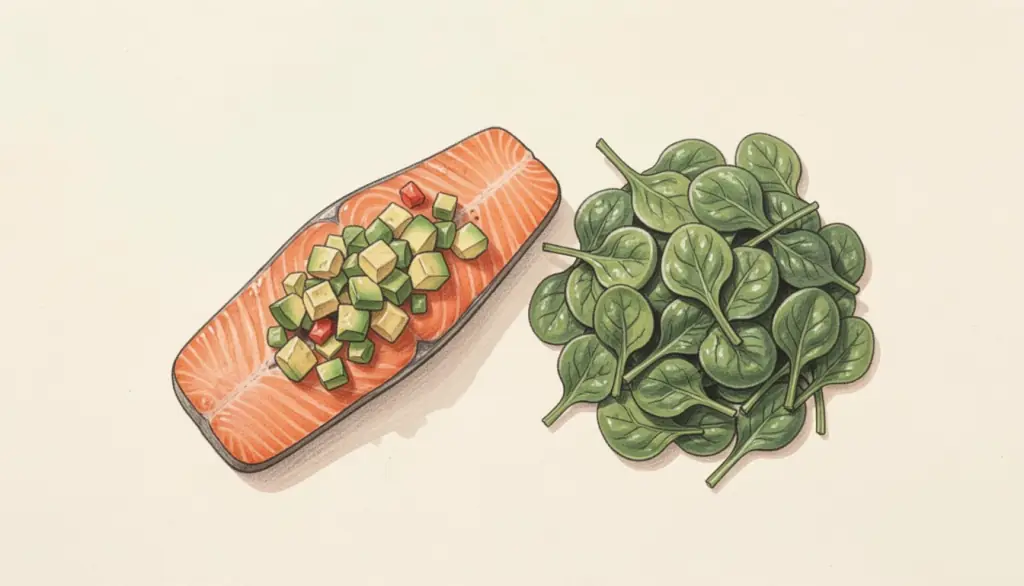
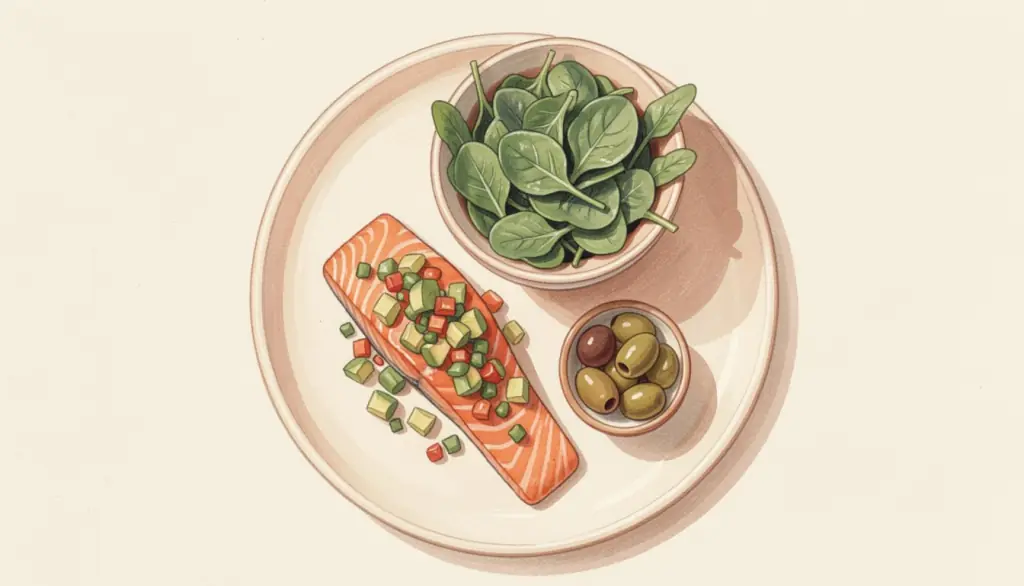
Strengths: more fiber and micronutrients, better satiety, and a diet that is easier to defend nutritionally. Weaknesses: more cooking and more cost. A dish like keto salmon with avocado salsa is a typical clean keto dinner, with no packaged ingredients needed. Clean keto is often the best long-term compromise for people who want the low-carb benefits without the tracking burden of the strict version.
Keep a few cooked proteins and chopped vegetables in the fridge so clean keto meals take ten minutes, not an hour.
Everything you need to plan your week — free
- Meal calendar
- Grocery list
- AI recipe ideas
Lazy keto: count carbs only
Lazy keto drops almost everything except the carb count. You keep carbs under your limit and do not track calories, protein or fat. The appeal is obvious: it is much simpler to follow, and for beginners it can feel like the only version that is sustainable.
The trade-off is that you give up control over the things that determine weight change. Fat is calorie-dense, and without tracking it is easy to eat more than you realize, which can stall weight loss even when carbs are low. Some people also under-eat protein. Others lean heavily on cheese, processed meats and sweeteners because those are easy to count, which narrows the diet and can leave you short on fiber and vegetables. Lazy keto can work well as a starting point or for maintenance, but if the scale does not move, adding some tracking of calories is the first thing to try. Our keto meal planning guide is a good next step.
Try lazy keto for two to three weeks. If weight, energy or hunger are not where you want them, add calorie and protein tracking before changing anything else.
Dirty keto: low carb, any quality
Dirty keto also meets the carb target, but with little regard for food quality. Bacon cheeseburgers without the bun, processed deli meats, sugar-free packaged snacks, fast-food lunches and diet soda all count as fair game, as long as carbs stay low.
Its upside is convenience and flexibility, and it can make the diet workable when cooking is not an option. The downsides are real: fewer vegetables, less fiber, more sodium and more processed meat, and more reliance on convenience products. Dietary guidance generally recommends limiting processed meats, and a diet short on vegetables and fiber can leave gaps. If you do eat this way, treat it as a short-term or occasional approach and fill in the gaps with vegetables where you can.
Strict keto: carbs, protein, fat, often ketones. Food quality high. Effort: highest.
Clean keto: carbs, sometimes calories. Food quality high. Effort: moderate.
Lazy keto: carbs only. Food quality varies. Effort: low.
Dirty keto: carbs only. Food quality low. Effort: low.
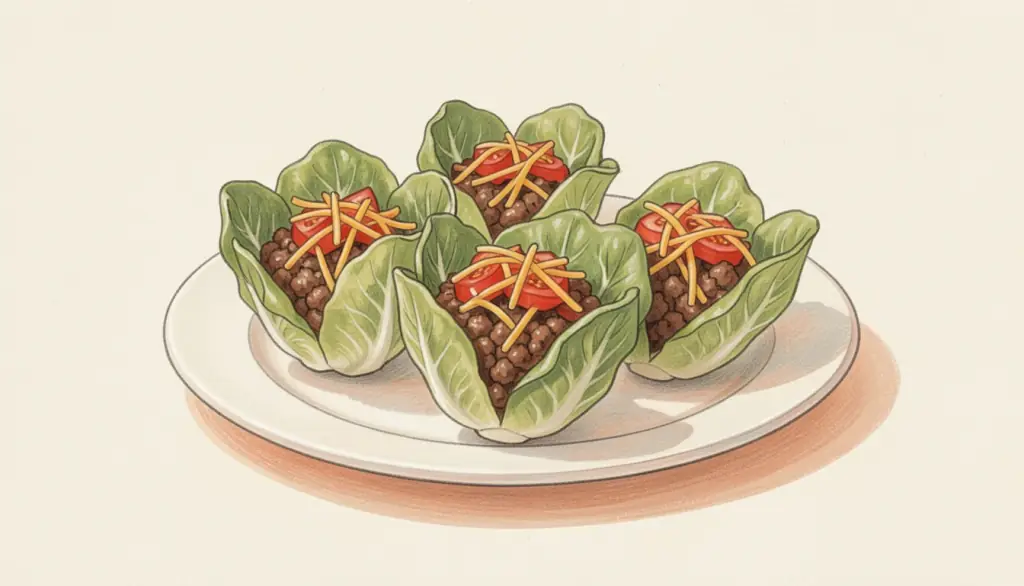
Effort and results are linked, but not linearly. A moderately tracked, whole-food version often gives most of the benefit at a fraction of the work. A keto beef taco in lettuce wraps is a typical weeknight clean-or-lazy meal that needs no special products.
Common mistakes across all four styles
The most frequent error is hidden carbs. Sauces, dressings, flavored yogurts, processed meats and some low-carb products can carry more carbohydrates than expected, so reading labels matters in every style. Another is eating too little overall: fat is satisfying, but if appetite drops sharply, you can under-eat and feel tired. A third is neglecting electrolytes. Lower-carb diets tend to increase fluid and sodium loss early on, and many early symptoms improve with adequate fluid and salt.
People also forget fiber. Without grains and fruit, fiber can fall, so non-starchy vegetables, seeds and avocado do double duty. Finally, do not mistake ketosis for fat loss. Being in ketosis is not the same as being in a calorie deficit, and calories still count in every style.
You do not have to pick one for life. A common path is to start lazy, learn what a day under your carb limit looks like, then drift toward clean as you learn to cook a few reliable meals. If a plateau arrives, you can borrow strict-style tracking for a few weeks, then step back. Some people use dirty keto when traveling and return to clean at home.
What matters is that you know which mode you are in and why. A flexible approach that you can maintain will beat a perfect version that lasts three weeks. If you are unsure whether to continue, take stock of your energy, digestion, sleep and any bloodwork your doctor has run, not just the scale.
Which style fits whom
Beginners often do best with lazy or clean keto, because the learning curve of full tracking can end the diet before it starts. People who need results from keto for a specific goal, such as a plateau, should add calorie and protein tracking, which moves them toward strict. People focused on long-term health should favor clean keto and plenty of vegetables. People with limited time may use dirty keto for the occasional rushed meal but should not let it be the only pattern.
If you use an app to count carbs, an AI nutritionist can help check labels and recipes, but it is not medical advice. And always run these choices past your doctor if you have health conditions.
Who should not do keto, or should talk to a doctor first
Keto in any style is not for everyone. Speak to a doctor or registered dietitian before starting if you have diabetes (especially if you take insulin or sulfonylureas), kidney disease, liver disease, pancreatitis, a history of gallbladder problems, or are on blood pressure medication, because needs can change quickly. It is generally not recommended during pregnancy or breastfeeding, for children, or for anyone with a history of an eating disorder.
Some people experience the so-called keto flu, with headache, fatigue and cramps, in the first weeks. Drinking enough fluid and getting enough sodium helps, but persistent symptoms deserve a check with your doctor. Long-term effects on cholesterol vary between individuals, so periodic bloodwork is wise. Because very low-carb eating can change how your body handles fluids and some medications, tell your doctor which style you follow, and be honest about how closely you track it so that any advice matches what you actually eat.
Key Takeaways
The four keto styles are not rivals so much as points on a dial between effort and control. Strict gives you the most precision, clean gives you the best food quality for the effort, lazy gives you simplicity, and dirty gives you convenience at a cost. For most people, a clean version with light tracking is the sweet spot. Choose the style you will actually follow, and check with a healthcare professional if you have any medical condition.
Frequently Asked Questions
Does lazy keto work for weight loss?▼
Is dirty keto bad for you?▼
What is the difference between clean keto and strict keto?▼
How many carbs can I eat on lazy keto?▼
Which keto style is best for beginners?▼
More in Diet Guides
View all

Free Kitchen Tools
Calculators and converters that pair with this page — no signup needed.
About This Article
Written by Sarah Mitchell, Food & Nutrition Writer. Published November 12, 2026. Updated November 12, 2026.
Editorial policy: Articles are drafted with the help of AI tools, link to the sources they rely on, and are updated when we find an error or newer evidence. Health articles are general information, not medical advice.
About the Author
Writes about everyday nutrition, balanced eating and turning dietary guidelines into practical, cook-at-home advice.