
In This Article
Track what you eat
Snap your meal to log calories and macros, run fasting timers and track water in the free SnapCal app.
Related Recipes
Related Guides
Medical disclaimer: The information in this article is for educational purposes only. Always consult a qualified healthcare professional before making significant dietary or lifestyle changes, especially if you have a medical condition.
Almost everyone has felt heartburn after a large, late, or very rich meal. When it happens often, doctors call it gastroesophageal reflux disease, or GERD, and diet becomes one of the first things people try to change. The internet is full of confident lists of banned foods, but the research is more modest than those lists suggest: the strongest lifestyle advice from gastroenterology groups is about how much you eat, when you eat, and body weight, while individual trigger foods vary a great deal from person to person. This guide explains what mainstream guidance generally says, which foods are worth testing rather than banning outright, what a reflux-friendly day of eating can look like, and which symptoms mean you should stop self-managing and see a clinician. Food can help reduce symptoms for many people, but it supports medical care rather than replacing it.
Key Takeaways
Reflux eating is about patterns first, then personal triggers.
• Meal size and timing often matter more than any single food: smaller meals, and finishing eating two to three hours before lying down, are commonly recommended. • Trigger foods are individual. Fatty, fried, spicy, citrus, tomato, chocolate, mint, coffee, and alcohol are common suspects, but not everyone reacts to all of them. • For people with overweight, losing weight is one of the better-supported lifestyle steps for reducing reflux symptoms. • Build meals around lean protein, oatmeal and other whole grains, non-citrus fruit, and cooked vegetables, then reintroduce suspects one at a time. • Trouble swallowing, vomiting blood, black stools, unintended weight loss, or chest pain are not diet problems and need prompt medical attention.
What reflux is, and what food can and cannot do
Reflux happens when stomach contents move back up into the esophagus, the tube that connects your throat and stomach. A ring of muscle at the bottom of the esophagus normally acts like a valve. In people with GERD, that valve relaxes at the wrong times or is under extra pressure, and acid and food come back up, causing a burning feeling behind the breastbone, a sour taste, or a cough.
Food influences this in a few ways: a large meal stretches the stomach and raises pressure, fatty meals leave the stomach more slowly, and some foods and drinks seem to relax the valve or irritate an already inflamed esophagus. What diet cannot do is fix an underlying structural problem such as a hiatal hernia, or treat damage that has already occurred. That is why guidelines such as the American College of Gastroenterology's treat lifestyle changes as one part of a plan that may also include medication prescribed or recommended by a clinician. Think of the approaches here as helping, not curing.
Meal size and timing: the habits with the strongest backing
If you change only one thing, change how you eat rather than what you eat. Large meals are a reliable way to bring on symptoms, so many people do better with smaller portions and a snack in between instead of two enormous meals. Eating slowly helps you notice fullness before you overshoot.
Timing matters too. Lying flat soon after eating makes it easier for stomach contents to travel upward, and guidelines commonly suggest leaving about two to three hours between your last meal and bedtime, particularly if your symptoms show up at night. For nighttime reflux, raising the head of the bed with a wedge or blocks under the bedposts is also commonly advised; extra pillows tend to bend the waist instead of lifting the torso. Loose clothing around the waist, and not bending over right after a meal, are small additions that cost nothing.
Plan your biggest meal at lunch or an early dinner. A simple weekly schedule in a meal planner calendar makes it far easier to keep dinner early and light than deciding at 8 p.m. when you are hungry.
Weight and reflux
Extra weight around the abdomen increases pressure on the stomach, which pushes contents upward. For people living with overweight or obesity, major guidelines list weight loss as one of the lifestyle changes most likely to reduce reflux symptoms, and for people already at a healthy weight, it offers little. If this applies to you, aim for gradual, steady loss rather than crash dieting: very low calorie plans and skipped meals can leave you ravenous and prone to a large, symptom-triggering meal later.
A reflux-friendly weekly plan does not have to be a special diet. Building ordinary balanced meals around vegetables, lean protein, and whole grains, in portions you can finish comfortably, usually covers both goals. Our weekly meal planning guide shows how to set that up. If you are not sure how much to eat for gradual loss, a registered dietitian can set targets that fit your health history.
Everything you need to plan your week — free
- Meal calendar
- Grocery list
- AI recipe ideas
Common trigger foods, and why a banned list is too blunt
Foods commonly named as reflux triggers include:
• Fried and very fatty foods, which slow stomach emptying • Spicy foods, including chili and hot sauce • Citrus fruit and juice, and tomato products such as sauce and ketchup • Chocolate and peppermint • Coffee, caffeinated drinks, and carbonated drinks • Alcohol, especially in larger amounts • Onion and garlic, in some people
The important caveat is that studies on individual foods are mixed, and the ACG guideline does not recommend a blanket elimination of foods for everyone. Instead, the sensible approach is targeted: pay attention to foods you personally associate with symptoms, cut those back for a few weeks, and bring them back one at a time. A food diary with the time you ate, what you ate, and when symptoms started is far more useful than a generic list. You may find tomato sauce is a problem but coffee is not, and there is no reason to give up something you tolerate well.
A reflux-friendly food list
These foods are generally well tolerated and make a good foundation while you work out your own triggers:
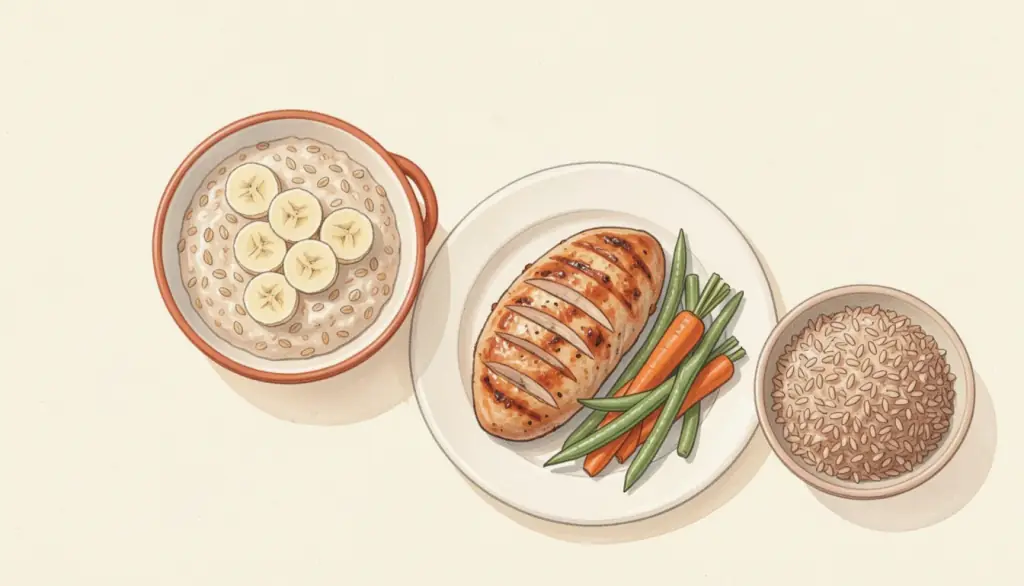
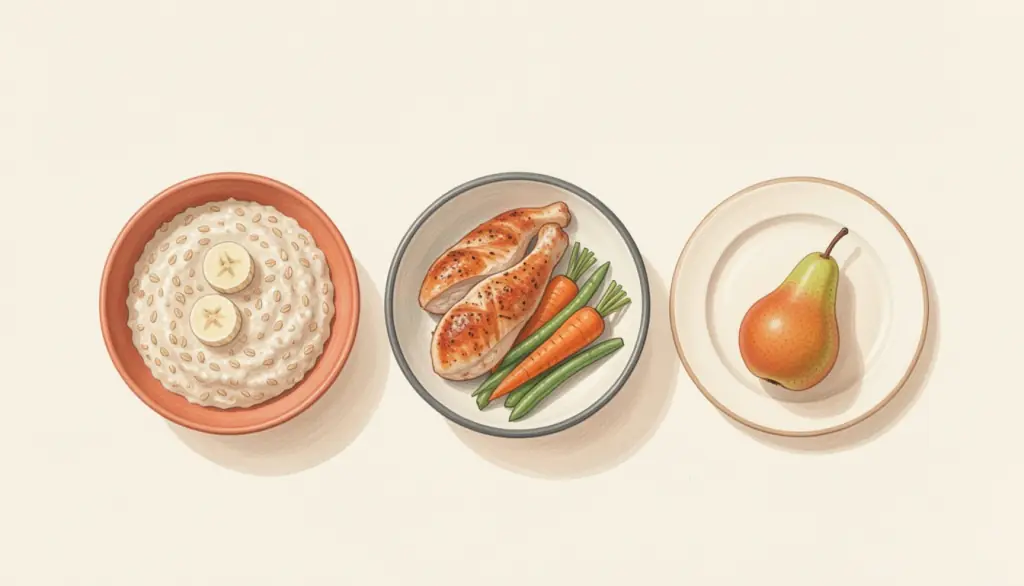
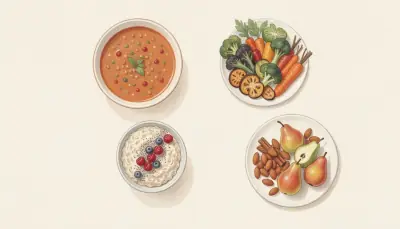
• Whole grains: oatmeal, brown rice, whole-grain bread, couscous, and quinoa. Fiber from whole grains is linked in general nutrition research with better digestive health. • Lean proteins: skinless chicken or turkey, fish, egg whites, tofu, and beans if you tolerate them, cooked by baking, grilling, poaching, or steaming rather than frying. • Vegetables: green beans, broccoli, asparagus, leafy greens, carrots, cucumber, sweet potato, and squash. Raw onion and heavy garlic are the usual exceptions. • Non-citrus fruit: bananas, melon, apples, pears, and berries, if citrus bothers you. • Healthy fats in moderation: a little olive oil, avocado, or a small handful of nuts rather than large amounts. • Drinks: water, herbal tea such as ginger or chamomile, and plant or low-fat milk.
A few recipes fit well. Creamy overnight oats makes an easy low-fat breakfast, grilled chicken with roasted carrots is a baked-and-roasted dinner that skips frying (leave out the lemon juice if citrus bothers you), and Cantonese congee is a gentle, soft-textured meal for days when your stomach feels irritated.
A sample day of eating for reflux
This is a template, not a prescription. Swap in foods you tolerate and adjust portions to your needs.
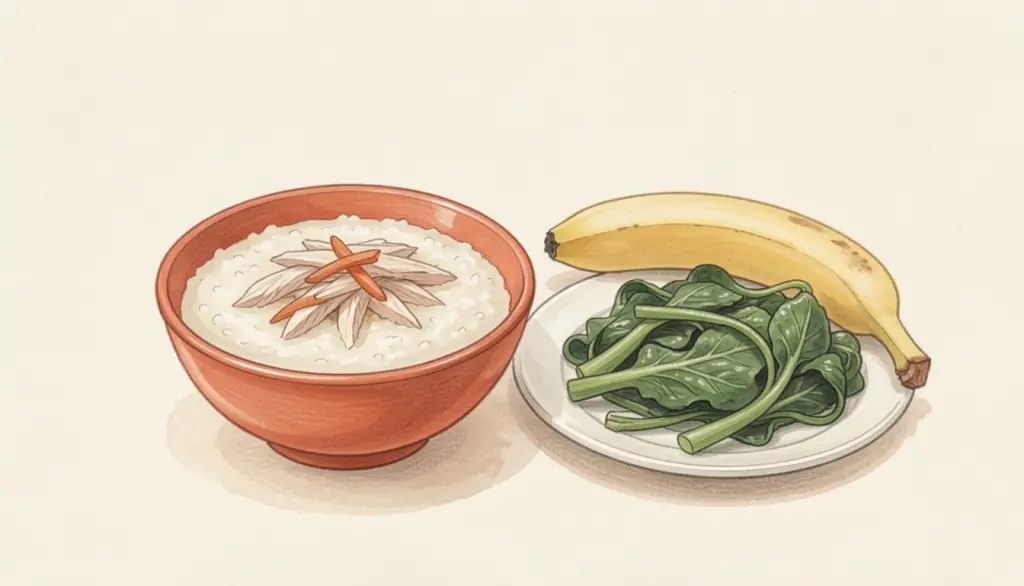
• Breakfast (7:30 a.m.): a bowl of oatmeal made with low-fat or plant milk, sliced banana, and a few almonds. Water or herbal tea. • Mid-morning: a pear and a small cup of low-fat yogurt. • Lunch (12:30 p.m.), the larger meal: baked chicken or fish with roasted carrots and green beans, plus a portion of brown rice. • Afternoon: whole-grain crackers with hummus, or a melon slice. • Dinner (6:00 p.m.): a soft, vegetable-based soup or a rice porridge with ginger and shredded chicken, with steamed greens on the side. • Evening: if you need a snack, keep it small and early, such as a banana, at least a couple of hours before bed.
If you like planning ahead, laying out a week like this on a meal planner calendar and generating the shopping list from it takes the guesswork out of staying consistent.
Cooking method changes a food's reflux effect as much as the food itself. The same chicken breast is usually easier to tolerate baked than breaded and fried.
Other habits that help
Alongside food choices, a handful of habits are commonly recommended. If you smoke, stopping is among the most useful changes you can make for reflux and for dozens of other reasons. Limiting alcohol helps many people. Chewing gum can increase saliva and swallowing, and some people find it eases symptoms, though the effect is modest. And be wary of acid-reducing medication used indefinitely without review: antacids and acid-suppressing drugs are useful, but long-term use should be discussed with a clinician rather than started and forgotten.
A broader gut-friendly eating pattern can also support overall digestive health; our guide to gut health foods covers fiber and variety in more depth. And because an anti-inflammatory style of eating overlaps heavily with reflux-friendly choices, our anti-inflammatory diet guide is a useful companion.
When to see a doctor, and who should not self-manage
Occasional heartburn is common and usually manageable. But persistent reflux deserves proper evaluation, because long-term irritation can damage the esophagus. See a doctor if you have heartburn or reflux more than about twice a week, if over-the-counter medication is needed for more than a couple of weeks, or if symptoms are not controlled despite changes.
Seek medical care promptly for any of these alarm features: difficulty or pain swallowing, food sticking in your chest, vomiting blood or material that looks like coffee grounds, black or tarry stools, unintended weight loss, persistent vomiting, or iron-deficiency anemia. Chest pain, especially with sweating, shortness of breath, or pain spreading to the arm or jaw, can be a heart problem and needs emergency care rather than a diet change.
People who are pregnant, who have a history of esophageal conditions, or who take medication for reflux should work with their doctor or a registered dietitian rather than adjusting food alone. Infants and children with reflux need pediatric guidance, not an adult diet.
Key Takeaways
A good reflux diet is less about fear of specific foods and more about steady habits: moderate portions, earlier and lighter dinners, a healthy weight if that applies to you, and a short list of personal triggers that you identify through careful testing. Build meals around whole grains, lean protein, and cooked vegetables, keep a simple diary, and reintroduce suspects one at a time. And treat food as one piece of the picture: persistent or worsening symptoms, or any alarm sign, are a reason to see a clinician rather than a reason to restrict yet another food.
Frequently Asked Questions
Can I ever eat tomatoes, coffee, or spicy food again with GERD?▼
How long should I wait to lie down after eating?▼
Is milk good for heartburn?▼
Does apple cider vinegar or baking soda cure reflux?▼
Is acid reflux the same as GERD?▼
References
- [1]Katz PO, Dunbar KB, Schnoll-Sussman FH, Greer KB, Yadlapati R, Spechler SJ (2022). “ACG Clinical Guideline for the Diagnosis and Management of Gastroesophageal Reflux Disease.” American Journal of Gastroenterology.
- [2]National Institute of Diabetes and Digestive and Kidney Diseases (2020). “Eating, Diet, & Nutrition for Acid Reflux (GER & GERD) in Adults.” NIDDK, National Institutes of Health.
More in Diet Guides
View all

Free Kitchen Tools
Calculators and converters that pair with this page — no signup needed.
About This Article
Written by Elena Vasquez, Health & Nutrition Writer. Published November 12, 2026. Updated November 12, 2026.
This article cites 2 peer-reviewed sources. See the full reference list below.
Editorial policy: Articles are drafted with the help of AI tools, link to the sources they rely on, and are updated when we find an error or newer evidence. Health articles are general information, not medical advice.
About the Author
Covers metabolic health, intermittent fasting and the gut microbiome, focused on summarising evidence in plain language.