
In This Article
Track what you eat
Snap your meal to log calories and macros, run fasting timers and track water in the free SnapCal app.
Related Recipes
Related Guides
Medical disclaimer: The information in this article is for educational purposes only. Always consult a qualified healthcare professional before making significant dietary or lifestyle changes, especially if you have a medical condition.
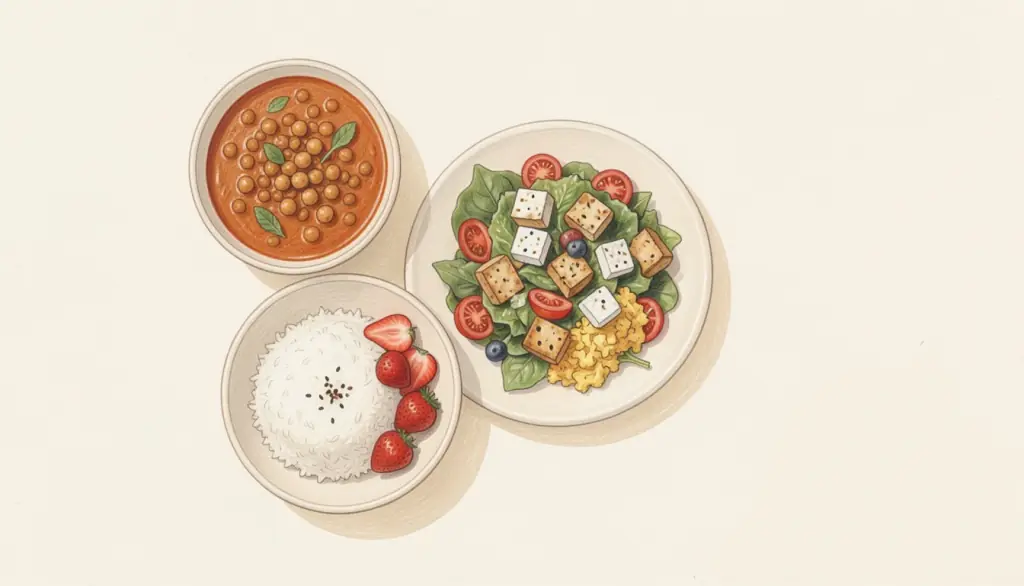
People stop eating meat for many reasons: health, animal welfare, the environment, cost, or simple curiosity. Whatever the reason, the first few weeks are easier if you have a clear idea of what a vegetarian plate looks like and which nutrients deserve attention. The good news is that a well-planned vegetarian diet can meet nutritional needs at every stage of life, according to the Academy of Nutrition and Dietetics. The less glamorous news is that a poorly planned one, heavy on cheese, bread and pasta, can leave gaps. This guide focuses on lacto-ovo vegetarian eating, which includes dairy and eggs, and covers the types of vegetarian diet, the nutrients to plan for, a first-week structure, pantry staples, and the mistakes that trip up most beginners.
Key Takeaways
A vegetarian diet excludes meat, poultry and fish, but the details vary by type.
• Lacto-ovo vegetarians eat dairy and eggs; lacto vegetarians eat dairy but not eggs; vegans exclude all animal foods. • Plan for protein, iron, vitamin B12, zinc and omega-3 fats, the nutrients that are easiest to miss. • Build each meal around a protein source such as beans, lentils, tofu, eggs or dairy, not just pasta and cheese. • Start by swapping one meal at a time and keep a short list of dishes you already like. • Children, pregnant people and anyone with a medical condition should get guidance from a doctor or registered dietitian.
Types of vegetarian diets
The word covers several patterns:
• Lacto-ovo vegetarian: no meat, poultry or fish; dairy and eggs included. This is the most common type and the focus here. • Lacto vegetarian: dairy but no eggs. • Ovo vegetarian: eggs but no dairy. • Pescatarian: fish and seafood in addition to a vegetarian diet. Strictly speaking this is not vegetarian, but it is a common stepping stone. • Vegan: no animal products at all. • Flexitarian: mostly vegetarian with occasional meat; see our flexitarian beginner's guide if you want a gradual approach.
There is no right type. Choose the one you can sustain, and know that you can change later.
Nutrients to plan for
Plant foods supply most nutrients in generous amounts, including fiber, vitamin C, folate, potassium and magnesium. A few nutrients need a deliberate plan.
Protein. Adults need about 0.8 grams per kilogram of body weight per day under the standard recommendation. Eggs, dairy, tofu, tempeh, lentils, beans, chickpeas, nuts and seeds all contribute. Our list of vegetarian protein sources goes into amounts and combinations.
Iron. Plant iron is absorbed less efficiently than the iron in meat, and vegetarians may need higher intakes. Eat beans, lentils, tofu, fortified cereals and dark greens with a source of vitamin C, and read our guide to iron-rich plant eating for specifics.
Vitamin B12. Dairy and eggs supply some, but intake can still be low, and vegans need a supplement or fortified foods. See our B12 deficiency guide.
Zinc. Found in beans, nuts, seeds, whole grains and dairy; soaking and cooking legumes and grains improves absorption.
Omega-3 fats. Walnuts, ground flaxseed, chia and hemp provide ALA; eggs from hens fed omega-3 sources and algae-based supplements provide DHA, which is otherwise found mainly in fish.
Calcium and vitamin D. Dairy, fortified plant milks and tofu set with calcium help; vitamin D often needs sunlight or a supplement.
If you only change one thing, add a bean or lentil dish to your lunch or dinner every day. It covers protein, iron, zinc and fiber together.
Pantry staples to stock first
A short list makes meatless cooking feel routine rather than improvised.
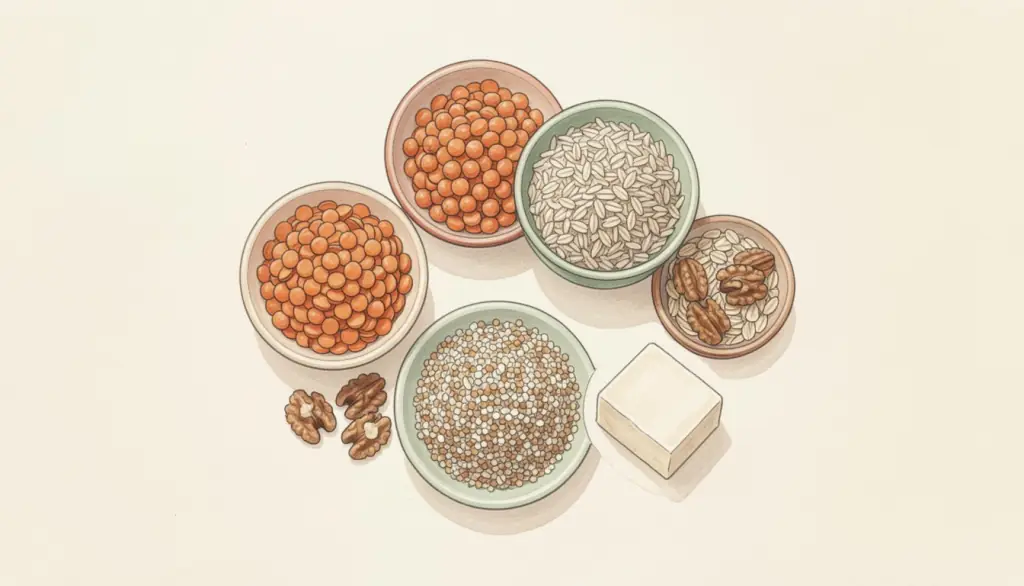
• Legumes: canned and dried lentils, chickpeas and black beans. • Grains: brown rice, quinoa, oats, whole-wheat pasta and bread. • Protein foods: eggs, firm tofu, tempeh, plain yogurt, cheese. • Nuts and seeds: peanut or almond butter, walnuts, ground flaxseed, chia. • Flavor: garlic, onions, canned tomatoes, soy sauce, tahini, vegetable broth, spices such as cumin and smoked paprika. • Frozen: spinach, peas, mixed vegetables, berries.
Everything you need to plan your week — free
- Meal calendar
- Grocery list
- AI recipe ideas
A first-week structure
Instead of a rigid menu, use a pattern you can repeat.
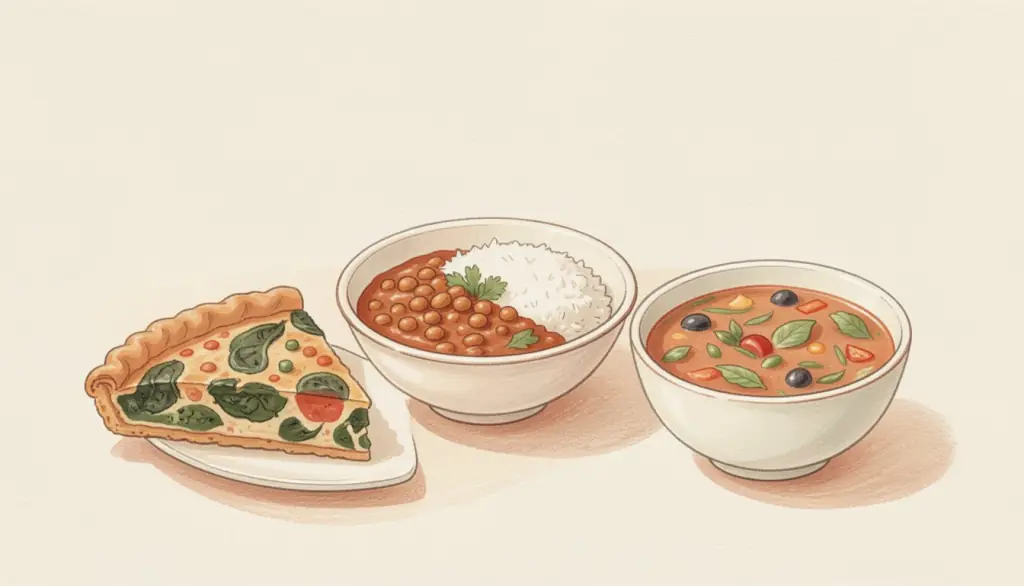
• Monday: bean and vegetable chili with brown rice. • Tuesday: tofu scramble with toast and fruit, or eggs if you prefer. • Wednesday: chana masala with rice and a side salad. • Thursday: a big pot of vegetable soup with whole-grain bread and cheese. • Friday: whole-wheat pasta with tomato sauce and white beans. • Saturday: spanakopita with a Greek salad. • Sunday: cook a batch of lentils, grains and roasted vegetables for the week ahead.
Use the same skeleton each week: a bean dish, an egg dish, a soup, a grain bowl, a pasta night, and one new recipe. A meal planner calendar lets you drag these into the week and see the nutrition totals, and the grocery list app turns the plan into a shopping list.
Batch preparation makes the week much easier, and our meal prep beginner's guide shows how.
Common beginner mistakes
Replacing meat with cheese and refined carbohydrates. Pizza, pasta and grilled cheese are vegetarian, but they are not a balanced week. Put beans, vegetables and whole grains at the center.
Forgetting protein. A salad or pasta dish without a protein source leaves you hungry an hour later. Add beans, tofu, eggs or cheese.
Ignoring B12 and iron. These deficiencies develop slowly. Know your sources and consider a blood test if you feel tired.
Relying on processed meat substitutes. Plant-based burgers and nuggets are convenient but can be high in sodium and saturated fat. Use them occasionally.
Going too fast. A gradual change, one meal at a time, is easier to maintain than an abrupt switch.
Not enough variety. Rotate protein sources and vegetables to cover a wide range of nutrients.
Skipping the planning. Without a plan, the easy default at 6 p.m. is cheese on toast again. Decide on dinners for the week, shop once, and keep two or three no-cook fallback meals, such as bean salads or egg wraps, for the evenings when you are tired.
Making meals filling and flavorful
New vegetarians often say their meals feel less satisfying at first. Part of the reason is that meat brings savory, umami flavor and a lot of protein and fat. You can replace both. Use mushrooms, tomato paste, soy sauce, miso, nutritional yeast, roasted vegetables and aged cheese for depth. Add healthy fats from olive oil, nuts, seeds and avocado for fullness. Use spices and herbs generously: the world's great vegetarian cuisines, from Indian dals to Ethiopian lentil stews, rely on them.
The texture matters too. Combine something creamy, something crunchy and something chewy in one dish, for instance beans, toasted seeds and whole grains. And do not forget breakfast: eggs, yogurt with nuts, oatmeal with peanut butter or tofu scramble make a proper protein start to the day.
Cook your vegetarian dinners at high heat. Roasting or pan-searing vegetables creates browned, savory flavor that boiling never will.
Who should be careful
A vegetarian diet can suit people of all ages, but certain groups should plan with extra care. Pregnant and breastfeeding people, infants, children and teenagers have higher needs for iron, B12, zinc, calcium and omega-3 fats, and should work with a doctor or registered dietitian. Older adults can find protein and B12 harder to get. People with anemia, a history of disordered eating, celiac disease, kidney disease or other medical conditions should discuss any major dietary change with their doctor, as should anyone taking medication for diabetes or blood pressure. A routine blood test for B12 and iron is reasonable after the first year.
For most healthy adults, though, a vegetarian diet is a well-supported choice, and the Academy of Nutrition and Dietetics has stated that appropriately planned vegetarian diets are healthful and nutritionally adequate across life stages. The word that matters is planned: a few minutes of thought about protein, iron and B12 now saves a lot of fatigue later.
Key Takeaways
Going vegetarian does not require a perfect plan, just a few habits: put a protein source in every meal, eat beans and lentils often, include iron with vitamin C, and make sure you have a reliable source of B12. Start with a week of meals you already enjoy, stock a handful of pantry staples, and add new recipes slowly. Done well, a vegetarian diet is varied, affordable and satisfying, and it is easy to adjust as you learn what works for you.
Frequently Asked Questions
What is a lacto-ovo vegetarian diet?▼
Do vegetarians get enough protein?▼
Do vegetarians need a B12 supplement?▼
How do I start a vegetarian diet?▼
References
- [1]Melina V, Craig W, Levin S (2016). “Position of the Academy of Nutrition and Dietetics: Vegetarian Diets.” Journal of the Academy of Nutrition and Dietetics.
More in Diet Guides
View all


Free Kitchen Tools
Calculators and converters that pair with this page — no signup needed.
About This Article
Written by Sarah Mitchell, Food & Nutrition Writer. Published November 12, 2026. Updated November 12, 2026.
This article cites 1 peer-reviewed sources. See the full reference list below.
Editorial policy: Articles are drafted with the help of AI tools, link to the sources they rely on, and are updated when we find an error or newer evidence. Health articles are general information, not medical advice.
About the Author
Writes about everyday nutrition, balanced eating and turning dietary guidelines into practical, cook-at-home advice.