
In This Article
Track what you eat
Snap your meal to log calories and macros, run fasting timers and track water in the free SnapCal app.
Related Guides
Medical disclaimer: The information in this article is for educational purposes only. Always consult a qualified healthcare professional before making significant dietary or lifestyle changes, especially if you have a medical condition.
The pegan diet is a mash-up of two eating styles that are usually seen as opposites: paleo, which emphasizes meat and avoids grains and legumes, and vegan, which is entirely plant-based. It was popularized by physician and author Mark Hyman, who describes it as a mostly plant-based way of eating with a few animal foods and a short list of foods to limit. The appeal is easy to see: lots of vegetables, little sugar, no ultra-processed food, and some flexibility. The weaknesses are just as clear: it restricts several food groups that mainstream guidelines recommend, and it has not been tested in trials as a named diet. This guide explains the rules, the food list, how it overlaps with and departs from standard advice, and who should be cautious.
Key Takeaways
The pegan diet is a paleo-meets-vegan pattern centered on plants, with limits on grains, legumes, dairy and sugar.
• About three quarters of the plate is vegetables and fruit, with animal protein as a side. • Dairy, gluten, refined sugar and most processed foods are avoided; grains and legumes are limited rather than banned. • It agrees with mainstream guidance on vegetables, fiber and cutting ultra-processed food. • It departs from it by restricting dairy, most grains and legumes, which major guidelines include. • The pegan diet itself has not been studied in clinical trials, so benefit claims rest on research into its separate components.
The main rules
The diet is described in Mark Hyman's book and related writing. Details vary a little between sources, but the core principles are consistent:
• Plants first. Roughly 75 percent of the plate is vegetables and fruit, preferably non-starchy and low in sugar. • Meat as a side. Animal protein is treated like a condiment or side dish, ideally from sustainably raised animals: pasture-raised meat, wild or low-mercury fish. • Low sugar and low glycemic load. Added sugar is minimal, and fruit is chosen with an eye on sugar content, for example berries over tropical fruit. • Limit grains and legumes. The book allows small portions of gluten-free whole grains and lentils, often described as around half a cup a day, rather than banning them. • No dairy and no gluten. Both are avoided. • Healthy fats. Olive oil, avocado, nuts, seeds and omega-3-rich fish are encouraged; industrial seed oils are avoided. • Food quality. Organic, local and non-GMO foods are preferred where affordable.
In practice, the rules are guidelines rather than a checklist. Hyman describes the diet as a set of principles, and many followers loosen the details around organic sourcing or portion sizes. That flexibility is part of its appeal, but it also means two people who say they follow the pegan diet can eat quite differently, which is another reason studies of it are hard to design.
The pegan food list
Eat freely: non-starchy vegetables (leafy greens, broccoli, cauliflower, peppers, zucchini, mushrooms), low-sugar fruits such as berries, nuts and seeds (except peanuts, which are a legume), avocados, olives, olive oil, herbs, spices, fermented vegetables.
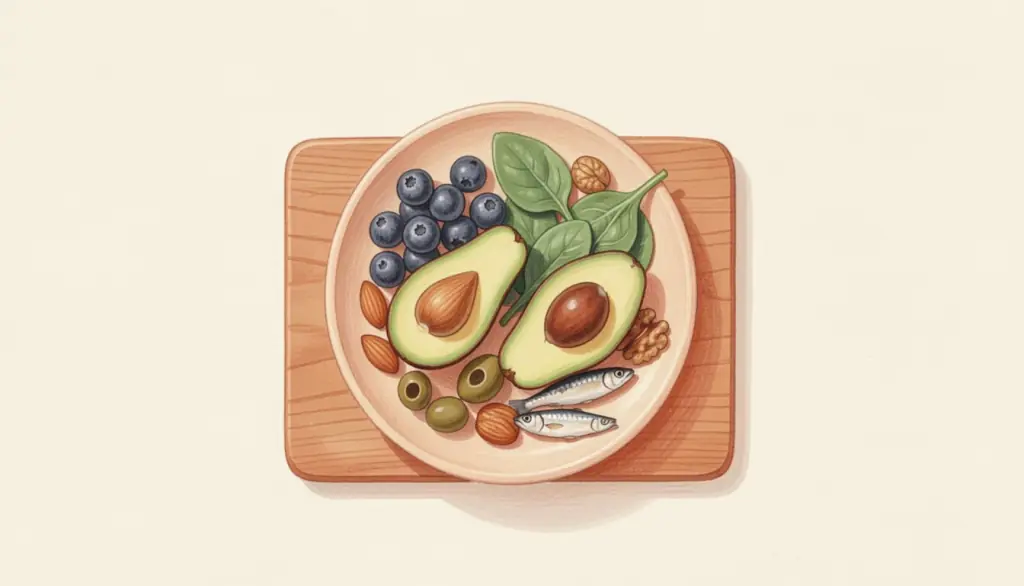
Eat in moderation: sustainably raised meat and poultry, eggs, low-mercury fish such as salmon, sardines, anchovies and herring, starchy vegetables such as sweet potatoes, small amounts of gluten-free whole grains, and small amounts of legumes, mostly lentils.
Avoid or minimize: dairy, gluten, refined grains and flour, added sugar and sweeteners, packaged and processed foods, industrial seed oils, and most soy and other legumes.
Eating fish is a good way to meet omega-3 needs on a pattern that excludes many plant sources; our guide to omega-3 sources and dosage explains how much to aim for.
Where it agrees with mainstream advice
A great deal. The Dietary Guidelines for Americans also recommend more vegetables and fruit, less added sugar, and fewer ultra-processed foods. Eating more plants and less processed food is consistent with nearly every well-regarded pattern, including the Mediterranean diet, which our Mediterranean diet beginner's guide covers. Prioritizing fish, olive oil and nuts also fits that picture. If the pegan diet nudges you to eat vegetables at every meal and give up soda and packaged snacks, those changes are good for most people.
Everything you need to plan your week — free
- Meal calendar
- Grocery list
- AI recipe ideas
Where it disagrees
The differences are in the exclusions. Mainstream guidelines recommend whole grains, legumes and dairy or fortified alternatives as part of a healthy diet, and large observational studies link whole grains and legumes with good health outcomes. The pegan diet limits grains to small portions, restricts legumes, and avoids dairy and gluten altogether.
Gluten avoidance is only necessary for people with celiac disease or non-celiac gluten sensitivity; for everyone else it removes whole grains that are good sources of fiber and B vitamins. The restriction on legumes is based on arguments about lectins and phytates that are not well supported by research on cooked legumes. Compare this with the more permissive plant-heavy approach in our whole-food plant-based guide, which keeps beans and whole grains central.
It also shares ground with our paleo diet beginner's guide, and similar cautions about excluding food groups apply.
What the evidence says
The honest answer is that the pegan diet as a named diet has not been tested in randomized trials. Claims about its benefits rest on research into the individual features it borrows: high vegetable intake, low added sugar, low ultra-processed food, and fish and olive oil. Those features are supported. The specific exclusions of dairy, legumes and most grains are not supported by clinical trial evidence of benefit for the general population.
That does not make the pattern unsafe for most healthy adults, but it does mean you should be skeptical of strong claims about reversing disease or inflammation. Treat it as one possible way of building a vegetable-heavy diet, not a proven protocol.
If you are curious whether it is working for you, look at practical signs instead of promises: your energy through the day, your digestion, your grocery spending and whether you can keep eating this way when life gets busy. A pattern you can sustain beats a stricter one you abandon after a month.
A sample day
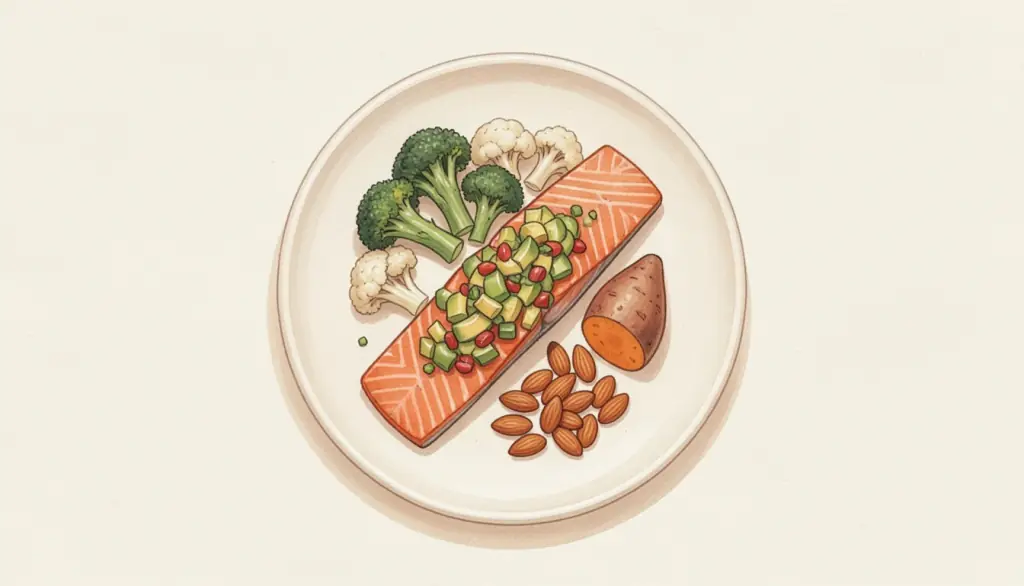
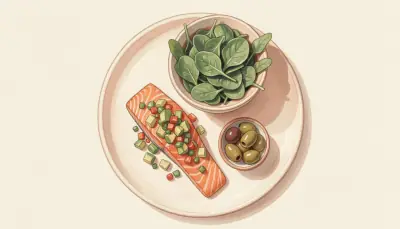
• Breakfast: an omelet with spinach and mushrooms cooked in olive oil, with berries on the side. • Lunch: a large salad of leafy greens, avocado, cucumber, olives and a small portion of grilled chicken or sardines, dressed with olive oil and lemon. • Dinner: a fillet of salmon with a bright topping such as our salmon with avocado salsa, roasted vegetables, and a small serving of sweet potato. Our chicken breast with sweet potato and broccoli is another easy fit. • Snacks: a handful of almonds or walnuts, vegetable sticks with guacamole.
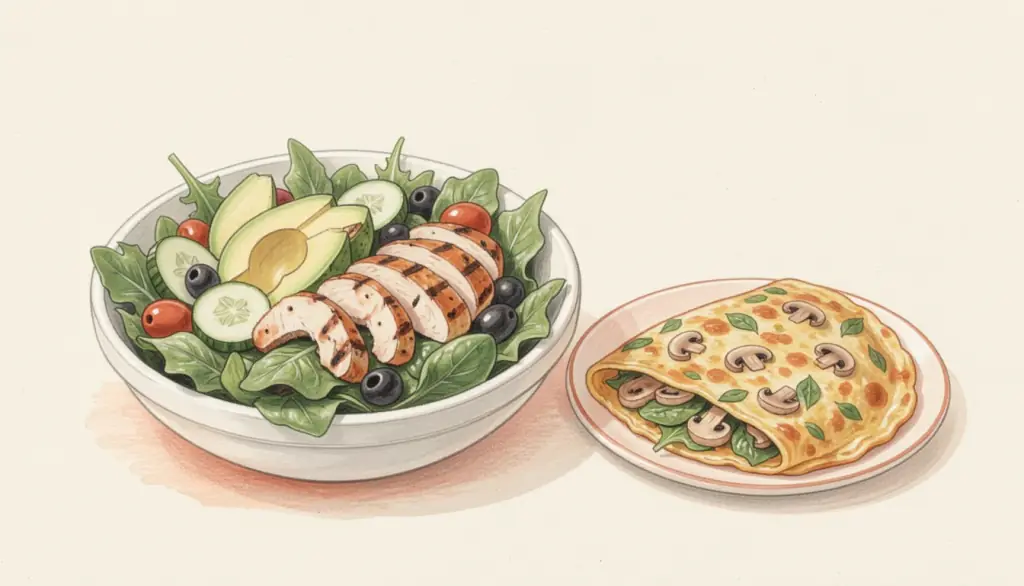
A flexible approach is to build the plate first and decide on a protein afterwards, instead of the other way around.
Cook a big batch of roasted vegetables and a protein on one day. Assembling plates through the week is far easier than cooking each night.
Practical tips, and keeping track
Cutting dairy, most grains and legumes can reduce intake of calcium, fiber, B vitamins and some minerals if the plate is not planned. Check that you get calcium from greens, canned fish with bones, almonds and fortified alternatives, and that you get enough protein and total calories, since a diet heavy in low-calorie vegetables can leave you under-eating. Asking the AI nutritionist to review a day of pegan meals against your calorie and protein targets is a quick way to spot gaps.
If you want to follow the spirit but keep legumes and whole grains, do so. The principle that matters most is more vegetables, less sugar, fewer processed foods. Is it practical and affordable?. The pegan diet can be expensive if you follow the preference for organic, pasture-raised and wild-caught foods to the letter. Fresh vegetables, quality fish and nuts add up, while the foods that make a vegetarian diet cheap, such as dry beans, oats and rice, are the ones the diet limits. Frozen vegetables, canned sardines and salmon, eggs, seasonal produce and bulk nuts are the budget-friendly path. Eating out and social events are another challenge, because the rules exclude bread, pasta, dairy and many sauces. Most restaurants can serve grilled fish or chicken with vegetables and olive oil, so it is manageable, but it requires asking questions. If strict rules make you anxious about food, a looser version will serve you better than a rigid one.
Who should be careful
The pegan diet is not appropriate for everyone. People with kidney disease, osteoporosis or low bone density, iron deficiency, or a history of disordered eating, as well as pregnant or breastfeeding people, children and teenagers, and older adults at risk of low protein or low weight, should speak with a doctor or registered dietitian before restricting food groups. People who take medication for diabetes or blood pressure should also check first, since a major dietary change can alter requirements. If you have celiac disease you need to avoid gluten, but that is a medical diet, not a pegan one.
Key Takeaways
The pegan diet is, at its best, a reminder to build meals around vegetables and cut back on sugar and processed food, advice that is sound for almost everyone. Its extra restrictions on dairy, grains and legumes go beyond the evidence and can make a diet harder to sustain and easier to under-fuel. If it appeals to you, use it as a loose template, keep whole grains and legumes if they suit you, and talk with a professional if you have a health condition.
Frequently Asked Questions
What is the pegan diet?▼
Can you eat beans on the pegan diet?▼
Is the pegan diet backed by science?▼
Is the pegan diet good for weight loss?▼
References
- [1]Hyman M (2021). “The Pegan Diet: 21 Practical Principles for Reclaiming Your Health in a Nutritionally Confusing World.” Little, Brown Spark (book).
- [2]U.S. Department of Agriculture and U.S. Department of Health and Human Services (2020). “Dietary Guidelines for Americans, 2020-2025.” USDA / HHS. Link
More in Diet Guides
View all

Free Kitchen Tools
Calculators and converters that pair with this page — no signup needed.
About This Article
Written by Sarah Mitchell, Food & Nutrition Writer. Published November 12, 2026. Updated November 12, 2026.
This article cites 2 peer-reviewed sources. See the full reference list below.
Editorial policy: Articles are drafted with the help of AI tools, link to the sources they rely on, and are updated when we find an error or newer evidence. Health articles are general information, not medical advice.
About the Author
Writes about everyday nutrition, balanced eating and turning dietary guidelines into practical, cook-at-home advice.