
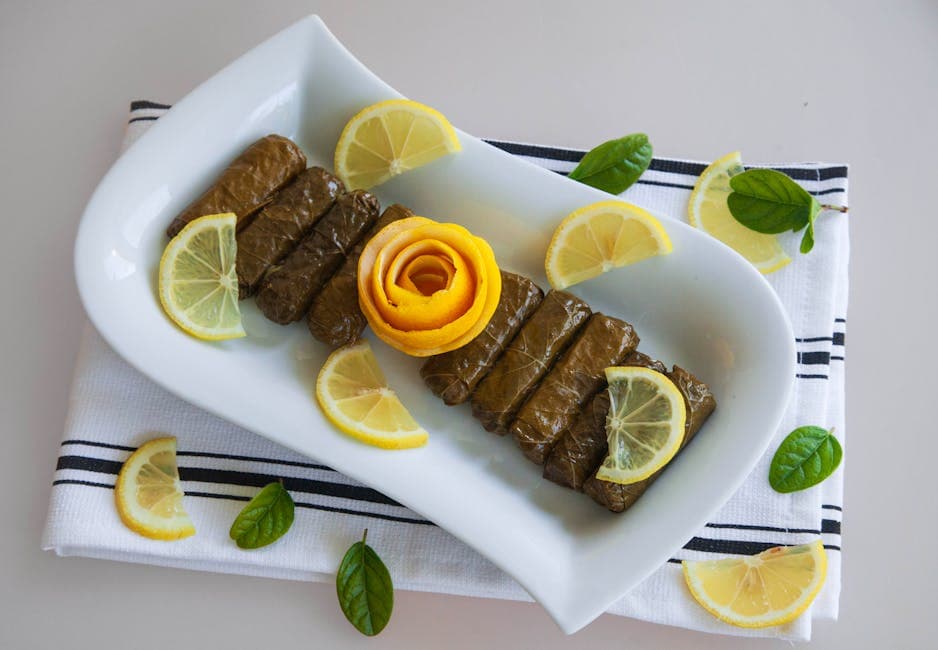
Yaprak Sarma
Turkey's beloved stuffed vine leaves — tender grape leaves packed with herbed rice, currants, and pine nuts, steamed in olive oil and lemon.
About This Recipe
Yaprak sarma (stuffed vine leaves) is one of Turkey's most labour-intensive and loved dishes — rolled parcels of grape leaves encasing a fragrant rice filling of pine nuts, currants, allspice, cinnamon, and fresh herbs. The vegetarian (zeytinyağlı) version, made with olive oil and served at room temperature, is a classic meyhane meze and a staple of Aegean cuisine. The filling is a masterpiece of the sweet-savoury balance that characterises Ottoman and Turkish cooking — currants for sweetness, lemon for brightness, pine nuts for richness, and fresh dill and mint for herbaceous freshness. Each sarma is rolled tightly and stacked in a pot, then steamed slowly in olive oil, lemon juice, and water until completely tender.
Ingredients
Serves 6
- 40–50grape vine leaves(jarred in brine, rinsed)
- 300 gmedium-grain rice(rinsed)
- 2 largeonions(very finely diced)
- 50 gpine nuts
- 50 gcurrants
- 1 tspground allspice
- ½ tspground cinnamon
- 1 tspsugar
- ½ bunchfresh dill(chopped)
- ½ bunchfresh mint(chopped)
- Juice of 2 lemons
- 100 mlextra virgin olive oil
- Salt and pepper(to taste)
Instructions
- 1
Make the filling
Sauté onions in 3 tbsp olive oil until very soft, 15 minutes. Add pine nuts and toast briefly. Add rice, allspice, cinnamon, sugar, salt, pepper, currants, half the lemon juice. Stir 3 minutes. Remove from heat, stir in herbs. Cool.
- 2
Roll the sarma
Lay a vine leaf flat, shiny side down. Place 1 tsp filling near the stem end. Fold the stem end over the filling, fold in the sides, then roll tightly forward. Repeat.
Roll firmly but not too tight — the rice expands during cooking and overly tight rolls will burst.
- 3
Stack in pot
Line the bottom of a wide, heavy pot with a few vine leaves. Pack the rolls tightly in layers, seam-side down.
- 4
Steam
Mix remaining olive oil, lemon juice, and 300 ml water. Pour over the rolls. Place a heavy heatproof plate on top to keep them submerged. Cover and cook on low heat for 50–60 minutes until the rice is cooked and the leaves are tender.
- 5
Cool and serve
Cool completely in the pot — do not attempt to serve hot. Arrange on a platter and serve at room temperature with lemon wedges and yogurt.
Did you make this?
Rate it and help other cooks find the recipes that actually work.
One tap to sign in, and we'll save the rating you just picked.
Everything you need to plan your week — free
- Meal calendar
- Grocery list
- AI recipe ideas
Track what you eat
Snap your meal to log calories and macros, run fasting timers and track water in the free SnapCal app.
Pro Tips
- →
Uniform tight rolling takes practice — don't worry if early attempts are imperfect.
- →
The weighted plate prevents rolls from unravelling during cooking.
- →
Zeytinyağlı sarma must be served at room temperature — the olive oil solidifies when cold.
Variations
- •
Add meat to the filling (lamb mince) for the et sarmalı version, served hot.
- •
Use fresh grape leaves in season — blanch for 30 seconds before using.
- •
Stuffed with bulgur instead of rice for a wheatier texture.
Storage
Excellent refrigerated for 4 days. The flavour improves as the days pass. Serve at room temperature.
History & Origin
Yaprak sarma is one of the defining dishes of Ottoman palace cuisine and a cornerstone of Turkish meze culture. The technique of wrapping food in leaves is ancient — it appears in Greek, Persian, and Arab cuisines as well — but the Turkish zeytinyağlı version with pine nuts and currants is a uniquely Ottoman invention that spread throughout the empire.
Frequently Asked Questions
How do I prevent the rolls from falling apart?
Roll them firmly and pack them tightly in the pot — they support each other. The weighted plate on top is also essential. If a roll unravels, simply tuck it back together; it will set in the steam.
Can I use cabbage leaves instead of vine leaves?
Lahana sarması (stuffed cabbage) uses the same filling but cabbage leaves, usually with meat, and is served hot. Both are delicious but quite different dishes.
Nutrition Facts
Per serving · 6 servings total
Time Summary
Have Questions?
Ask our AI cooking assistant anything about this recipe — substitutions, techniques, scaling.
Chat with AI Chef →Featured in Guides
This recipe is featured in the following curated guides:
More Turkish Recipes
You Might Also Like
Similar dishes from other cuisines around the world.
Browse by Ingredient
More recipes built around the same core ingredients.
Free Kitchen Tools
Calculators and converters that pair with this page — no signup needed.
Put This Into a Plan
Schedule it, shop for it, and track what you already have.
Read Next
Longer reads that go deeper on the ideas behind this dish.
Community
Join the conversation
Sign in to leave a comment and save your favourite recipes