
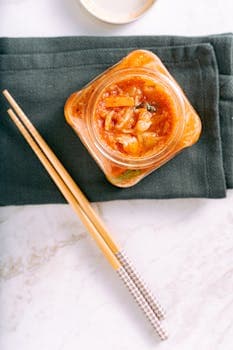
Traditional Homemade Kimchi
Fiery, tangy Korean fermented cabbage — the probiotic-rich superfood that's central to Korean cuisine.
About This Recipe
Kimchi is Korea's most important food — a fermented vegetable dish with over 200 regional variations and deep cultural significance. In 2013, UNESCO inscribed Kimjang (the communal kimchi-making tradition) as a World Heritage element. This recipe makes the classic baechu-kimchi (napa cabbage kimchi), which develops complex, funky, tangy flavours over 2–5 days of fermentation. Kimchi is extraordinary eaten fresh as a side dish, but even better after a few days of fermenting when it develops its characteristic sour depth.
Ingredients
Serves 20
- 1 kgnapa cabbage (Chinese leaf)(about 1 large head)
- 60 gfine sea salt(non-iodised)
- 5spring onions(cut into 5cm lengths)
- 1small daikon radish(peeled and julienned)
- 4garlic cloves(minced to a paste)
- 1 tspfresh ginger(grated)
- 3 tbspgochugaru (Korean red pepper flakes)(adjust for heat)
- 2 tspfish sauce or soy sauce(soy sauce for vegan)
- 1 tspcaster sugar
Instructions
- 1
Salt the cabbage
Quarter the cabbage lengthways, then cut crossways into 5cm pieces. Toss with salt in a large bowl, massaging briefly. Leave for 1–2 hours, turning occasionally, until wilted and liquid has been released.
Use non-iodised salt — iodised salt can inhibit fermentation and cause off flavours.
- 2
Rinse and drain
Rinse the cabbage under cold water 2–3 times to remove excess salt. Taste — it should be slightly salty but not overwhelmingly so. Drain and squeeze out as much liquid as possible. Leave in a colander for 15 minutes.
- 3
Make the kimchi paste and mix
Combine gochugaru, garlic paste, ginger, fish sauce and sugar into a thick paste. Wearing gloves, combine cabbage, spring onions and daikon in a large bowl. Add the kimchi paste and mix thoroughly, massaging the paste into every piece of cabbage.
- 4
Pack and ferment
Pack the kimchi tightly into clean glass jars, pressing down firmly to remove air pockets. Leave 2–3cm headspace for expansion. Seal loosely. Ferment at room temperature for 1–5 days, tasting daily. When pleasantly sour, move to the fridge.
Ferment at room temperature for 1–2 days in summer, 2–4 days in winter.
Did you make this?
Rate it and help other cooks find the recipes that actually work.
One tap to sign in, and we'll save the rating you just picked.
Everything you need to plan your week — free
- Meal calendar
- Grocery list
- AI recipe ideas
Track what you eat
Snap your meal to log calories and macros, run fasting timers and track water in the free SnapCal app.
Pro Tips
- →
Gochugaru (Korean red pepper flakes) is essential — it's not the same as regular chilli flakes. Find it in Korean or Asian supermarkets.
- →
Always wear gloves when handling gochugaru — it stains skin, clothes and surfaces red.
- →
Kimchi gets better with time. Most Koreans prefer it after 2–3 weeks of refrigerator fermentation.
- →
Taste and adjust salt at the very end — flavors concentrate as liquids reduce, and a final pinch of flaky salt sharpens the whole dish.
Variations
- •
Water Kimchi (Mul Kimchi): a milder, lightly fermented version in a chilli-free brine — perfect for kimchi beginners.
- •
Cucumber Kimchi (Oi Sobagi): quick-fermented cucumber kimchi ready in just a few hours — refreshing and crunchy.
- •
Vegetarian: swap the protein for roasted king oyster mushrooms, smoked tofu or cooked chickpeas — adjust seasoning slightly upward to compensate.
- •
Spicier: add a finely chopped fresh chile or a teaspoon of crushed Aleppo/Urfa pepper to the aromatics for warm, layered heat instead of a single sharp hit.
Storage
Keeps in the refrigerator for up to 3 months, improving with time. After 3 months it becomes 'old kimchi' (mukeunji) — sharper and ideal for cooking.
History & Origin
Kimchi has been made in Korea for over 2,000 years. Early versions used salt and fermentation without chilli, which wasn't introduced to Korea from the Americas until the 16th century via Portuguese traders.
Frequently Asked Questions
Is kimchi vegan?
Traditional kimchi contains fish sauce or fermented shrimp. Substitute soy sauce or miso for a fully vegan version that ferments just as well.
Why is my kimchi not fermenting?
Cold temperatures slow fermentation significantly. Move it somewhere warmer (20–22°C) and leave for another day or two.
Can I make this ahead of time?
Yes — most of the components can be prepared up to a day in advance and refrigerated separately. Reheat gently and assemble just before serving so textures stay distinct.
What can I substitute if I don't have all the ingredients?
Stay close to the role each ingredient plays: swap aromatics for similar ones (shallot for onion, lime for lemon), and keep the fat-acid-salt balance intact. Spice blends can usually be approximated with what's in the cupboard.
Nutrition Facts
Per serving (150g / 5.3 oz) · 20 servings total
Time Summary
Have Questions?
Ask our AI cooking assistant anything about this recipe — substitutions, techniques, scaling.
Chat with AI Chef →Featured in Guides
This recipe is featured in the following curated guides:
More Korean Recipes
You Might Also Like
Similar dishes from other cuisines around the world.
Browse by Ingredient
More recipes built around the same core ingredients.
Free Kitchen Tools
Calculators and converters that pair with this page — no signup needed.
Put This Into a Plan
Schedule it, shop for it, and track what you already have.
Read Next
Longer reads that go deeper on the ideas behind this dish.
Community
Join the conversation
Sign in to leave a comment and save your favourite recipes