
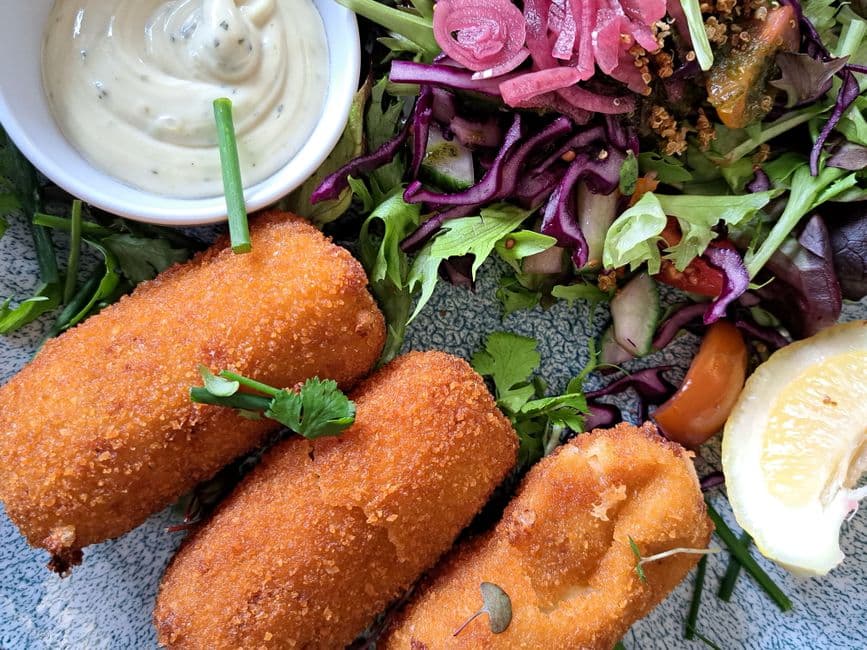
Manx Queenies
Pan-seared queen scallops from the Isle of Man, delicate and sweet.
About This Recipe
Manx queenies — known formally as queen scallops (Aequipecten opercularis) — are harvested from the cold, nutrient-rich waters of the Irish Sea surrounding the Isle of Man, and they occupy a place of genuine culinary prestige on the island. Smaller than a king scallop but considerably more tender, queenies have a sweet, almost milky flavor with a hint of brine that is entirely their own. The Isle of Man queenie fishery is carefully managed under a strict dredging season, and the sustainable harvesting practices have helped the fishery retain Marine Stewardship Council certification — meaning every queenie on your plate comes from a population that will be there for future generations. The critical principle when cooking queenies is speed and ferocious heat. Unlike king scallops, which have enough mass to develop a deep golden crust over 90 seconds per side, queenies are small enough that you are working with a 60-to-90-second window per side at most. The pan must be genuinely hot before the butter goes in — hold your hand four inches above the surface and you should feel strong radiant heat. Add the scallops in a single layer with space between each one; crowding drops the pan temperature and the shellfish steam rather than sear, producing a grayish, rubbery result instead of the caramelized, golden surface that concentrates their sweetness. A small pour of dry white wine or a squeeze of lemon lifted into the pan at the end creates a brief emulsified sauce that carries the garlic butter without overwhelming the delicate shellfish flavor beneath.
Ingredients
Serves 2
- 300 gManx queenie scallops(shucked, roe on or off)
- 30 gunsalted butter(divided)
- 1 tbspneutral oil(sunflower or light olive oil)
- 2 clovesgarlic(finely minced)
- 2 tbspdry white wine(or 1 tsp lemon juice)
- to tasteflaky sea salt and white pepper
- 1 tbspfresh chives or flat-leaf parsley(finely chopped, to finish)
Instructions
- 1
Dry the scallops thoroughly
Lay the queenies in a single layer on a double sheet of kitchen paper and press another sheet firmly on top. Leave for at least 5 minutes — surface moisture is the enemy of a good sear. Even a small amount of residual liquid will cause steaming rather than caramelization, and the scallops will look boiled rather than bronzed.
If the scallops have been stored in water (common with supermarket shellfish), drain them in a colander for 10 minutes before patting dry.
- 2
Heat the pan to ripping hot
Set a heavy stainless steel or cast iron skillet over high heat for 2 full minutes. Add the oil — it should shimmer immediately and begin to smoke very lightly at the edges. This high initial temperature is non-negotiable for searing shellfish; a warm pan produces a sticky, pale result.
- 3
Add half the butter and the scallops
Add 15g of the butter to the hot oil — it will foam instantly. Working quickly, place the queenies in the pan in a single layer, flat-side down, leaving at least 1cm between each one. You should hear a vigorous sizzle the moment they hit the pan. Do not touch them for a full 60 seconds.
Cook in two batches if your pan is less than 26cm wide — overcrowding is the most common mistake and ruins the sear.
- 4
Turn and finish the sear
After 60 seconds the undersides should be deep golden-brown. Flip each queenie using tongs or a small palette knife and sear the second side for 45-60 seconds. The center should remain just translucent — squeeze one gently with your finger; it should feel slightly springy, not firm.
- 5
Build the pan sauce
Reduce the heat to medium. Add the remaining 15g butter and the garlic to the pan, swirling to coat. After 20 seconds, pour in the white wine or lemon juice — it will sizzle and partially evaporate within 30 seconds, picking up all the caramelized fond from the pan base and forming a glossy, emulsified sauce.
- 6
Season and plate immediately
Season with flaky sea salt and white pepper directly in the pan, then spoon the scallops onto warmed plates. Pour every drop of the pan sauce over them, scatter the chopped herbs, and serve at once. Queenies deteriorate in texture within minutes of resting — eat them the moment they are plated.
Did you make this?
Rate it and help other cooks find the recipes that actually work.
One tap to sign in, and we'll save the rating you just picked.
Everything you need to plan your week — free
- Meal calendar
- Grocery list
- AI recipe ideas
Cook this hands-free
Get AI meal plans, step-by-step cooking mode, and your saved recipes in the free Bento app.
Pro Tips
- →
Never refrigerate queenies for more than 24 hours after purchase — shellfish sweetness fades quickly. Buy them the morning you intend to cook them for the best flavor.
- →
The roe (the orange coral attached to the muscle) is edible and delicious; it cooks slightly faster than the white muscle, so it should just be warm through when the muscle is seared — if it shrivels and darkens, the heat was too high.
- →
Use a stainless steel pan rather than non-stick when possible; the steel retains high heat better and creates a superior sear. Non-stick pans at high temperatures also release chemical coatings.
- →
Resist the urge to add garlic at the start — it burns instantly in a screaming-hot pan and turns bitter. Add garlic only after flipping the scallops and reducing the heat.
- →
If serving as a starter, warm the plates in a low oven (50°C) for 5 minutes before plating — the scallops are small and cool down within 90 seconds on a cold plate.
Variations
- •
Cream sauce variation: after building the pan sauce with wine, add 50ml of double cream and simmer for 1 minute until the sauce coats the back of a spoon. Stir in a teaspoon of wholegrain mustard and serve with crusty bread to mop up the sauce.
- •
Crispy pancetta and pea puree: serve seared queenies on a bed of blended sweet pea puree (peas, mint, butter) and top with slivers of crispy fried pancetta — a classic combination from British gastropub menus.
- •
Herb salsa verde: make a quick salsa of chopped parsley, basil, capers, anchovy, garlic, and olive oil and spoon cold over the hot seared scallops — the heat wilts the herbs slightly and the anchovy amplifies the brine of the shellfish.
- •
Asian-inspired: replace the white wine with a teaspoon of light soy sauce and a few drops of sesame oil in the pan sauce, and finish with julienned spring onion and toasted sesame seeds.
Storage
Manx queenies are not suitable for storing once cooked — eat immediately. Live or freshly shucked queenies should be kept covered on ice in the coldest part of the refrigerator and used within 24 hours of purchase. Do not freeze fresh scallops unless pre-frozen by the supplier, as ice crystal formation destroys the delicate cell structure and produces a watery, mushy texture when thawed.
History & Origin
Queen scallop fishing has been documented in Manx waters since at least the 18th century, and the Irish Sea grounds around the Isle of Man remain among the most productive in Northern Europe. The word 'queenie' is a local Isle of Man term that entered widespread use among British fishmongers during the early 20th century to distinguish the smaller, sweeter Aequipecten opercularis from the larger king scallop Pecten maximus. The fishery gained particular prominence in the 1990s when chefs at London's top restaurants began championing Manx queenies for their superior sweetness compared to imported Atlantic scallops.
Frequently Asked Questions
Where can I buy Manx queenies outside the Isle of Man?
Several specialist British fishmongers, including Dorset Seafood and Wright Brothers in London, stock Manx queenies during the harvesting season (typically September through April). Online fishmongers such as Fish for Thought and Direct Seafoods also offer overnight delivery. Outside the UK, ask your fishmonger for fresh queen scallops, which share similar flavor characteristics even if they come from different waters.
How do I know when queenies are properly cooked?
A properly cooked queenie will have a deep golden crust on the seared side and an opaque but not fully firm interior — press one gently with a finger and it should yield slightly, like a firm marshmallow. If it feels bouncy and rigid all the way through, it is overcooked; the flesh will be rubbery and the sweetness will have cooked away.
Why are my scallops releasing water in the pan and not browning?
This almost always means the pan was not hot enough before the scallops went in, or the scallops were not dried sufficiently. Surface moisture converts to steam, which prevents the Maillard browning reaction. Ensure the pan smokes lightly before adding the oil, and pat the scallops dry very thoroughly — even 30 seconds more drying time makes a visible difference.
Can I use frozen queen scallops if I cannot find fresh?
Commercially frozen queen scallops can work acceptably if they were frozen at sea immediately after shucking (look for the phrase 'frozen at sea' on the pack). Thaw them overnight in the refrigerator, drain in a colander, and dry very well before cooking. Avoid scallops that have been frozen in water or brine, as the excess moisture makes searing nearly impossible.
Should I remove the roe before cooking?
This is a matter of personal preference. The roe (orange coral) has a stronger, more intense briny flavor than the white muscle and a softer, slightly grainy texture when cooked. Many people enjoy it; others find the flavor too strong. Leave it on for a more traditional presentation, or remove it and freeze the roe to enrich a fish stock or bisque.
Nutrition Facts
Per serving · 2 servings total
Time Summary
Have Questions?
Ask our AI cooking assistant anything about this recipe — substitutions, techniques, scaling.
Chat with AI Chef →Featured in Guides
This recipe is featured in the following curated guides:
More Isle-of-man Recipes
You Might Also Like
Similar dishes from other cuisines around the world.
Free Kitchen Tools
Calculators and converters that pair with this page — no signup needed.
Put This Into a Plan
Schedule it, shop for it, and track what you already have.
Read Next
Longer reads that go deeper on the ideas behind this dish.
Community
Join the conversation
Sign in to leave a comment and save your favourite recipes