
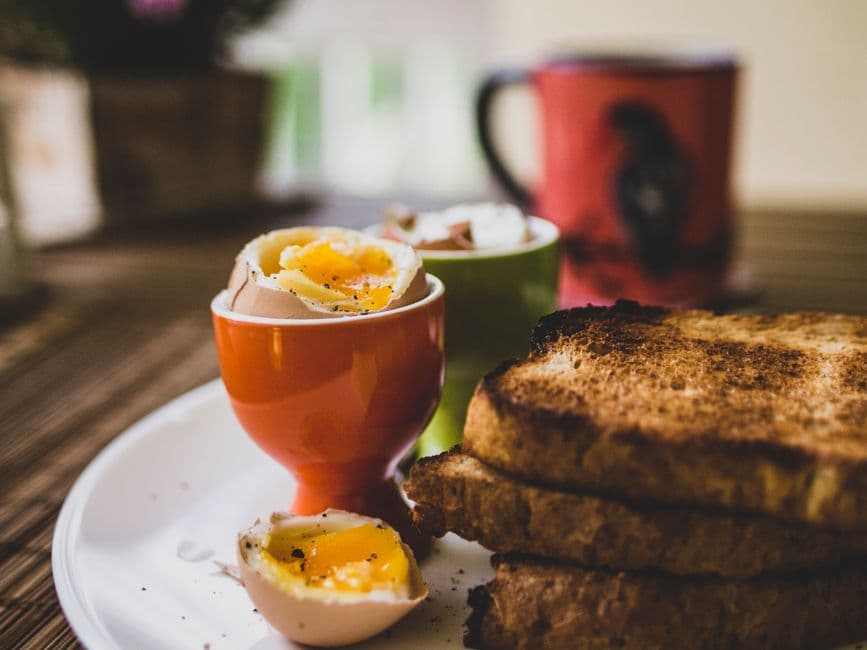
Kaya Toast with Soft-Boiled Eggs
Singapore's quintessential breakfast: crisp toast slathered with coconut-pandan kaya jam and cold butter, served with runny soft-boiled eggs and kopi.
About This Recipe
Kaya Toast is the breakfast of Singapore's soul — a ritual eaten in kopitiam (coffee shop) culture that transcends age, race, and class. Thick-cut white bread is toasted over charcoal until perfectly crisped, then spread generously with kaya (a fragrant Southeast Asian jam of coconut milk, eggs, sugar, and pandan), topped with a thick cold slab of butter. The set is completed with two soft-boiled eggs served in a shallow dish, broken, seasoned with light soy sauce and white pepper, and used as a dip for the toast. Washed down with a cup of kopi (thick Nanyang-style coffee with condensed milk), this is one of the world's most satisfying and democratic breakfast rituals.
Ingredients
Serves 2
- 4 slicesthick-cut white bread or brioche
- 4 tbspkaya jam (see below or store-bought)
- 30 gcold unsalted butter, sliced thin
- 4eggs, at room temperature
- 1 tbsplight soy sauce
- White pepper(to taste)
- 4eggs (for kaya)
- 1 cupcoconut milk (for kaya)
- 0.75 cupsugar (for kaya)
- 6 leavespandan leaves, tied in a knot (for kaya)
Instructions
- 1
Make the kaya
Whisk eggs, coconut milk, and sugar until combined. Strain into a double boiler. Add pandan knot. Stir continuously over medium-low heat for 15–20 minutes until thickened to a spreadable jam. Remove pandan. Cool completely and refrigerate.
- 2
Soft-boil the eggs
Bring a saucepan of water to a boil. Lower eggs gently and cook for exactly 6 minutes. Remove and place in a bowl of cold water for 1 minute, then crack into a shallow dish. The white should be just set, yolk still runny.
- 3
Toast the bread
Toast bread slices in a toaster or under a grill until golden and crisp on both sides. For the authentic kopitiam experience, toast over a charcoal flame if possible.
- 4
Assemble and serve
Spread each toast slice generously with kaya and sandwich with thin cold butter slices. Serve alongside the soft-boiled eggs seasoned with a few drops of light soy and a crack of white pepper. Eat by dipping toast into the egg.
Did you make this?
Rate it and help other cooks find the recipes that actually work.
One tap to sign in, and we'll save the rating you just picked.
Everything you need to plan your week — free
- Meal calendar
- Grocery list
- AI recipe ideas
Track what you eat
Snap your meal to log calories and macros, run fasting timers and track water in the free SnapCal app.
Pro Tips
- →
Stir the kaya continuously and patiently — rushing over high heat will scramble the eggs.
- →
Store-bought kaya works perfectly; the dish is about the ritual as much as the recipe.
- →
Bread is traditionally grilled over charcoal — a gas flame held briefly beneath the bread approximates this.
- →
Taste and adjust salt at the very end — flavors concentrate as liquids reduce, and a final pinch of flaky salt sharpens the whole dish.
Variations
- •
Pandan kaya is the green variety made with pandan juice; coconut kaya is golden — both are traditional.
- •
Serve with a Milo dinosaur (iced Milo with extra Milo powder) for a Singaporean childhood experience.
- •
Use croissants instead of bread for a modern, flakier version.
- •
Vegetarian: swap the protein for roasted king oyster mushrooms, smoked tofu or cooked chickpeas — adjust seasoning slightly upward to compensate.
Storage
Kaya keeps refrigerated in a sealed jar for up to 2 weeks. Do not freeze. Toast and assemble just before serving.
History & Origin
Kaya Toast emerged in Singapore's kopitiam culture in the early 20th century, brought by Hainanese immigrants who became Singapore's most celebrated coffee-shop keepers. The jam itself is Peranakan in origin, adapted from a Portuguese egg jam tradition. Today Ya Kun Kaya Toast and Killiney Kopitiam are the most famous purveyors, beloved by generations.
Frequently Asked Questions
What if I can't find pandan leaves?
Use 0.5 tsp of pandan extract instead. The flavour is slightly less fresh but the kaya will still be delicious.
Is it safe to eat the runny eggs?
Singapore's kaya toast sets use fresh, high-quality eggs. Use pasteurised eggs if you are concerned.
Can I make this ahead of time?
Yes — most of the components can be prepared up to a day in advance and refrigerated separately. Reheat gently and assemble just before serving so textures stay distinct.
What can I substitute if I don't have all the ingredients?
Stay close to the role each ingredient plays: swap aromatics for similar ones (shallot for onion, lime for lemon), and keep the fat-acid-salt balance intact. Spice blends can usually be approximated with what's in the cupboard.
Nutrition Facts
Per serving (320g / 11.3 oz) · 2 servings total
Time Summary
Have Questions?
Ask our AI cooking assistant anything about this recipe — substitutions, techniques, scaling.
Chat with AI Chef →Featured in Guides
This recipe is featured in the following curated guides:
More Singaporean Recipes
You Might Also Like
Similar dishes from other cuisines around the world.
Free Kitchen Tools
Calculators and converters that pair with this page — no signup needed.
Put This Into a Plan
Schedule it, shop for it, and track what you already have.
Read Next
Longer reads that go deeper on the ideas behind this dish.
Community
Join the conversation
Sign in to leave a comment and save your favourite recipes