
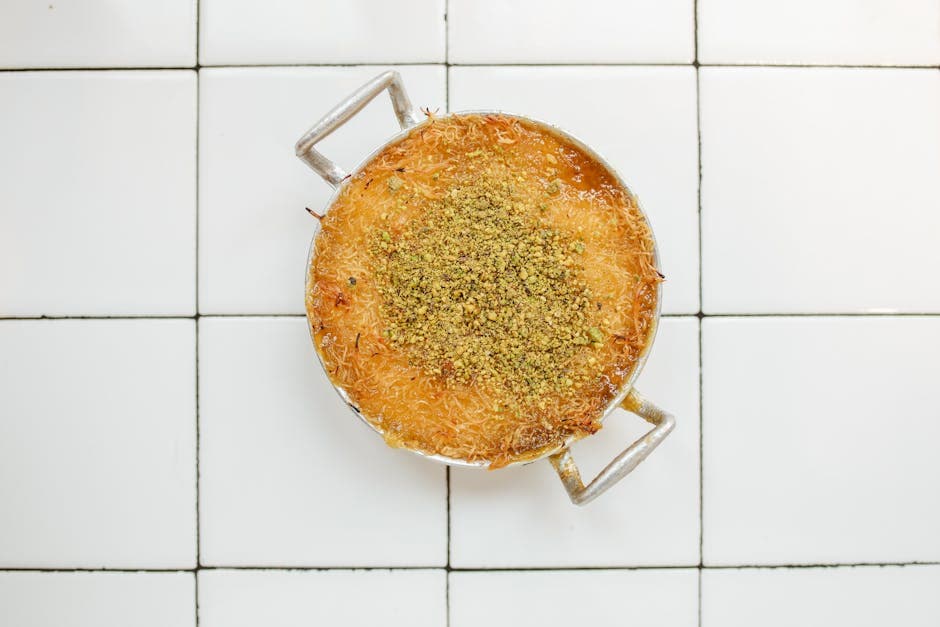
Knafeh Nabulsi (Levantine Cheese Pastry)
Palestinian-Levantine cheese pastry — shredded kataifi pastry layered over melting cheese, soaked in rose-orange syrup, dusted with pistachio.
About This Recipe
Knafeh nabulsi (also kunafa or kunafeh) is the most beloved Middle Eastern dessert — and perhaps the most theatrical. A bottom layer of fresh, stretchy Nabulsi cheese is buried under bright-orange shredded kataifi pastry (semolina-dough strands) soaked in butter or ghee, baked until the pastry is deep gold and crisp and the cheese underneath is molten. The whole thing is flipped onto a platter, drenched in rose- and orange-blossom-scented sugar syrup, and showered with crushed pistachios. The result: a contrast of crisp-soft, cheese-sweet, salty-rose-floral, that has no real equal in any other tradition. Originally from Nablus in the Palestinian West Bank (hence 'nabulsi'), it spread across the Levant and now has shops worldwide. Eaten hot from the pan — knafeh waits for no one.
Ingredients
Serves 8
- 400 gkataifi (shredded phyllo) pastry, thawed if frozen
- 200 gunsalted butter or clarified butter (ghee), melted
- 500 gfresh Nabulsi cheese OR low-moisture mozzarella + Akkawi mix
- 1 tsporange food coloring (optional, for the traditional orange top)
- 400 gsugar
- 240 mlwater
- 1 tbsplemon juice
- 1 tsprose water
- 1 tsporange-blossom water
- 100 gshelled pistachios, finely chopped (garnish)
Instructions
- 1
Soak the cheese to desalt
Nabulsi cheese is brined; you must desalt it. Cube the cheese, soak in cold water for 2 hours, changing the water twice. If using mozzarella, no soaking needed. Drain and grate the cheese roughly.
- 2
Make the syrup
Combine sugar, water, and lemon juice in a saucepan. Bring to a boil. Reduce to a simmer; cook 10 minutes until slightly thickened (it should coat a spoon but not be molasses-thick). Off the heat, stir in rose water and orange-blossom water. Cool completely — cold syrup on hot knafeh is the trick.
- 3
Prep the pastry
Pull the kataifi apart with your fingers to loosen and separate the threads — it comes packed tight. Place in a wide bowl. Pour over the melted butter (or ghee) plus optional food coloring. Toss thoroughly until every strand is glistening and slightly orange.
- 4
Build in a wide pan
Press half of the buttered kataifi into the bottom of a 28 cm round (or 20 × 30 cm rectangular) baking dish, packing firmly. Make an even, flat layer.
- 5
Add cheese
Spread the cheese evenly over the kataifi base in an even layer, leaving 1 cm at the edges.
- 6
Top with remaining pastry
Distribute the other half of the buttered kataifi over the cheese, pressing gently to even it out.
- 7
Bake
Bake at 200°C for 25-30 minutes until the top is deep golden brown and you can see (or smell) the cheese sizzling at the edges.
- 8
The flip (the moment of truth)
Pull out. Rest 30 seconds. Place a wide flat plate over the pan. With confidence and oven gloves, invert the pan onto the plate. Lift away the pan. The knafeh now has its orange crisp side up.
- 9
Pour the cold syrup over hot knafeh
Pour the cold syrup evenly over the hot knafeh — listen for the dramatic hiss. The pastry absorbs the syrup and crisps; the cheese stays molten.
- 10
Pistachio and serve immediately
Shower with crushed pistachios. Cut into wedges or squares immediately. Eat hot — once knafeh cools, the cheese becomes a single rubber band. Heaven is the first slice.
Did you make this?
Rate it and help other cooks find the recipes that actually work.
One tap to sign in, and we'll save the rating you just picked.
Everything you need to plan your week — free
- Meal calendar
- Grocery list
- AI recipe ideas
Track what you eat
Snap your meal to log calories and macros, run fasting timers and track water in the free SnapCal app.
Pro Tips
- →
Cold syrup on hot knafeh — the temperature contrast is the trick. Don't reverse.
- →
Use real Nabulsi or Akkawi cheese if you can — fresh stretchy salty cheese that's been desalted. Mozzarella is a workable substitute.
- →
Eat within 15 minutes of pouring the syrup. After that the cheese hardens and the magic is gone.
Variations
- •
Cream knafeh (kunafa bil ashta): replace the cheese with thickened sweetened clotted cream. Lighter, milkier.
- •
Knafeh khishneh: with chopped pistachios layered between the pastry and cheese.
- •
Chocolate knafeh: modern Dubai version — Nutella between the pastry layers. Sacrilege or genius depending on who you ask.
Storage
Best within 15 minutes of plating. Cold knafeh isn't really knafeh. To revive: reheat slices in a 200°C oven for 5 minutes to re-soften the cheese.
History & Origin
Knafeh nabulsi originated in Nablus, Palestine, where Nabulsi cheese has been made for over 1000 years. The dish became a regional specialty by the 14th century and spread to Damascus, Beirut, and Cairo. The 'Akkawi' (Acre) version uses cheese from coastal Israel/Palestine. The flagship dish at Hashem in Amman (where King Abdullah eats) and Habiba in Amman is widely considered the world's reference standard.
Frequently Asked Questions
Where do I find Nabulsi cheese?
Middle Eastern groceries, often in vacuum-sealed brine packs. If unavailable: a 50/50 mix of low-moisture mozzarella and Akkawi is the standard substitute. Pure mozzarella is acceptable in a pinch.
Why is my knafeh soggy?
Syrup was too hot when poured, or you poured too much. Cold syrup, applied evenly but not drowningly. The pastry should absorb the syrup, not swim in it.
Nutrition Facts
Per serving (240g / 8.5 oz) · 8 servings total
Time Summary
Have Questions?
Ask our AI cooking assistant anything about this recipe — substitutions, techniques, scaling.
Chat with AI Chef →Featured in Guides
This recipe is featured in the following curated guides:
More Lebanese Recipes
You Might Also Like
Similar dishes from other cuisines around the world.
Browse by Ingredient
More recipes built around the same core ingredients.
Free Kitchen Tools
Calculators and converters that pair with this page — no signup needed.
Put This Into a Plan
Schedule it, shop for it, and track what you already have.
Read Next
Longer reads that go deeper on the ideas behind this dish.
Community
Join the conversation
Sign in to leave a comment and save your favourite recipes