
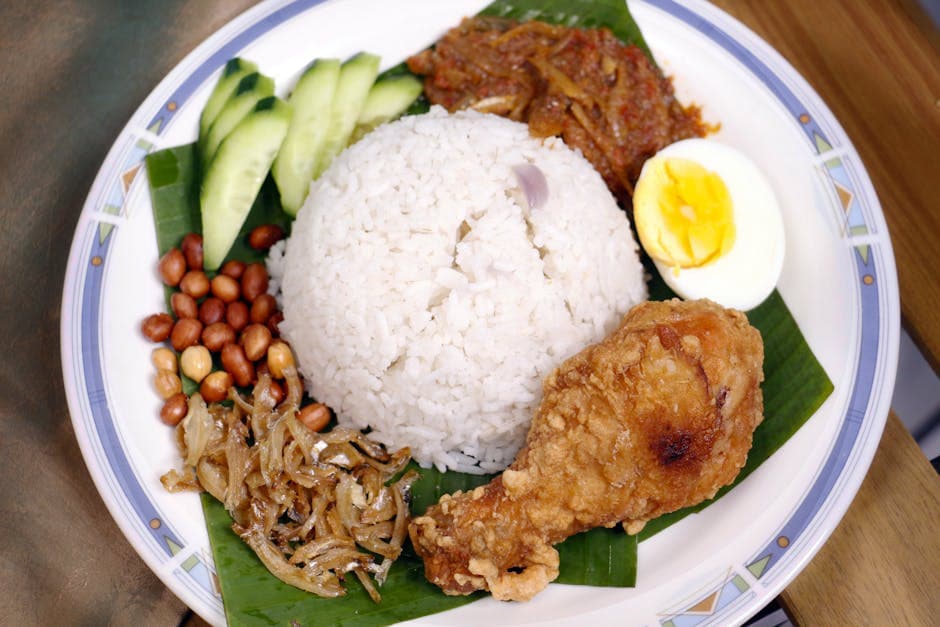
Laksa Lemak
Malaysia's most iconic noodle soup — a rich, spicy coconut broth with thick rice noodles, shrimp, tofu puffs, and a complex rempah spice paste, a meal of extraordinary depth.
About This Recipe
Laksa is the definitive noodle soup of the Malay Archipelago, with dozens of regional variations from Penang to Singapore. Laksa lemak (coconut milk laksa) is the richest and most celebrated — a broth that takes hours to make from a rempah (spice paste) of dried shrimp, galangal, lemongrass, chilies, and shallots, finished with generous amounts of coconut milk. The topping ritual matters: shrimp, tofu puffs that soak up the broth, bean sprouts, and cockles are traditional. A spoonful of sambal belachan on the side for heat. The broth is so complex and satisfying that laksa has been called 'one of the world's most delicious dishes.'
Ingredients
Serves 4
- 400 gthick rice noodles (laksa noodles)(or rice vermicelli)
- 300 gshrimp(peeled, shells reserved for stock)
- 400 mlcoconut milk
- 500 mlshrimp stock(made from reserved shells)
- 200 gtofu puffs (taukua)(halved)
- 100 gbean sprouts
- 8 driedred chilies(soaked)
- 4 shallots
- 2 stalkslemongrass(sliced)
- 2 cmfresh galangal(sliced)
- 2 tbspdried shrimp paste (belacan)
- 1 tbsppalm sugar or brown sugar
- 3 tbspvegetable oil
- 1 tspsalt
Instructions
- 1
Make shrimp stock
Simmer shrimp shells in 700ml water for 20 minutes. Strain.
- 2
Make the rempah
Blend dried chilies, shallots, lemongrass, galangal, and belacan into a smooth paste.
- 3
Fry the rempah
Heat oil in a wok. Fry rempah over medium heat for 10–15 minutes until fragrant and oil separates.
- 4
Build the broth
Add shrimp stock and coconut milk. Add palm sugar and salt. Simmer 15 minutes.
- 5
Cook toppings
Poach shrimp in the broth for 2 minutes. Add tofu puffs to heat through.
- 6
Assemble
Place softened noodles in bowls. Ladle hot broth over. Arrange shrimp, tofu puffs, and bean sprouts on top.
Did you make this?
Rate it and help other cooks find the recipes that actually work.
One tap to sign in, and we'll save the rating you just picked.
Everything you need to plan your week — free
- Meal calendar
- Grocery list
- AI recipe ideas
Track what you eat
Snap your meal to log calories and macros, run fasting timers and track water in the free SnapCal app.
Pro Tips
- →
Frying the rempah thoroughly until oil separates is the most important step — it concentrates and deepens the flavor
- →
Make more rempah than you need and freeze it for future laksa
- →
Taste and adjust salt at the very end — flavors concentrate as liquids reduce, and a final pinch of flaky salt sharpens the whole dish.
- →
Mise en place pays for itself: chop, measure and pre-mix everything before the heat goes on, especially for any step that moves fast.
Variations
- •
Use Penang asam laksa (tamarind-sour fish-based) for a completely different style
- •
Add cockles (kerang) as traditional garnish
- •
Vegetarian: swap the protein for roasted king oyster mushrooms, smoked tofu or cooked chickpeas — adjust seasoning slightly upward to compensate.
- •
Spicier: add a finely chopped fresh chile or a teaspoon of crushed Aleppo/Urfa pepper to the aromatics for warm, layered heat instead of a single sharp hit.
Storage
Broth keeps 3 days. Cook noodles fresh each time. Freeze broth up to 3 months.
History & Origin
Laksa originated in the Peranakan (Straits Chinese) communities of the Malay Peninsula, blending Chinese noodle traditions with Malay coconut spice cooking. It has evolved into many regional varieties.
Frequently Asked Questions
What's the difference between Penang laksa and laksa lemak?
Penang asam laksa uses a sour, tamarind-based fish broth with no coconut milk. Laksa lemak uses a rich coconut milk broth. They're completely different dishes that share only the noodle.
Can I make this ahead of time?
Yes — most of the components can be prepared up to a day in advance and refrigerated separately. Reheat gently and assemble just before serving so textures stay distinct.
What can I substitute if I don't have all the ingredients?
Stay close to the role each ingredient plays: swap aromatics for similar ones (shallot for onion, lime for lemon), and keep the fat-acid-salt balance intact. Spice blends can usually be approximated with what's in the cupboard.
How do I know it's authentic?
Authenticity sits on a spectrum — what matters more is honoring the technique and balance of flavors. If the dish tastes harmonious and respects how cooks in its home region would build it, you're on solid ground.
Nutrition Facts
Per serving · 4 servings total
Time Summary
Have Questions?
Ask our AI cooking assistant anything about this recipe — substitutions, techniques, scaling.
Chat with AI Chef →Featured in Guides
This recipe is featured in the following curated guides:
More Malaysian Recipes
You Might Also Like
Similar dishes from other cuisines around the world.
Browse by Ingredient
More recipes built around the same core ingredients.
Free Kitchen Tools
Calculators and converters that pair with this page — no signup needed.
Put This Into a Plan
Schedule it, shop for it, and track what you already have.
Read Next
Longer reads that go deeper on the ideas behind this dish.
Community
Join the conversation
Sign in to leave a comment and save your favourite recipes