
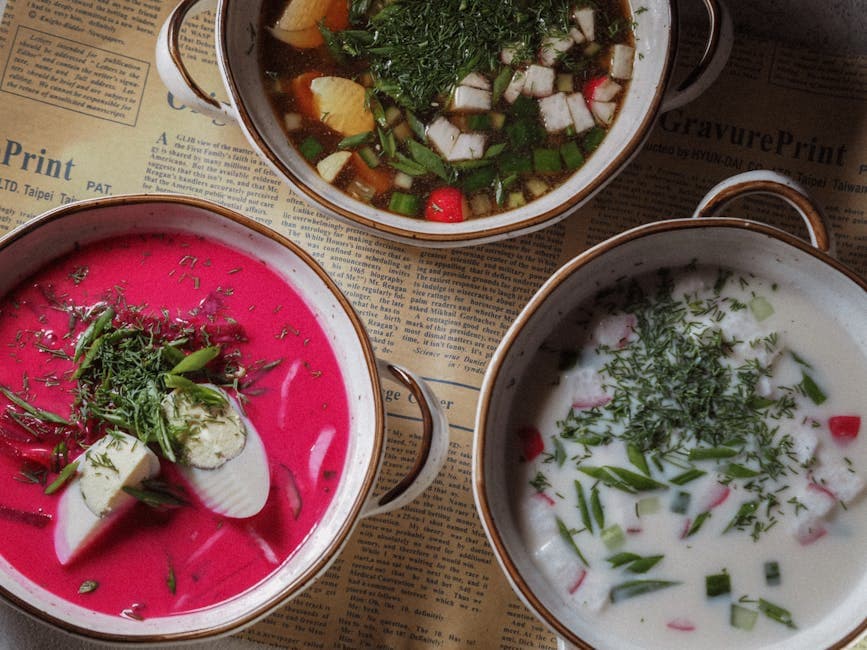
Šaltibarščiai (Lithuanian Cold Pink Beet Soup)
Lithuania's summer soup: kefir blended with grated beets, cucumber, dill, and chopped egg — electric pink and revivingly cold.
About This Recipe
Šaltibarščiai is the day-glo pink, almost neon-bright cold soup that Lithuanians eat from the first warm day of May through the end of August. The base is kefir — Lithuania's beloved fermented dairy — whisked with cooked grated beets, cucumber, fresh dill, spring onion, and chopped hard-boiled egg. Served thoroughly chilled with a side of hot boiled potatoes (the temperature contrast is essential), it is impossibly refreshing, gently tart, and the kind of dish that makes you understand why a national cuisine evolved around long, sunny northern summers. Every Lithuanian grandmother insists hers is the best, and travelers' photos of the shocking color regularly go viral on social media — but it tastes far gentler than it looks, with the kefir tang doing most of the lifting.
Ingredients
Serves 4
- 500 gcooked beets (boiled or roasted), peeled
- 1 Lfull-fat kefir (or buttermilk as substitute)
- 300 mlcold water or beet-cooking liquid
- 1 mediumcucumber, finely diced
- 4spring onions, finely sliced
- 20 gfresh dill, finely chopped, plus extra to serve
- 4 largeeggs, hard-boiled and chopped
- 1 tspfine salt, plus more to taste
- 0.5 tspground white pepper
- 1 tbspwhite wine vinegar or lemon juice
- 800 gsmall new potatoes, scrubbed (for serving)
Instructions
- 1
Boil the potatoes
Place new potatoes in a pot of cold salted water, bring to a boil, and cook 20–25 minutes until tender. Keep them hot until serving — they are eaten warm alongside the cold soup.
- 2
Grate the beets
Coarsely grate the cooked beets on the large holes of a box grater, or pulse briefly in a food processor (don't purée — you want texture). You should have a coarse, juicy beet pulp.
- 3
Mix the base
In a large bowl whisk the kefir with the cold water until smooth. Stir in the vinegar, salt, and white pepper.
- 4
Combine
Add the grated beets, diced cucumber, spring onions, and dill. Stir well — the soup will immediately turn the famous neon pink.
If you want a deeper magenta, stir in 2 tablespoons of beet cooking liquid; if you want a softer pink, hold it back.
- 5
Chill
Cover and refrigerate at least 1 hour, ideally 3 hours. The flavors marry and the soup gets properly cold. Stir before serving — kefir separates slightly.
- 6
Plate
Ladle into chilled bowls. Top each with chopped hard-boiled egg, an extra shower of dill, and a few cracks of black pepper. Place a bowl of hot, butter-glossed potatoes on the side.
Did you make this?
Rate it and help other cooks find the recipes that actually work.
One tap to sign in, and we'll save the rating you just picked.
Everything you need to plan your week — free
- Meal calendar
- Grocery list
- AI recipe ideas
Cook this hands-free
Get AI meal plans, step-by-step cooking mode, and your saved recipes in the free Bento app.
Pro Tips
- →
Eat the soup very cold and the potatoes very hot — the temperature contrast is the dish, not a side note. Don't combine them in one bowl.
- →
Use full-fat kefir; low-fat versions are watery and the soup won't have the right body. Lithuanian brands like Rokiškio are the closest you'll get abroad.
- →
Cook the beets the day before — they release more juice when chilled overnight, intensifying the color and flavor.
Variations
- •
Add 100 g chopped pickled herring for a heartier, traditional version popular in coastal Lithuania.
- •
Vegan: replace kefir with cultured oat or cashew yogurt thinned with water — flavor differs but the structure works.
- •
Add a tablespoon of grated horseradish for the spicier Latgalian variant.
Storage
Best within 24 hours — the dill wilts and the soup loses its sparkle by day 2. Store the soup and the potatoes separately; never combine for storage.
History & Origin
Cold beet soups appear across the Baltic and Slavic regions — the Polish chłodnik, the Belarusian chaladnik, the Ukrainian kholodnyk — all descend from a shared medieval tradition of fermented-dairy summer soups. The Lithuanian version, with its bright pink kefir base and the obligatory hot potato side, has become a national symbol and a viral favorite of food photographers since the 2010s.
Frequently Asked Questions
Why is the soup served with hot potatoes?
The temperature contrast — ice-cold soup, steaming potatoes — is the entire point of the dish. Lithuanians dip the potato into the cold soup or alternate bites. It's not optional.
Can I make šaltibarščiai with buttermilk?
Yes — full-fat buttermilk is the closest substitute if you can't find kefir. The flavor is slightly less tangy, so add an extra teaspoon of vinegar to compensate.
Why is my soup not pink enough?
Either your beets weren't deeply red (some varieties are pale) or you didn't include enough beet cooking liquid. Add a splash of beet broth or a teaspoon of grated raw beet to boost the color.
Nutrition Facts
Per serving (580g / 20.5 oz) · 4 servings total
Time Summary
Have Questions?
Ask our AI cooking assistant anything about this recipe — substitutions, techniques, scaling.
Chat with AI Chef →Featured in Guides
This recipe is featured in the following curated guides:
More Lithuanian Recipes
You Might Also Like
Similar dishes from other cuisines around the world.
Free Kitchen Tools
Calculators and converters that pair with this page — no signup needed.
Put This Into a Plan
Schedule it, shop for it, and track what you already have.
Read Next
Longer reads that go deeper on the ideas behind this dish.
Community
Join the conversation
Sign in to leave a comment and save your favourite recipes